Every traveler knows the fear of losing face: the reservation that falls through, the photo that didn’t turn out, the embarrassing moment in a foreign language. But Lao Tzu reveals a startling truth: these fears only exist because you believe in a “self” that can be honored or shamed. Let go of that self, and the road becomes wide open.
Executive Summary
Tao Te Ching Chapter 13 reveals that fear—whether of praise or humiliation—arises from attachment to a fragile, image‑based self.
This blog reframes the teaching through the metaphor of travel: the moment we cling to reputation, we become anxious about gaining favor and terrified of losing it.
Lao Tzu’s solution is radical and freeing—release the story of the “self” that can be judged, and both fear and misfortune dissolve. When we stop protecting an identity and instead care for ourselves the way we care for the whole world, we become steady, trustworthy, and unshakable on any road.
The chapter ultimately teaches that freedom comes not from controlling circumstances, but from letting go of the self that fears them.
Chapter 13
Favor and disgrace make one fearful
Tao te ching 13 Of 81
The greatest misfortune is the self
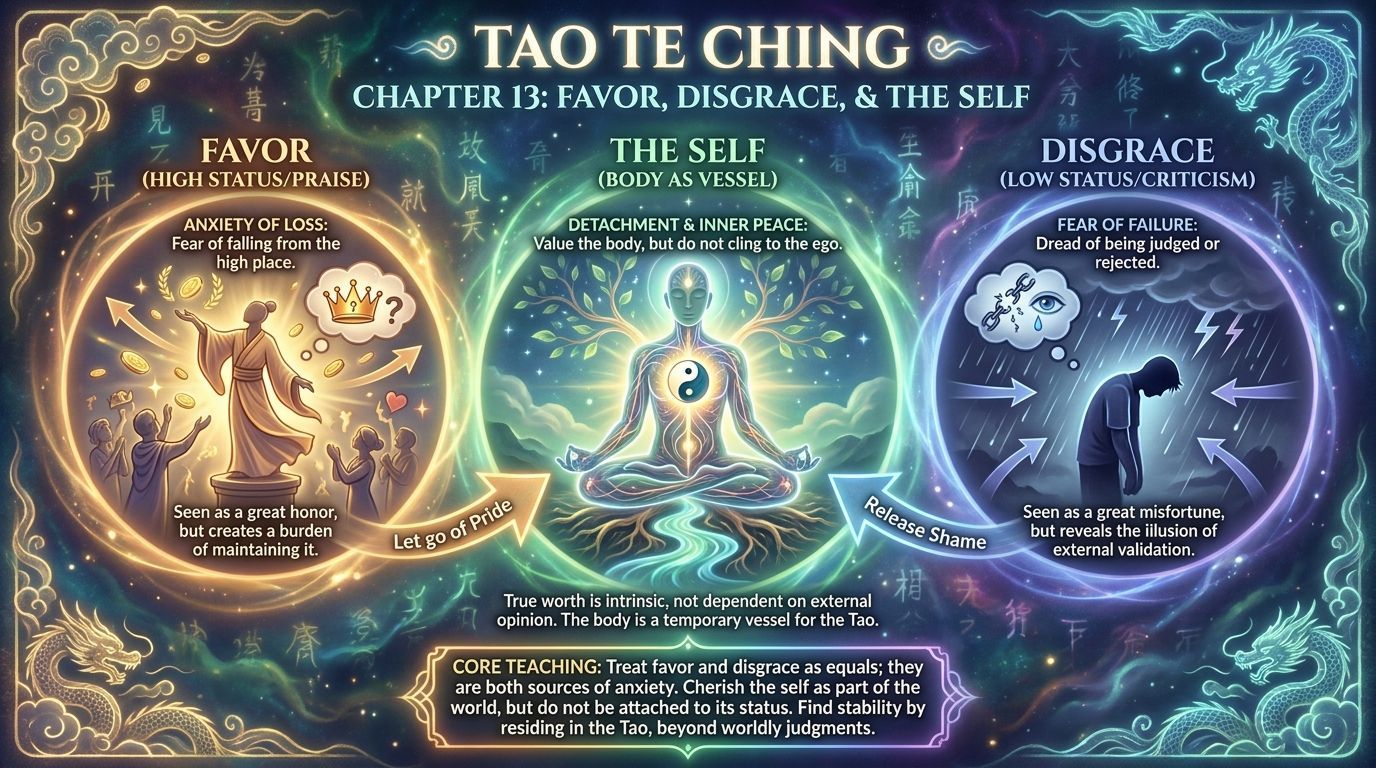
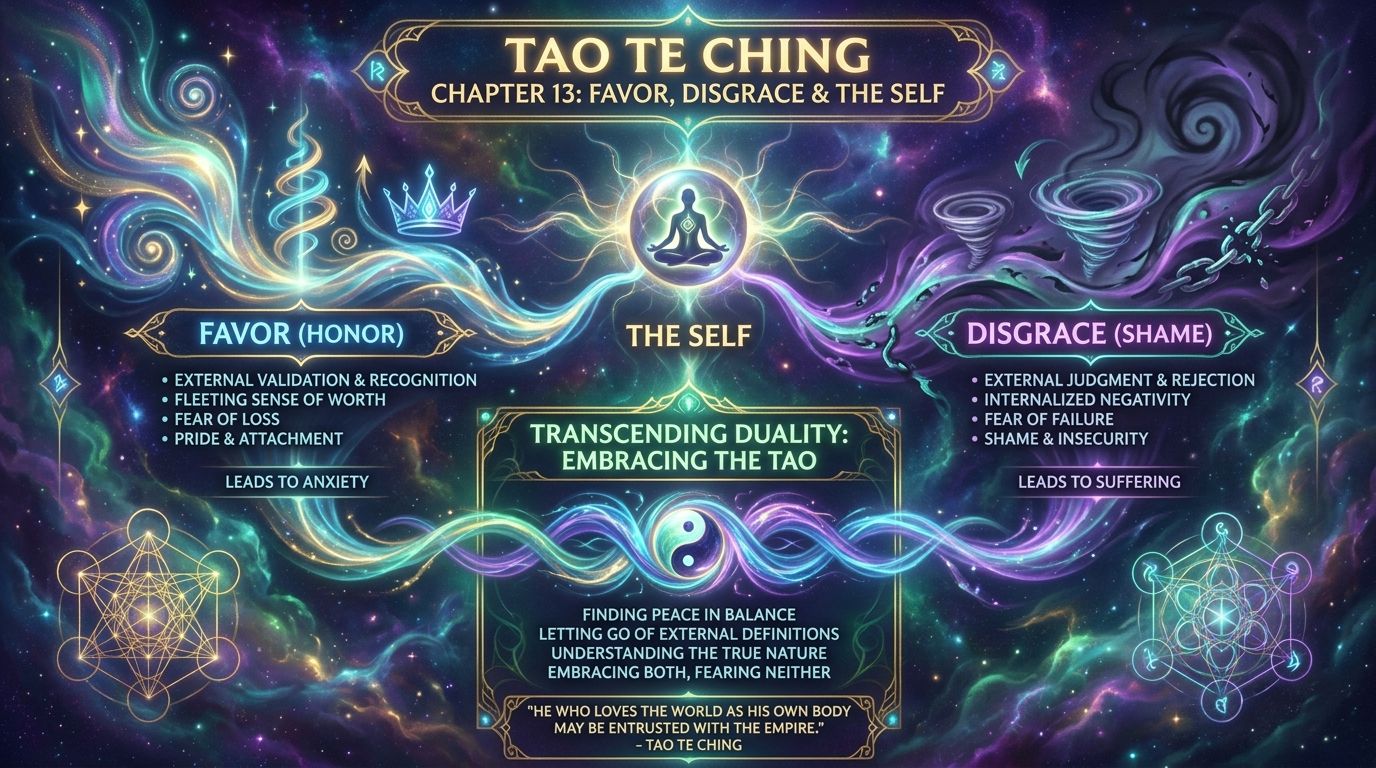
What does “favor and disgrace make one fearful” mean?
Favor is high; disgrace is low
Having it makes one fearful
Losing it makes one fearful
This is “favor and disgrace make one fearful”
What does “the greatest misfortune is the self” mean?
The reason I have great misfortune
Is that I have the self
If I have no self
What misfortune do I have?
So one who values the self as the world
Can be given the world
One who loves the self as the world
Can be entrusted with the world
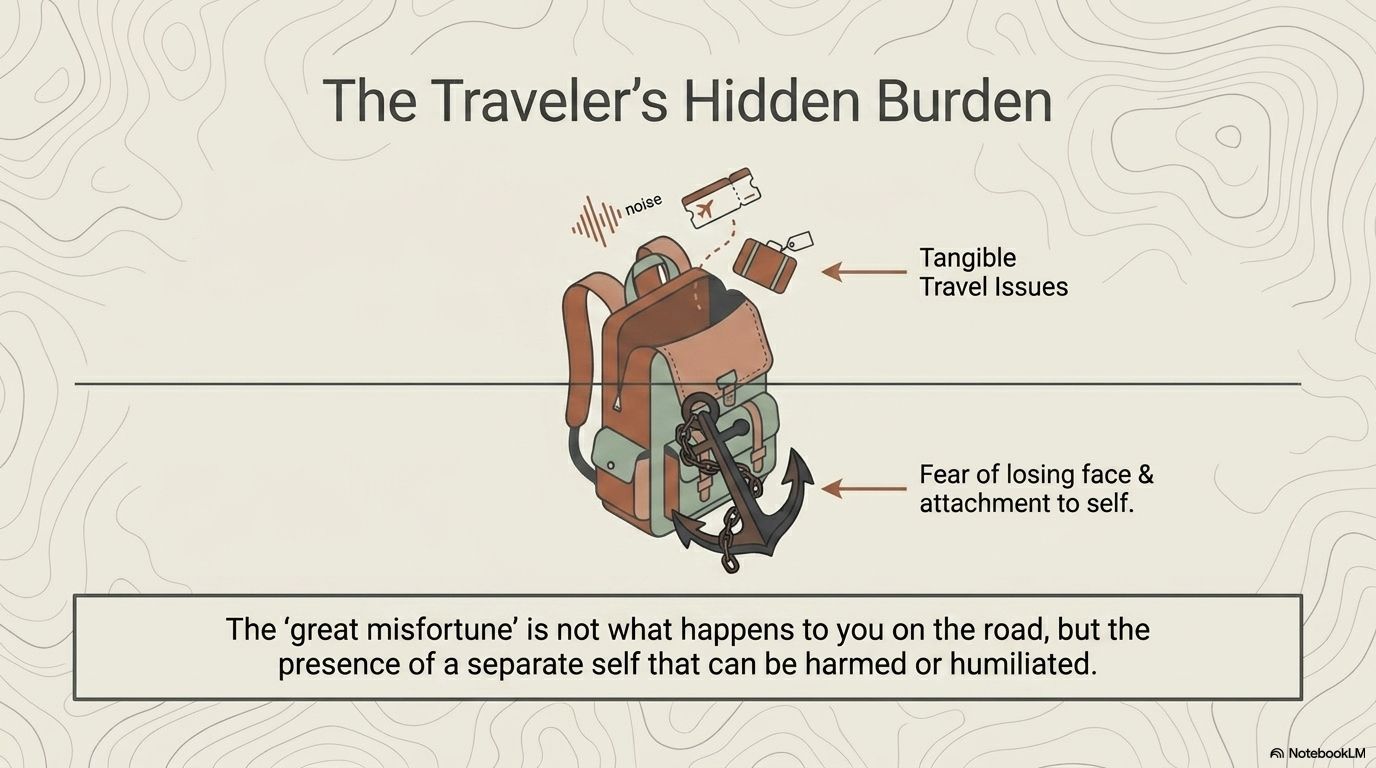
The Traveler’s Hidden Burden
After learning to see beyond sensory noise in Chapter 12, Tao Te Ching Chapter 13 tackles one of the most persistent sources of suffering: the fear of losing face and the attachment to self. This chapter directly addresses why we feel fear around favor and disgrace—and offers a radical solution that frees the traveler to move through the world without anxiety.
For anyone who has ever felt humiliated, anxious about reputation, or terrified of failure, this chapter is a liberation manual. It shows that the “great misfortune” is not what happens to you, but the very sense of a separate self that can be harmed.
The Fear of Favor and Disgrace
The chapter begins by asking what seems like a simple question:
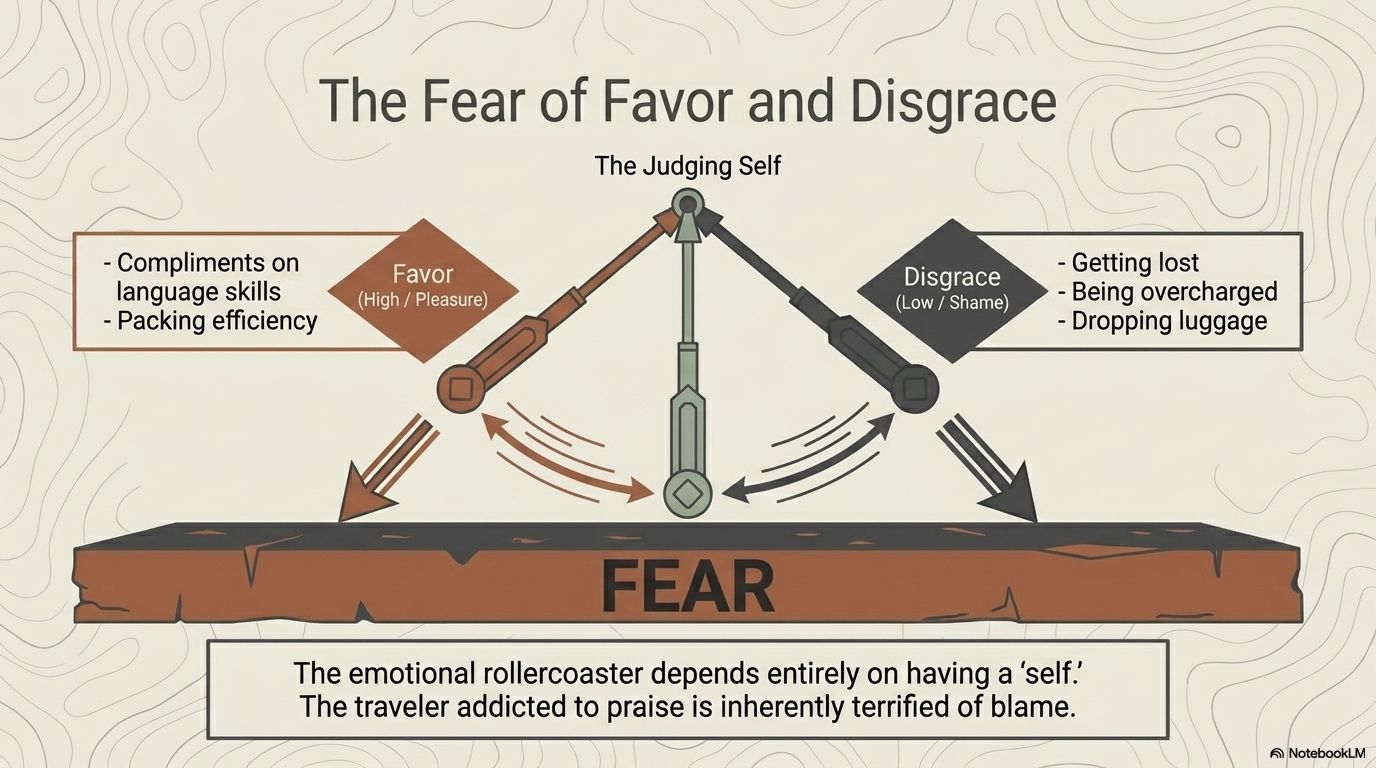
“What does ‘favor and disgrace make one fearful’ mean? Favor is high; disgrace is low. Having it makes one fearful; losing it makes one fearful. This is ‘favor and disgrace make one fearful.’”
The Traveler’s Insight: Think of the last time you received a compliment on your journey—maybe someone praised your language skills, your packing efficiency, or your adventurous spirit. Did you feel a flash of pleasure followed immediately by a tiny fear: “Will I be able to maintain this? What if they see my flaws?” That’s the fear of losing favor.
Now think of a moment of disgrace—getting lost in front of others, being overcharged because you looked like a tourist, dropping your luggage in a busy station. The shame is real. But notice: both the high of favor and the low of disgrace produce the same emotion: fear. You fear losing the favor; you fear experiencing the disgrace. The emotional rollercoaster depends entirely on having a “self” that can be judged.
The traveler addicted to praise is also terrified of blame. The two are inseparable.
The Root of All Misfortune: The Self
Lao Tzu then drops the bombshell:
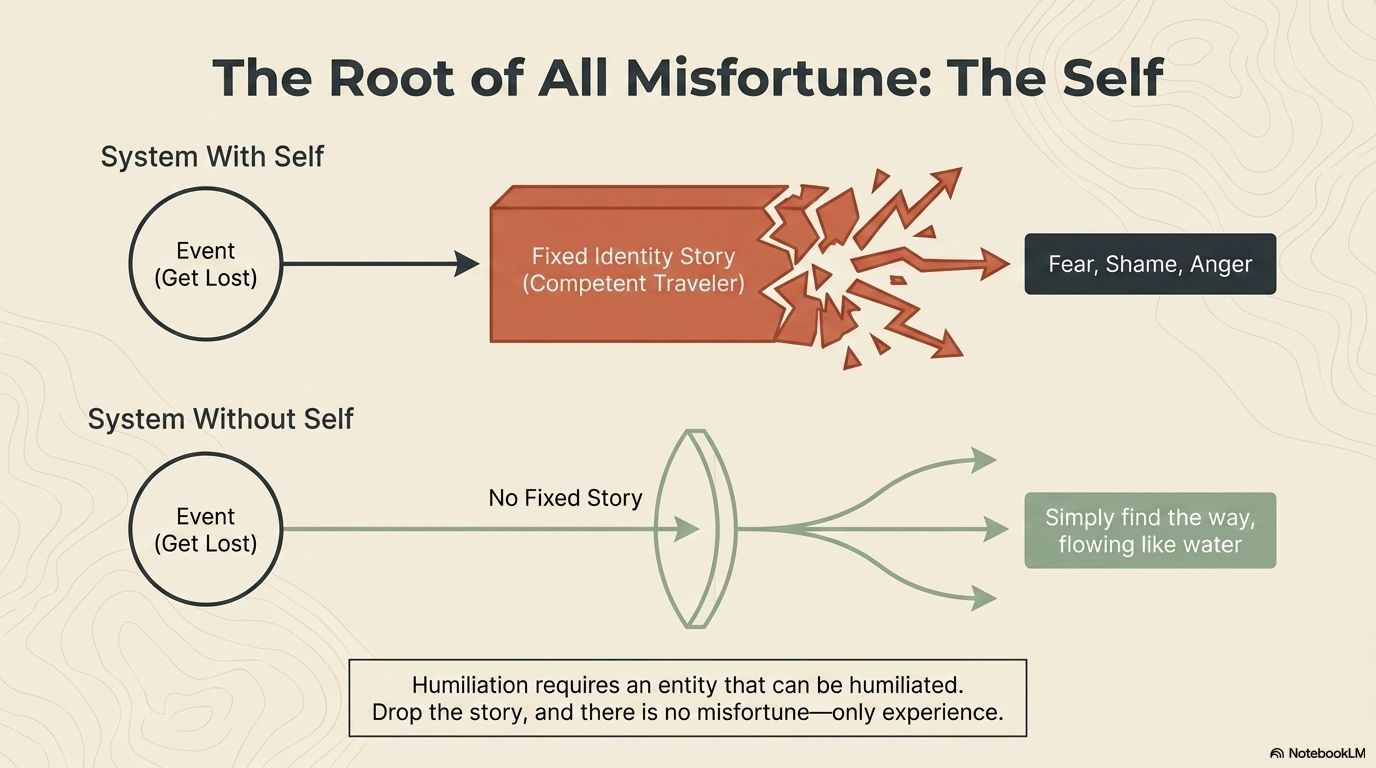
“What does ‘the greatest misfortune is the self’ mean? The reason I have great misfortune is that I have the self. If I have no self, what misfortune do I have?”
The Traveler’s Insight: This is not a philosophical abstraction—it is a practical observation about life on the road. The “self” is the story you tell about who you are: the competent traveler, the intelligent person, the one who shouldn’t make mistakes. Every time that story is threatened, you feel fear, shame, or anger.
But imagine traveling without that story. Without the need to be seen as capable, without the fear of being seen as foolish. What happens when you get lost? You simply find your way. What happens when you make a mistake? You correct it. What happens when someone laughs at you? They laugh—and you keep walking.
The “misfortune” of embarrassment, of disappointment, of humiliation—all of it requires a “self” that can be embarrassed, disappointed, or humiliated. Without that fixed identity, there is no misfortune. There is only experience, flowing like water.
The Paradox of Valuing the Self
The chapter concludes with a reversal that has puzzled readers for millennia:
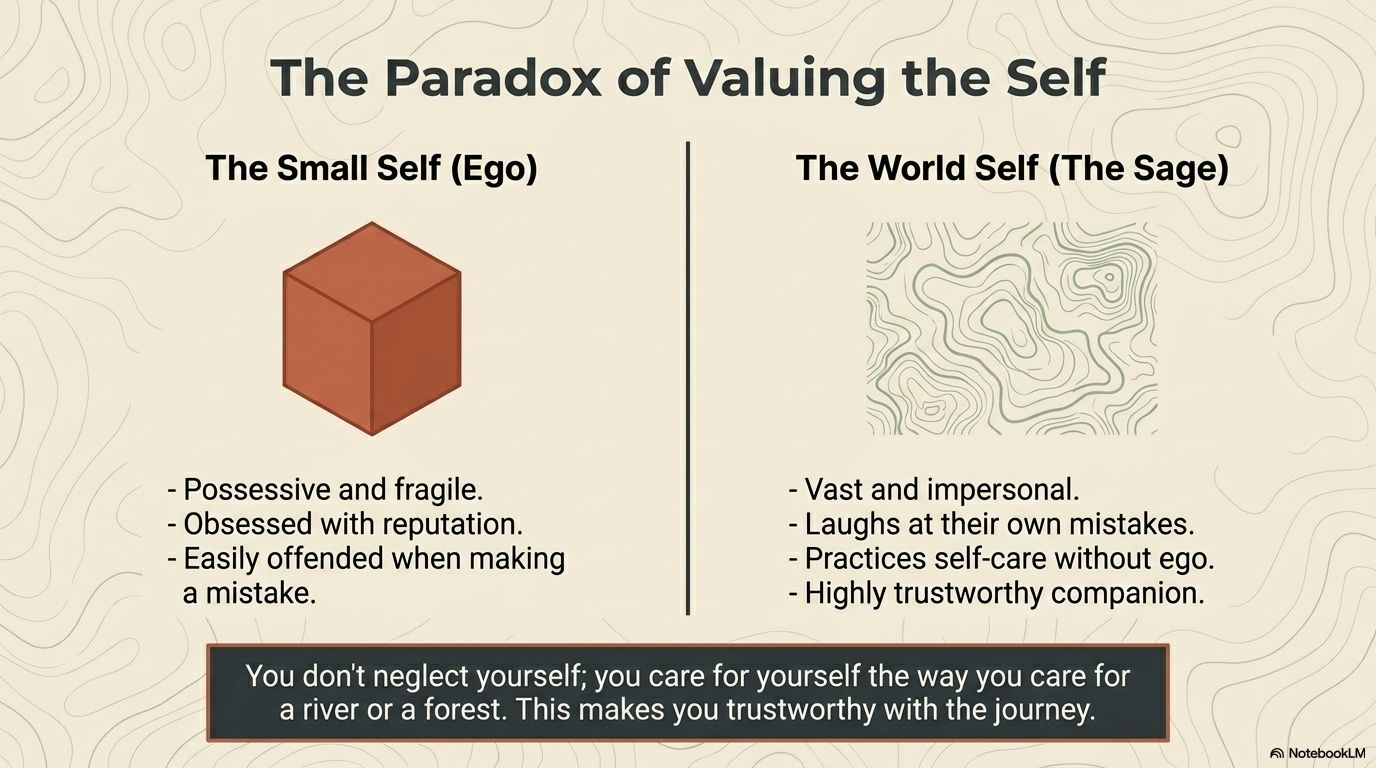
“So one who values the self as the world can be given the world. One who loves the self as the world can be entrusted with the world.”
This is not a return to ego. The key phrase is “as the world.” The sage does not value the self in a small, possessive way—but values it as they value the whole world. And they love the self as they love the world itself.
The Traveler’s Insight: When you stop clinging to your small self—the ego that fears disgrace and craves favor—you are free to care for yourself with the same vast, impersonal care that the universe gives to all things. You don’t neglect yourself; you simply stop obsessing over your reputation. And paradoxically, this makes you trustworthy with great responsibility.
Think of the best travel companions you’ve known. They weren’t the ones obsessed with being right or looking good. They were the ones who could laugh at their own mistakes, who didn’t take offense easily, who could handle any situation with calm. They “valued themselves” enough to take care of their needs, but not so much that they were fragile. These are the people you entrust with the journey.
Your Roadmap: Traveling Without the Fearful Self
How do you bring the wisdom of Chapter 13 onto the road?
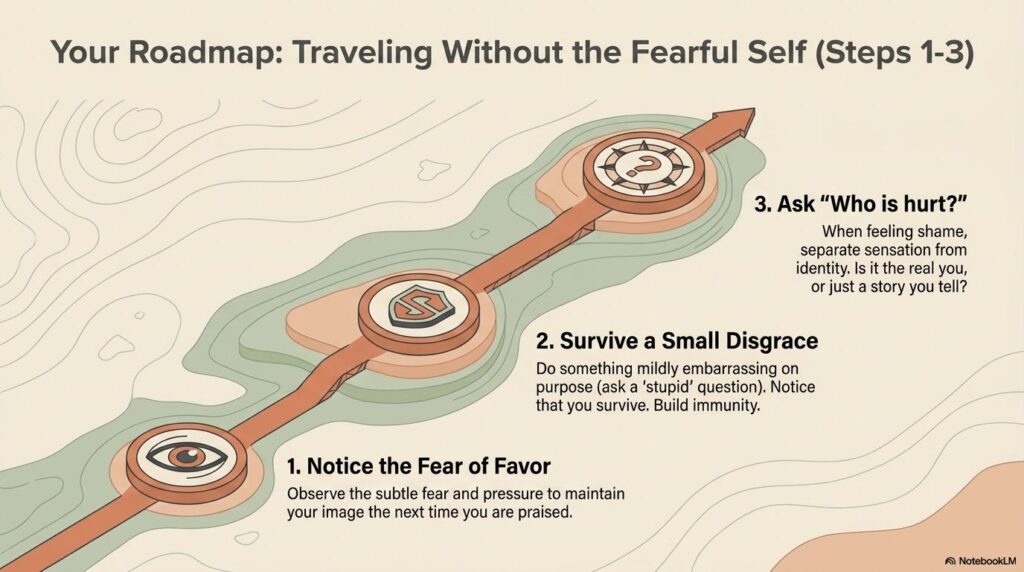
- Notice the Fear of Favor: The next time someone praises you, observe the subtle fear that follows—the pressure to maintain the image. Simply notice it without judgment.
- Survive a Small Disgrace On Purpose: Do something mildly embarrassing on purpose—misspeak, get slightly lost, ask a “stupid” question. Notice that the world doesn’t end. You survive. This builds immunity.
- Ask “Who is hurt?” When you feel shame, pause and ask: “Which ‘self’ is hurt? Is it the real me, or just a story I’m telling?” Separate the sensation from the identity.
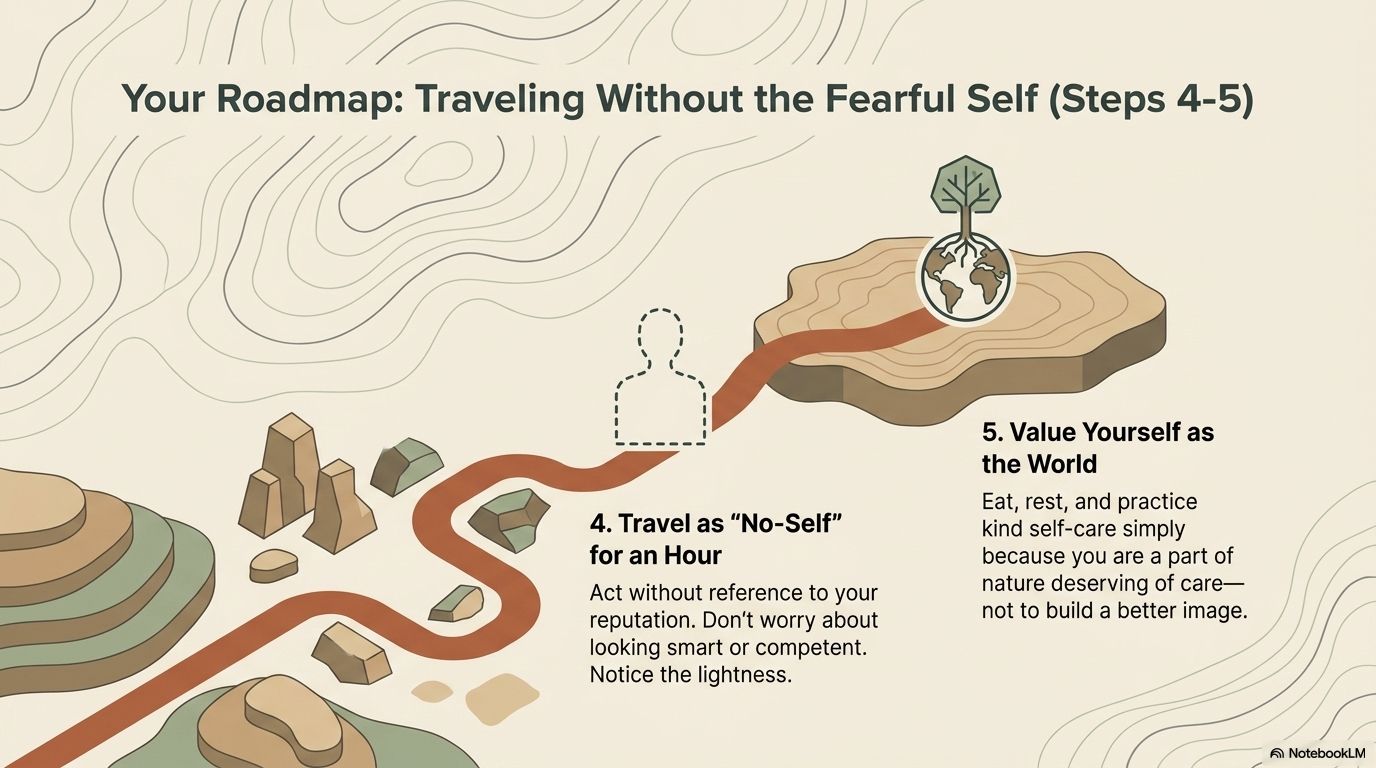
- Travel as “No-Self” for an Hour: For one hour of your day, try to act without reference to your reputation. Don’t worry about looking smart, cool, or competent. Just do what needs doing. Notice how light you feel.
- Value Yourself as the World: Practice self-care that is not ego-based—eating well, resting, being kind to yourself—not to build a better image, but simply because you are part of the world deserving of care, like a river or a tree.
The Destination: Freedom from Fear
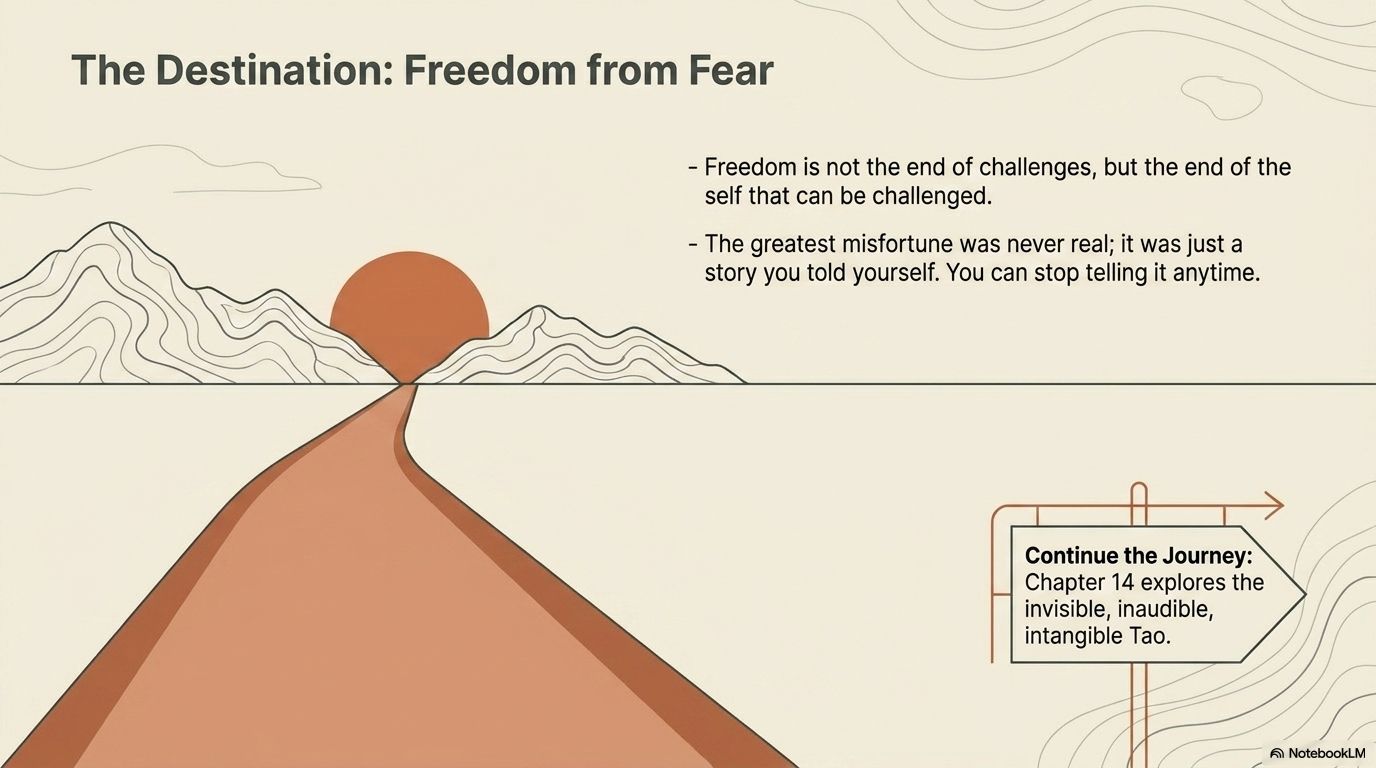
Tao Te Ching Chapter 13 offers a radical path: the end of fear is not the end of challenge, but the end of the self that can be challenged. When you stop carrying a fragile identity onto the road, you stop fearing disgrace and chasing favor.
You become the traveler who can be entrusted with any journey because you don’t collapse under praise or blame. You become the companion others trust because you value yourself no more and no less than the world itself.
And in that freedom, you discover what the sage has always known: the greatest misfortune was never real. It was just a story you told yourself. And you can stop telling it anytime.
Continue Your Journey: Having released the fearful self, Chapter 14 explores the invisible, inaudible, intangible Tao—the mysterious unity that cannot be grasped but can be followed.
For the foundational maps of this philosophy, explore our Foundations of the Tao series.