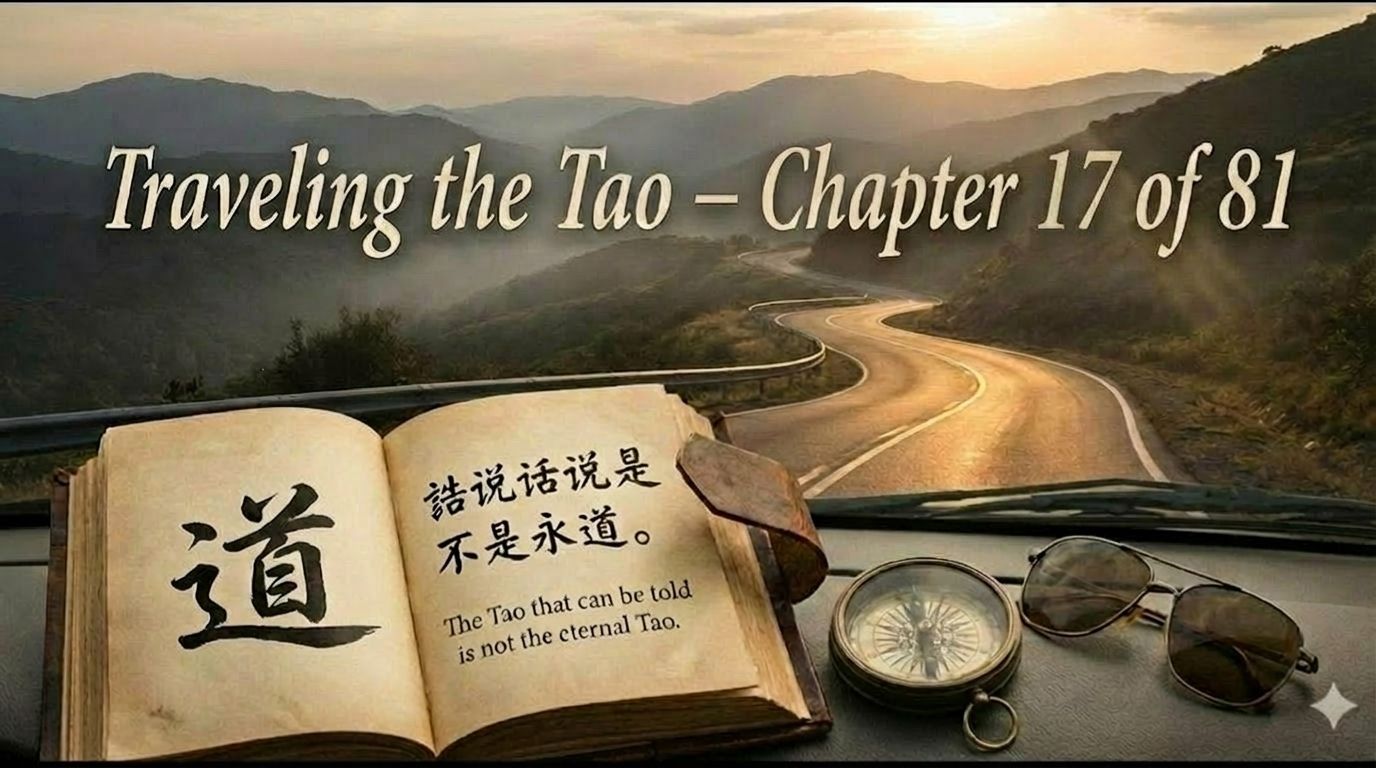
The best travel companions are the ones you barely notice – until they’re gone. They don’t announce their expertise, don’t demand gratitude, don’t leave a trail of instructions. When the journey is over, you look back and think, “We did that ourselves.” Tao Te Ching Chapter 17 describes the highest form of leadership: guiding so naturally that people forget a guide was ever there.
Executive Summary
Tao Te Ching Chapter 17 describes four levels of leadership, with the highest being so attuned to the Tao that people barely notice their presence.
This chapter reframes power as subtle, quiet, and non‑performative. The best leaders guide without ego, speak little, interfere rarely, and create conditions where people feel they accomplished everything themselves.
When leaders drop into trust—trusting the Tao, trusting the process, trusting the people—harmony arises naturally.
The chapter ultimately teaches that true influence is invisible, and the greatest authority is the one that leaves no trace.
Chapter 17
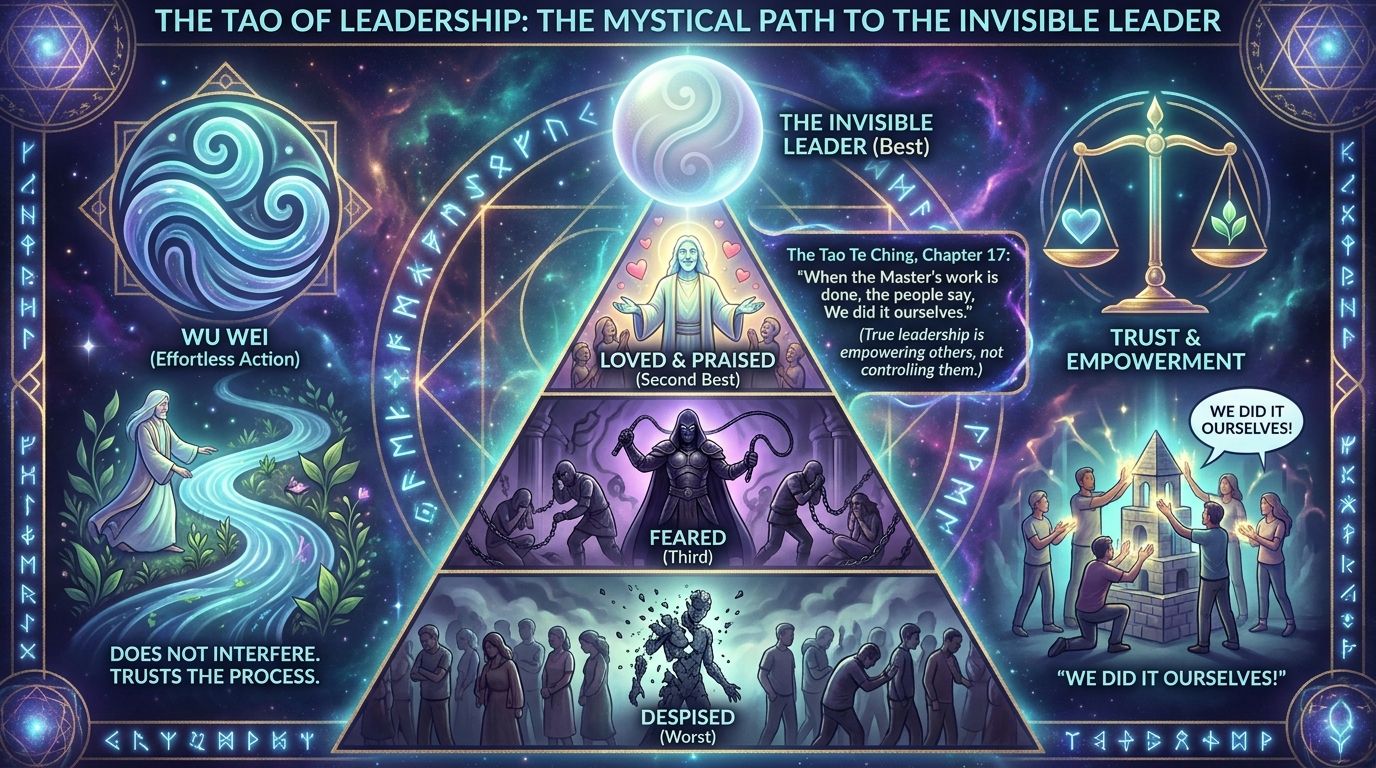
The highest rulers, people do not know they have them
Tao te ching 17 Of 81
The next level, people love them and praise them
The next level, people fear them
The next level, people despise them
If the rulers’ trust is insufficient
Have no trust in them
Proceeding calmly, valuing their words
Task accomplished, matter settled
The people all say, “We did it naturally”
The Four Kinds of Travel Leaders
After learning to return to the root in Chapter 16, Tao Te Ching Chapter 17 applies that wisdom to the art of leading – whether a nation, a team, a family, or a small group of travelers. Lao Tzu presents a hierarchy of four leadership styles, from the worst to the best. The best is so subtle that people don’t even know the leader exists.
For anyone who has ever been responsible for others on a journey – a tour guide, a parent, a project manager, or simply the friend who holds the map – this chapter offers a radical reframing: true mastery is invisibility.
The Four Levels of Leadership
The chapter opens with a clear ranking:
“The highest rulers, people do not know they have them. The next level, people love them and praise them. The next level, people fear them. The next level, people despise them.”
The Traveler’s Insight: Imagine four different trip leaders.
Level 4: The Despised Leader
This leader is controlling, micromanaging, and harsh. They shout instructions, blame others for mistakes, and treat the group like servants. People despise them. When the trip is over, no one wants to travel with them again. This is the bottom.
Level 3: The Feared Leader
This leader rules through intimidation. They aren’t necessarily cruel, but they keep people in line through threats of punishment – missed flights, extra costs, public embarrassment. People comply, but out of fear. There is no joy in the journey.
Level 2: The Loved and Praised Leader
This is the charismatic, helpful, beloved guide. They are kind, efficient, and always there when needed. People sing their praises, write glowing reviews, and feel grateful. Most would consider this excellent leadership.
But Lao Tzu says there is one level higher.
Level 1: The Invisible Leader
This leader is so subtle, so natural, that people don’t even know they are being led. The route unfolds smoothly. Problems are solved before anyone notices. The group moves in harmony – but each person feels they are acting freely, by their own choice. When the journey ends, they say, “We did that ourselves.”
The Traveler’s Insight: The invisible leader doesn’t need praise because they aren’t seeking credit. They don’t need to be loved because they aren’t attached to ego. They simply set conditions so right that the journey runs itself. Think of a parent who builds an environment where a child learns independently. Or a manager who empowers a team so completely that the manager seems unnecessary. That is the highest art.
The Problem of Insufficient Trust
The chapter then explains why leaders fall short:
“If the rulers’ trust is insufficient, have no trust in them.”
The Traveler’s Insight: Trust is a mirror. When a leader doesn’t trust their people – when they micromanage, spy, or second-guess – the people respond in kind: they don’t trust the leader. Distrust breeds distrust. The fearful leader creates followers who are also fearful and untrustworthy.
On a journey, the guide who constantly checks if you’re following the rules, who doesn’t believe you can handle yourself, creates resentment. The group stops cooperating. The guide then feels justified in their distrust – a self-fulfilling prophecy.
The sage traveler, by contrast, trusts first. They assume competence and goodwill. And in that atmosphere, people rise to meet the trust.
The Way of Proceeding Calmly
The chapter describes the sage’s method:
“Proceeding calmly, valuing their words.”
The Traveler’s Insight: The invisible leader does not rush, does not shout, does not over-explain. They proceed calmly, like a river that knows its course. They value their words – speaking rarely, but when they speak, it matters. They don’t fill silence with unnecessary instructions or anxious chatter.
On a road trip, the calm leader sits quietly while the driver navigates. They don’t backseat drive. They don’t point out every potential hazard. They trust. When they do speak, it is because something truly needs saying – and because they speak so rarely, people listen.
Task Accomplished, Matter Settled
The chapter concludes with the ultimate sign of mastery:
“Task accomplished, matter settled. The people all say, ‘We did it naturally.’”
The Traveler’s Insight: This is the highest compliment a leader can receive: not “You were amazing,” but “We didn’t even notice you.” The journey succeeded. Every challenge was met. The destination was reached. And every member of the group feels a sense of ownership and natural flow. No one feels controlled or managed. They feel they did it themselves.
This is not manipulation – it is genuine empowerment. The invisible leader has created the conditions for others to discover their own capability. The leader’s reward is not praise, but the quiet satisfaction of a journey well-guided, invisible as the wind that fills the sails.
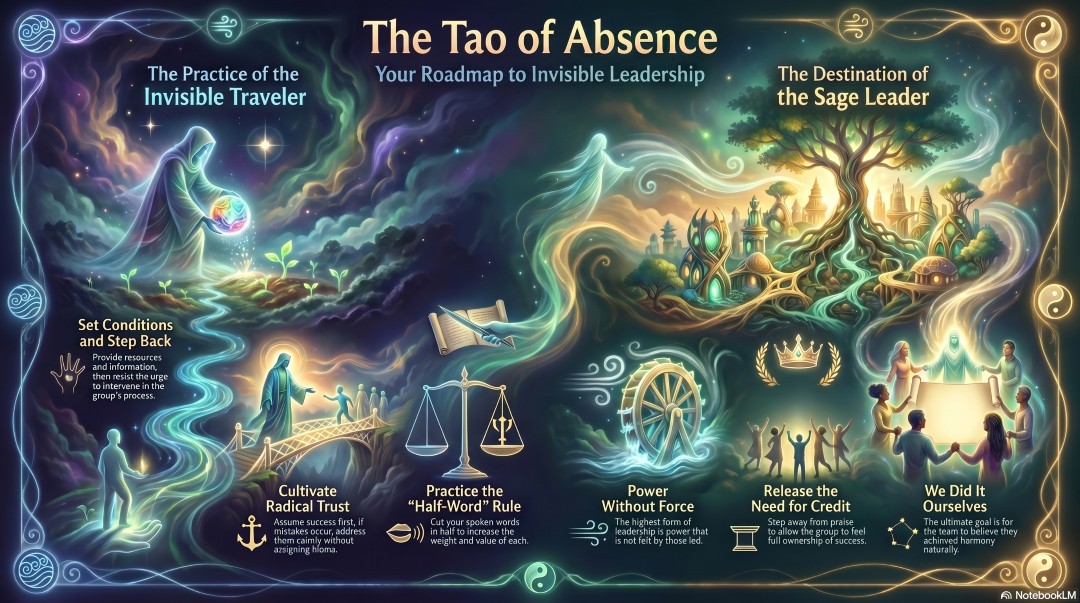
Your Roadmap: Becoming the Invisible Traveler
How do you apply Chapter 17 to your own leadership, whether on the road or in life?
- Practice Invisible Guidance: The next time you are in a group, resist the urge to direct. Instead, set conditions – share information, offer resources, then step back. Let people find their own way. Notice if they succeed without your intervention.
- Trust First: Before assuming someone will fail, assume they will succeed. Give them the benefit of the doubt. If they make a mistake, address it calmly, without “I told you so.” Trust builds trust.
- Speak Less, Value More: Count how many words you speak in a meeting or conversation. Cut them in half. When you do speak, make each word count. Notice how people lean in when you speak rarely.
- Release the Need for Credit: When something goes well, consciously refrain from taking credit. Let others feel ownership. Say nothing, or say “You all did great.” Watch how this changes the atmosphere.
- Proceed Calmly: When things go wrong – a missed turn, a lost reservation – resist the urge to panic or assign blame. Proceed calmly. Your calmness will spread to the group.
- Ask “Do They Know I Exist?” Reflect on your leadership style. Would the people you lead say they are aware of your control? Or would they say they are acting naturally? Aim for the latter.
The Destination: The Leader Who Disappears
Tao Te Ching Chapter 17 reveals that the highest form of power is power that is not felt. The sage leader is like the Tao itself – invisible, impartial, yet the source of all harmony. When you lead this way, you don’t need praise because you don’t need ego. You don’t fear disrespect because you aren’t attached to status. You simply serve the journey.
And when the journey is complete, the people will look back and say, “We did that.” And you will smile, knowing that you did exactly what needed to be done – by doing almost nothing at all.
Continue Your Journey: Having learned to lead invisibly, Chapter 18 explores the paradox that when the great Tao is forgotten, talk of “kindness” and “morality” appears – a sign that something has gone wrong.
For the foundational maps of this philosophy, explore our Foundations of the Tao series.