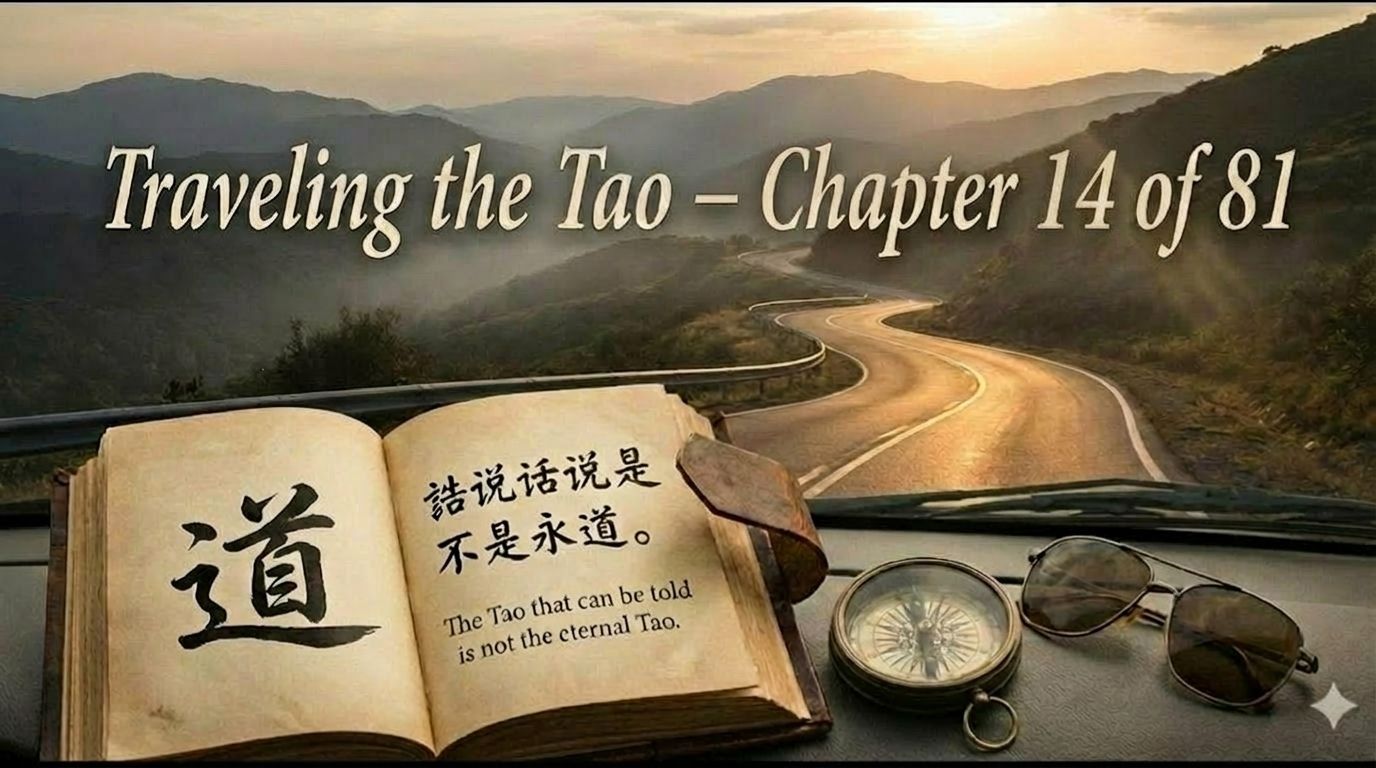
The best roads are not always marked on any map. The deepest calls to adventure are not shouted—they are felt as a whisper, an absence, a mysterious pull toward something you cannot name. Tao Te Ching Chapter 14 describes the Tao as invisible, inaudible, and intangible—yet it is the most reliable guide for the journey of life.
Executive Summary
Tao Te Ching Chapter 14 teaches that the most reliable guidance in life comes from what cannot be seen, heard, or grasped.
This blog reframes the chapter as a traveler’s lesson: the Tao is the “invisible road” beneath every visible path—subtle, formless, and ever‑present.
By learning to navigate through intuition, quiet perception, and trust in what lies beyond the senses, the traveler becomes aligned with the same ancient principle that has guided humanity since the beginning.
The chapter ultimately shows that the formless shapes the formed, and that the wisest journey is led not by signs or maps, but by the invisible source that makes all roads possible.
Chapter 14
Tao te ching 14 Of 81
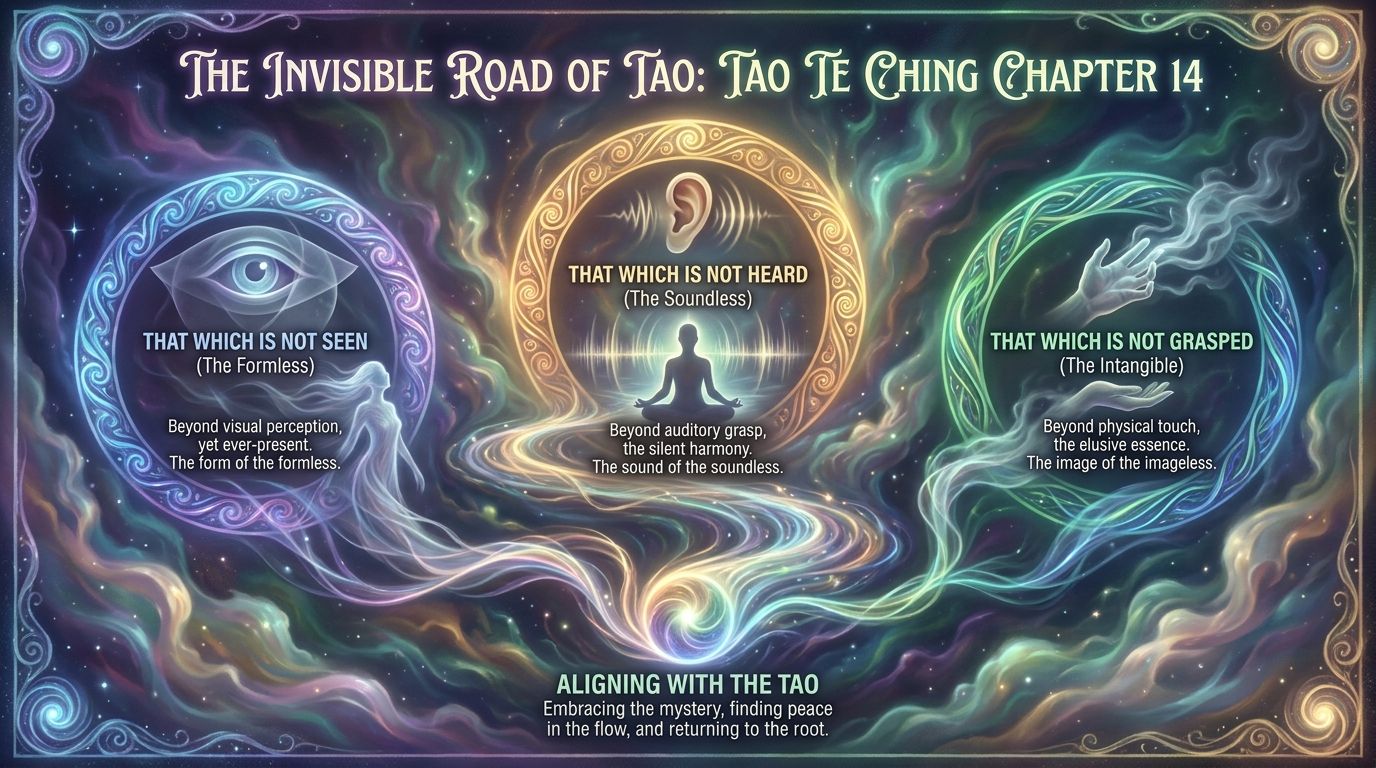
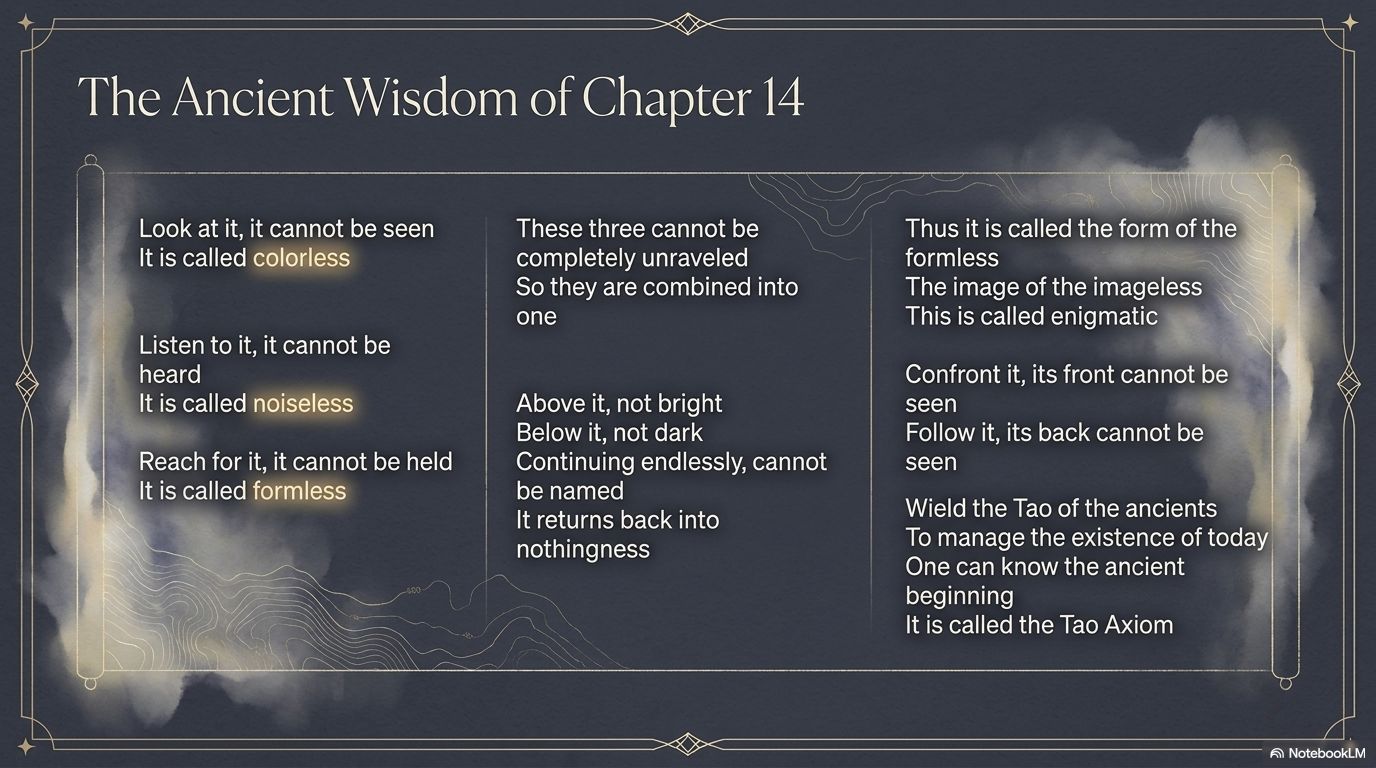
Look at it, it cannot be seen
It is called colorless
Listen to it, it cannot be heard
It is called noiseless
Reach for it, it cannot be held
It is called formless
These three cannot be completely unraveled
So they are combined into one
Above it, not bright
Below it, not dark
Continuing endlessly, cannot be named
It returns back into nothingness
Thus it is called the form of the formless
The image of the imageless
This is called enigmatic
Confront it, its front cannot be seen
Follow it, its back cannot be seen
Wield the Tao of the ancients
To manage the existence of today
One can know the ancient beginning
It is called the Tao Axiom
The Unseen Path That Leads to Everything
After exploring the fearful self in Chapter 13, Tao Te Ching Chapter 14 takes us into the mysterious heart of the Tao itself. This chapter describes what cannot be described: the formless, soundless, touchless source of all things. It acknowledges the limits of our senses and our language—and then invites us to trust what lies beyond them.
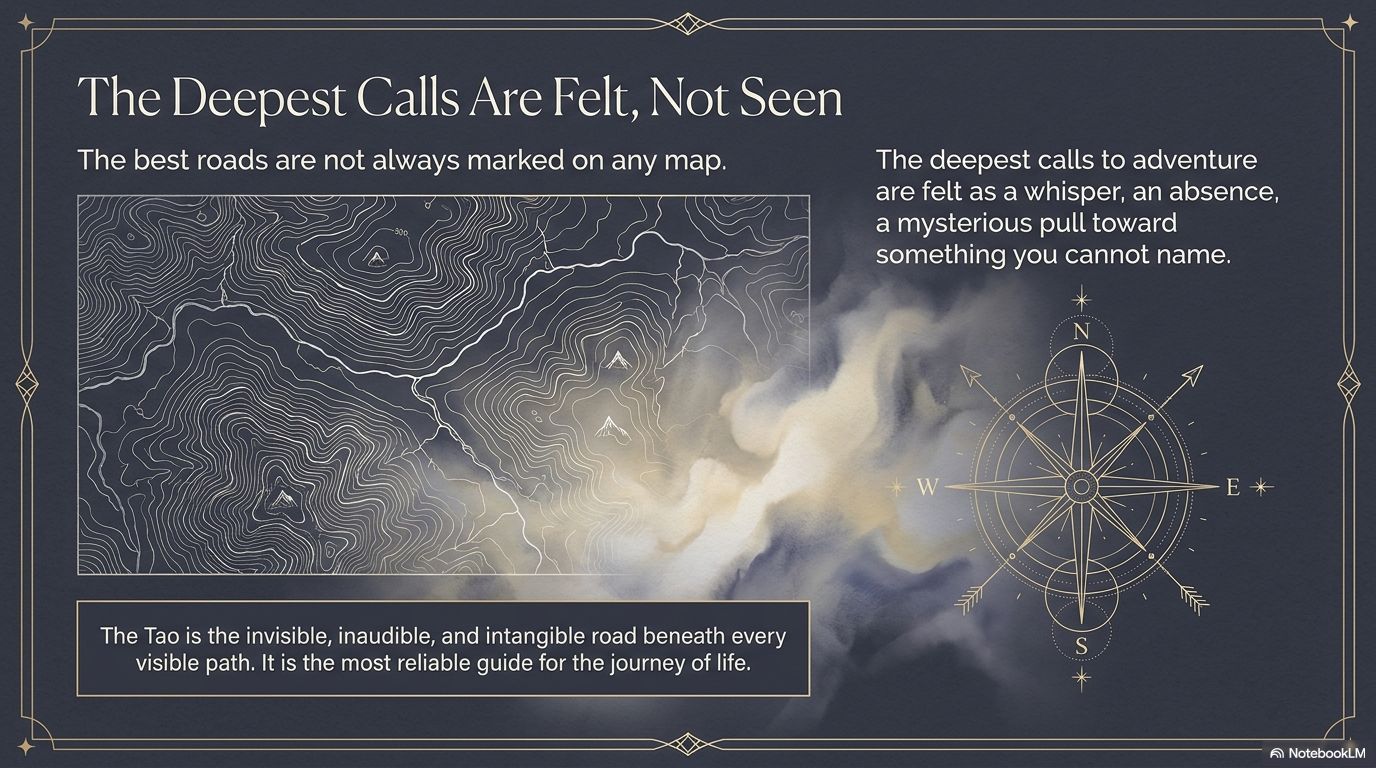
For the traveler, this chapter is about learning to navigate by the invisible. Just as a sailor reads wind and current, or a desert wanderer follows stars and subtle shifts in sand, the sage traveler learns to perceive the Tao not as an object, but as an ever-present, guiding presence that cannot be grasped yet cannot be missed.
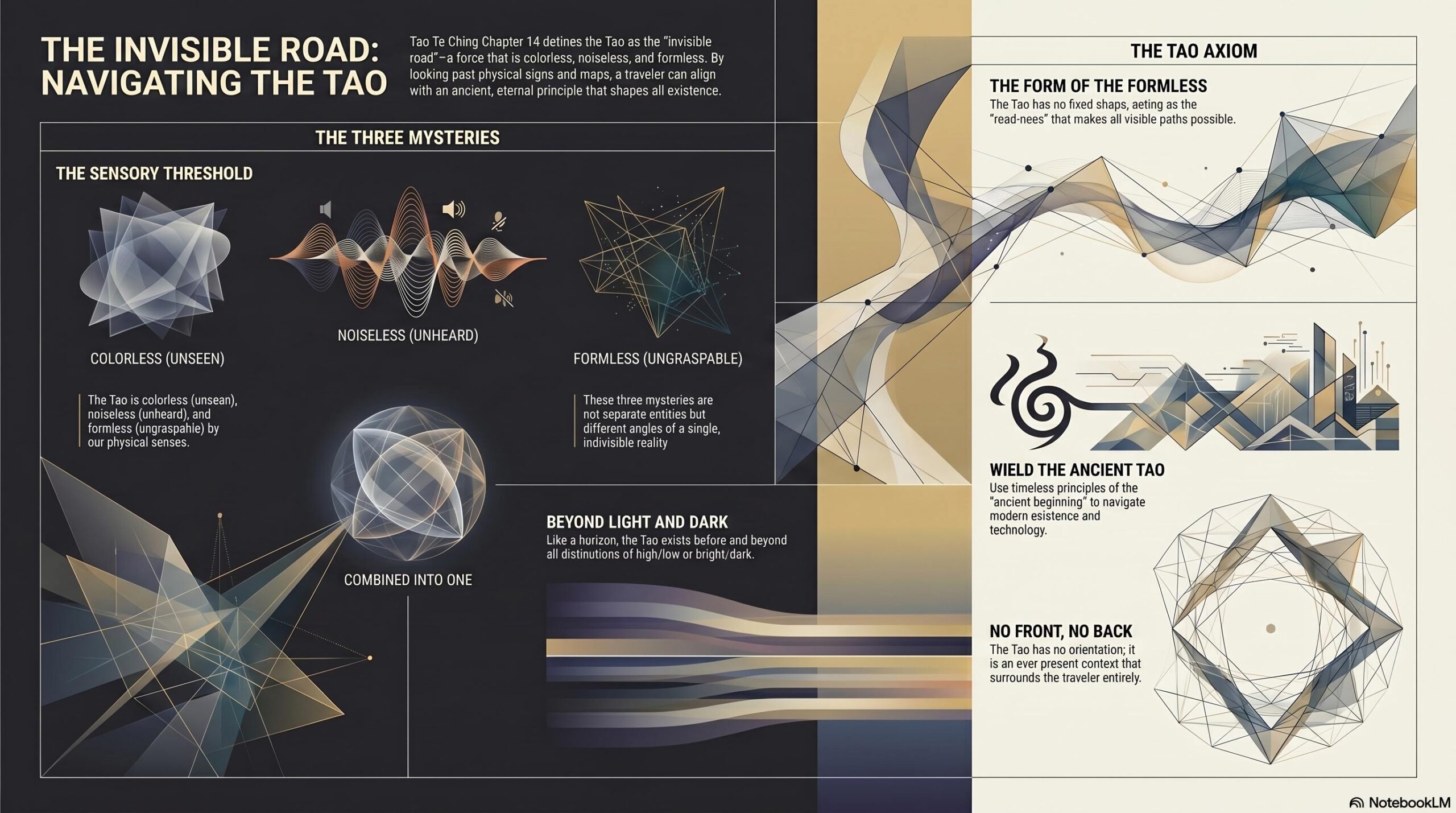
The Three Mysteries: Colorless, Noiseless, Formless
The chapter opens by naming what the Tao is not—through the very senses we rely on to navigate:
“Look at it, it cannot be seen; it is called colorless. Listen to it, it cannot be heard; it is called noiseless. Reach for it, it cannot be held; it is called formless.”
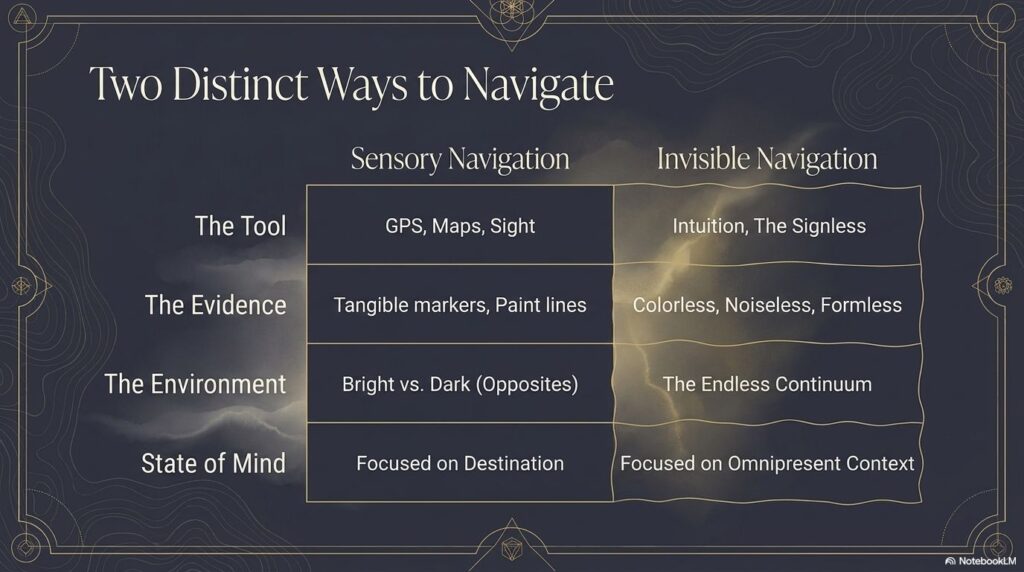
The Traveler’s Insight: Imagine trying to find your way using a road that has no paint lines, no signs, no physical surface you can touch. That is the Tao. It is not an object of sight, sound, or touch. Yet it is not nothing—it is the very “road-ness” that makes all roads possible.
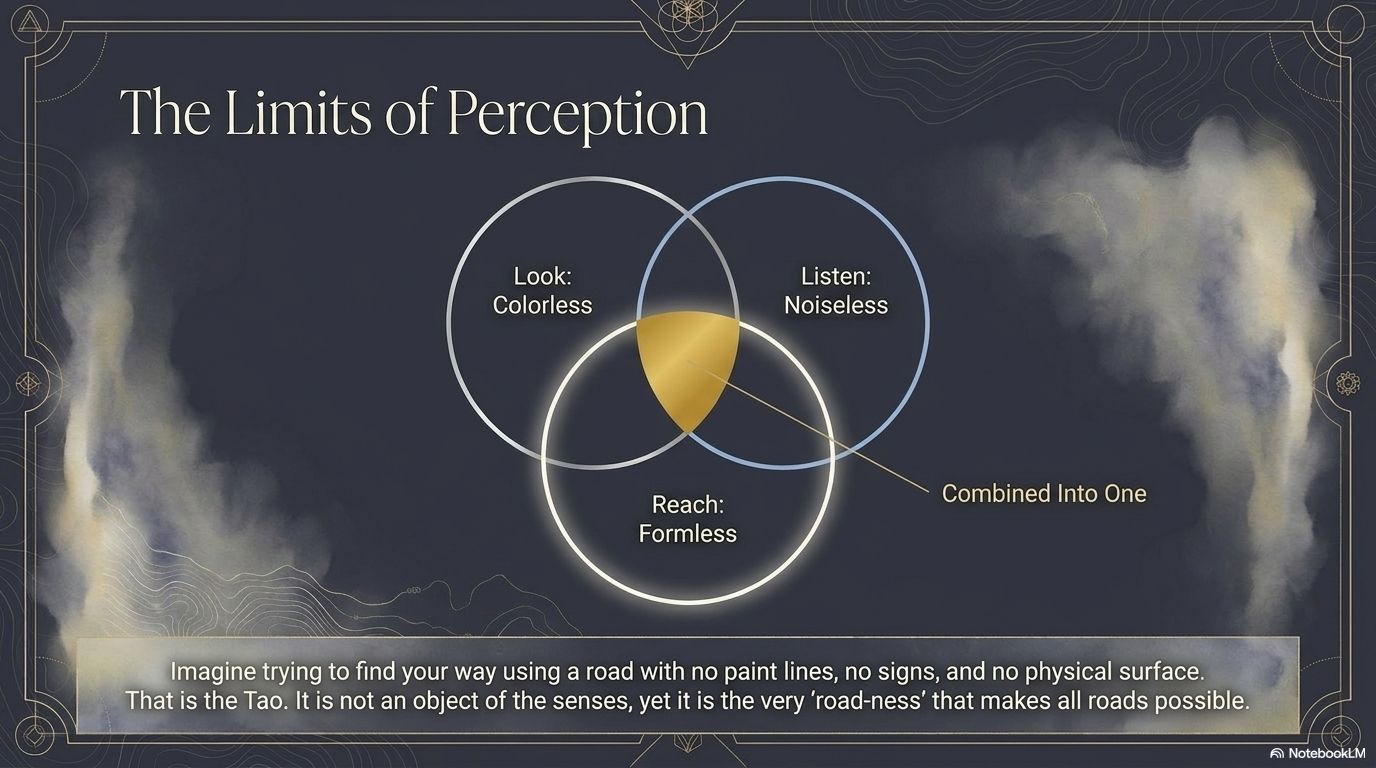
Why does this matter on an actual journey? Because so much of what truly guides us is invisible. Trust in your companions, the feeling that a direction is “right,” the sudden clarity that comes after confusion—these are not things you can see or hold. But they are real. The Tao is the name for that subtle, guiding reality that our senses cannot capture.
“These three cannot be completely unraveled, so they are combined into one.”
The colorless, noiseless, formless are not three separate things. They are different angles on the same mystery. You cannot separate them because they are aspects of a single, indivisible reality—the Tao itself.
Beyond Light and Dark: The Endless Continuum
The chapter continues with more paradoxes:
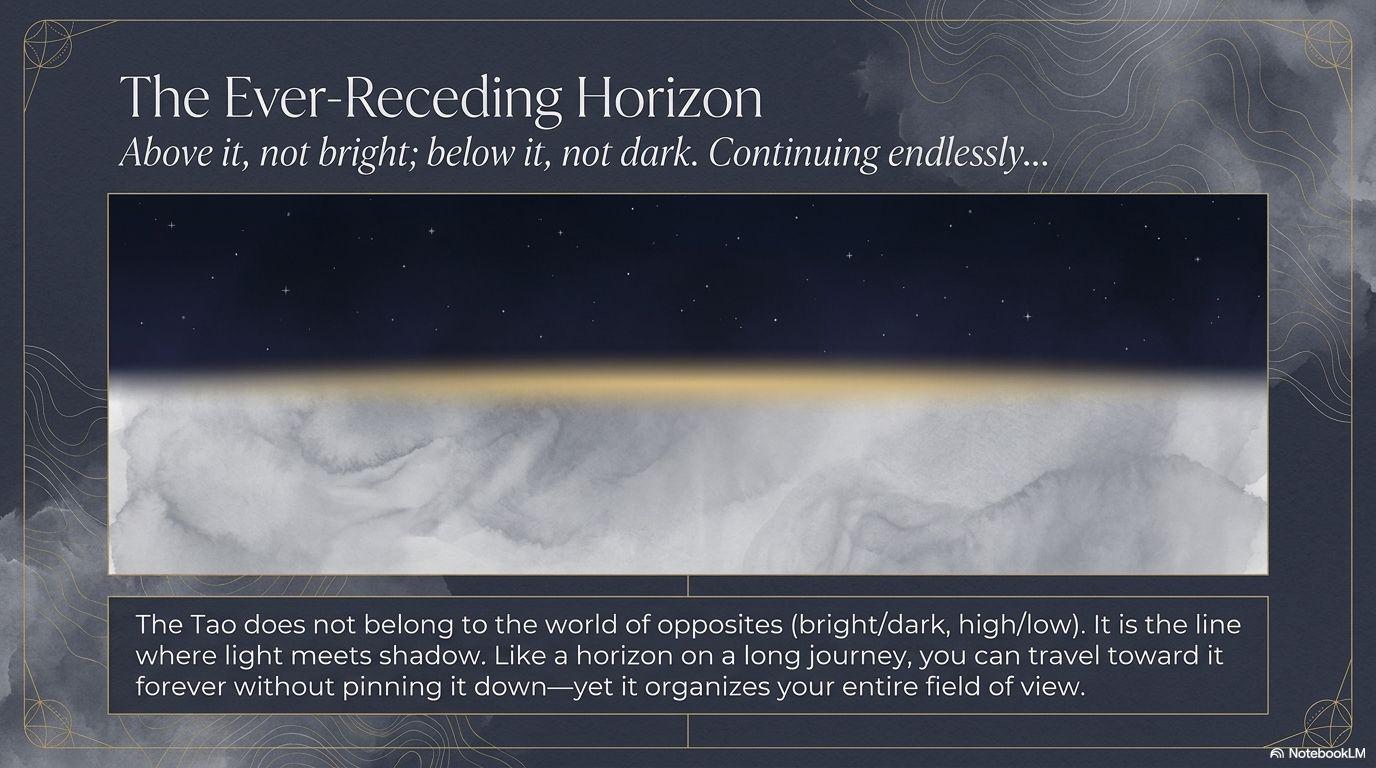
“Above it, not bright; below it, not dark. Continuing endlessly, cannot be named. It returns back into nothingness.”
The Traveler’s Insight: The Tao does not belong to the world of opposites—bright vs. dark, high vs. low, here vs. there. It is before and beyond all such distinctions. On a long journey, think of the horizon. It is neither fully bright nor fully dark. It is the line where light meets shadow, always receding as you approach. The Tao is like that horizon: you can travel toward it forever, but you will never pin it down. Yet it organizes your entire view.
“Continuing endlessly, cannot be named”—this is the feeling of a road that stretches beyond your map. You don’t have a name for what lies ahead, but you keep moving. The Tao is that unnamed, endless quality of the journey itself.
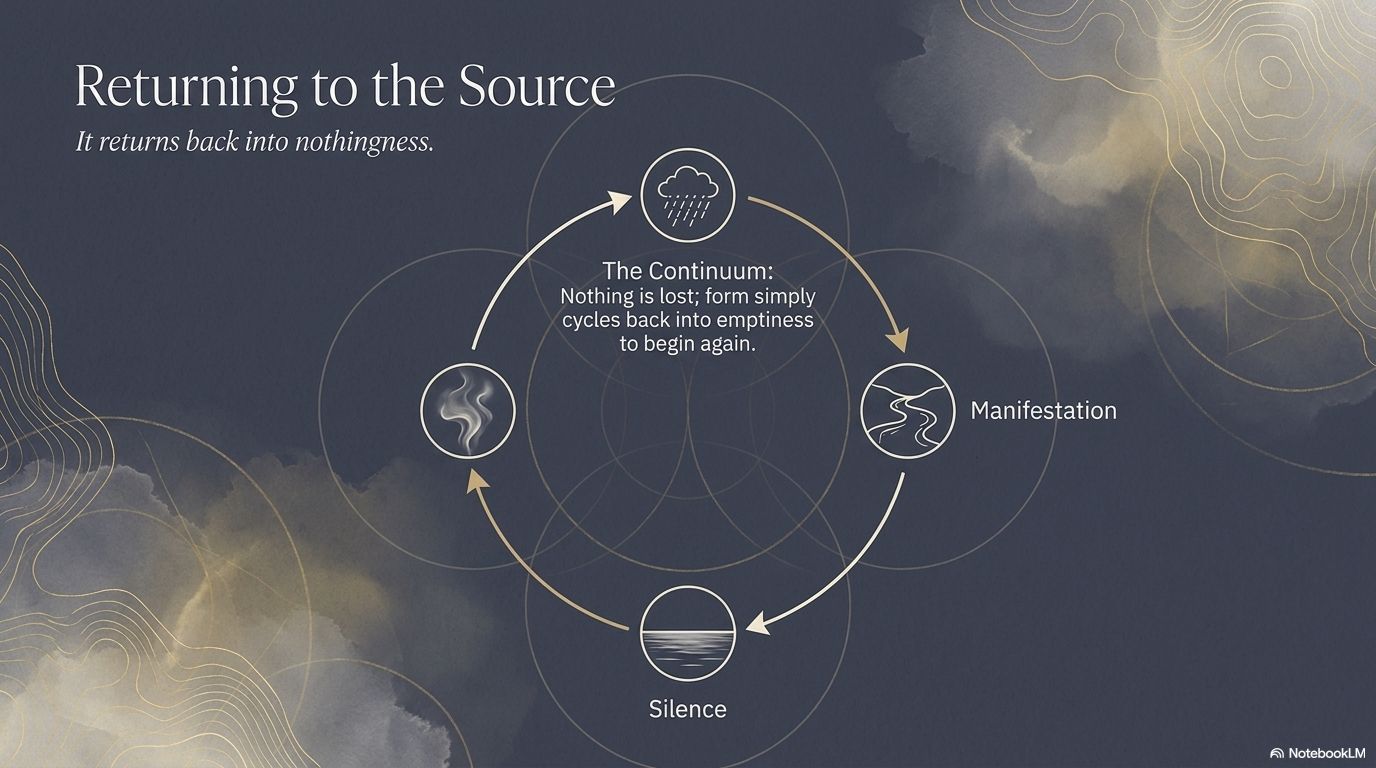
“It returns into nothingness”—like a river that flows to the ocean and then evaporates, only to fall as rain and begin again. The Tao cycles between manifestation and silence, form and emptiness. Nothing is lost; it simply returns to its source.
The Form of the Formless
Lao Tzu gives this mystery a name:
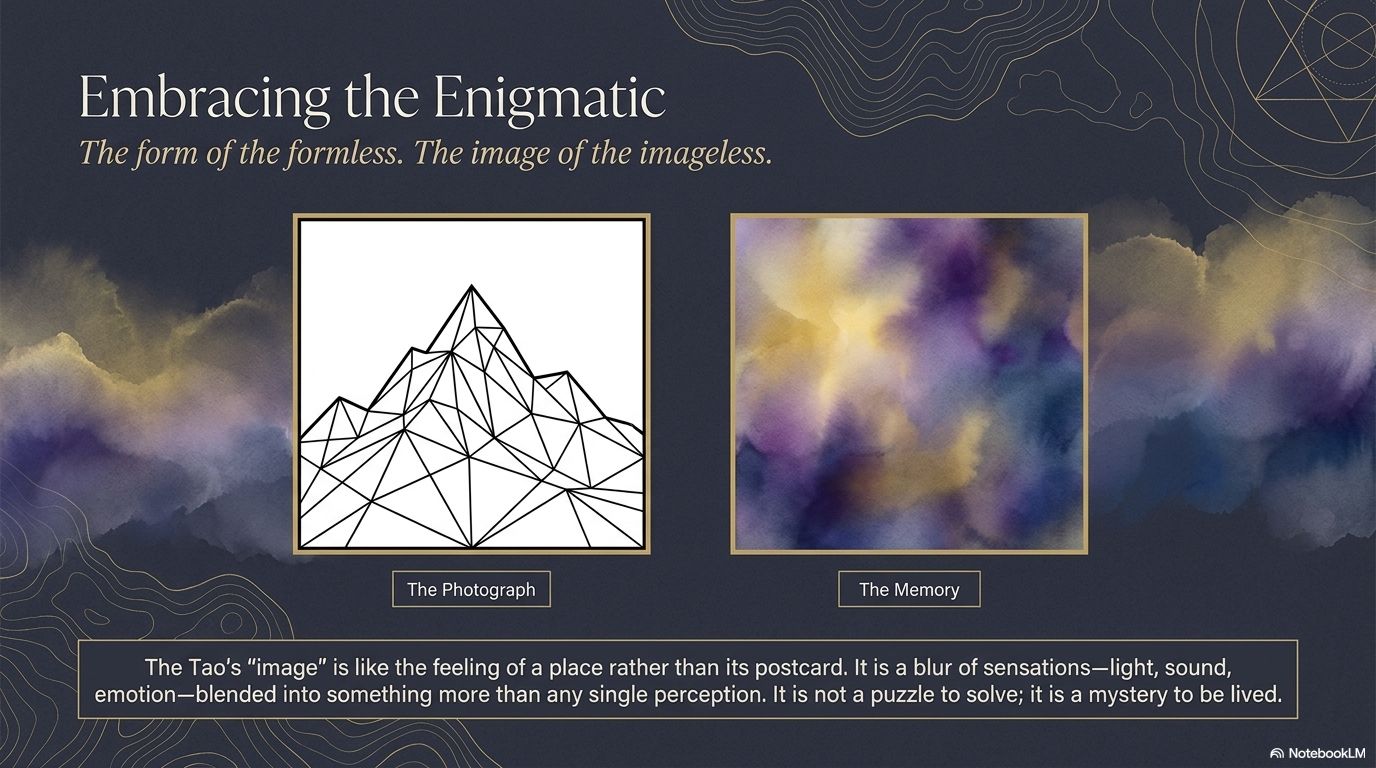
“Thus it is called the form of the formless, the image of the imageless. This is called enigmatic.”
The Traveler’s Insight: This is not a contradiction—it is an honest admission of language’s limits. The Tao has a kind of “form,” but it is the form of what has no fixed shape, like water or mist or memory. It has an “image,” but it is the image of what cannot be captured in a photograph—like the feeling of a place rather than its postcard.
Think of the most memorable moment of a trip. Can you hold it? Can you see it clearly? It may be a blur of sensations—light, sound, emotion—all blended into something more than any single perception. That is the “enigmatic.” It is not a puzzle to solve; it is a mystery to be lived.
No Front, No Back: The Tao Surrounds You
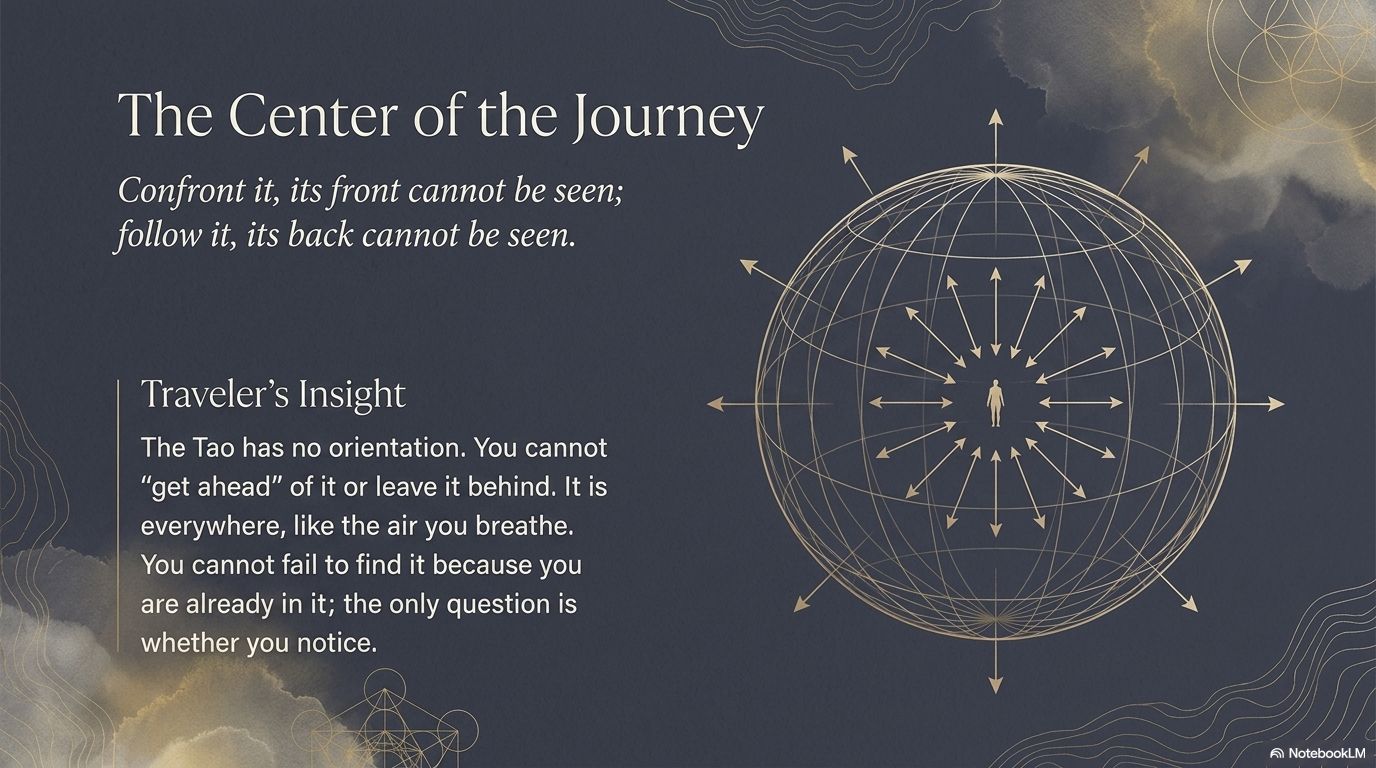
“Confront it, its front cannot be seen; follow it, its back cannot be seen.”
The Traveler’s Insight: The Tao has no orientation. It is not an object you can approach from one side and leave from another. It is everywhere, like the air you breathe or the ground you walk on. On a journey, you cannot “get ahead” of the Tao or leave it behind. It is the context of every step.
This means you cannot fail to find it. You are already in it. The only question is whether you notice.
Wielding the Ancient Tao for Today’s Journey
The chapter ends with a practical payoff:
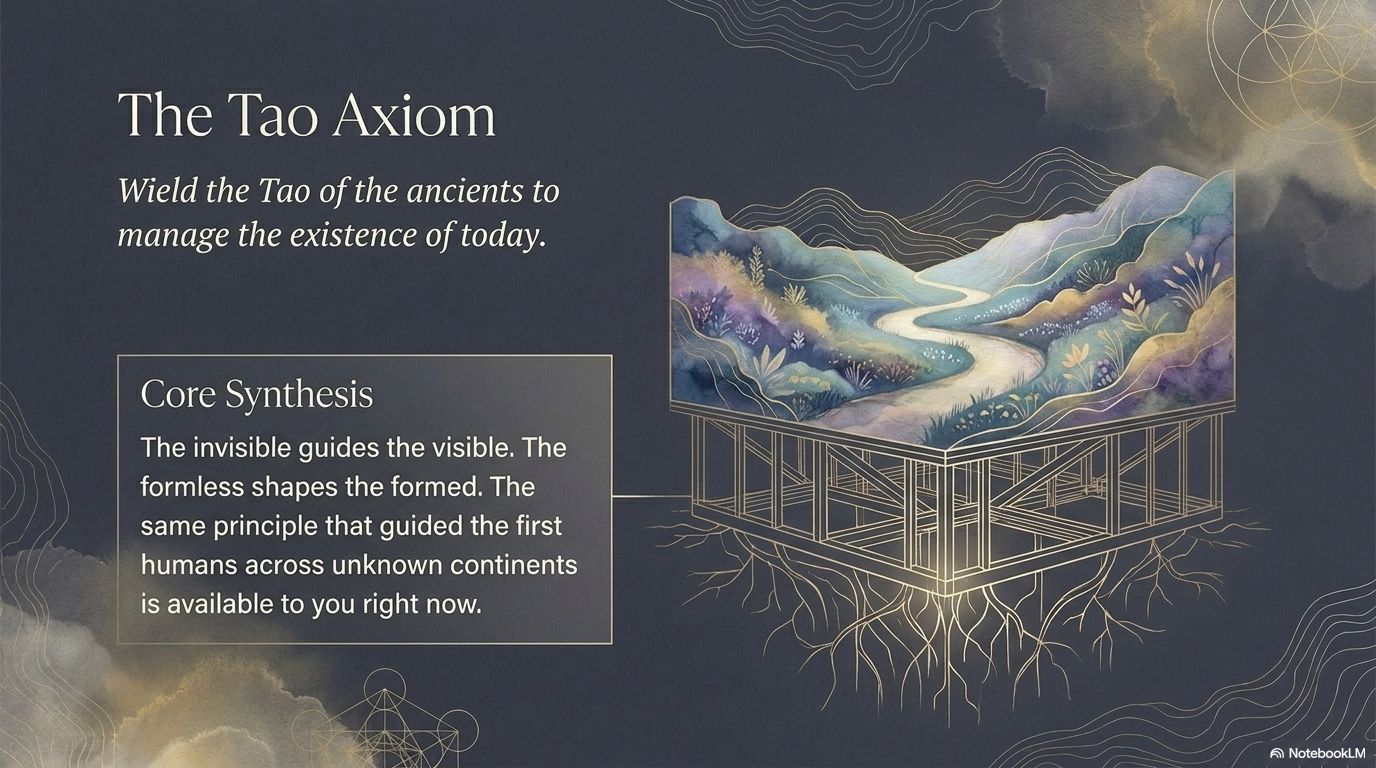
“Wield the Tao of the ancients to manage the existence of today. One can know the ancient beginning. It is called the Tao Axiom.”
The Traveler’s Insight: This is not a call to live in the past. It is a call to recognize that the same principle that guided the first humans across unknown continents—the same invisible, intangible, formless intelligence—is available to you right now. The “ancient beginning” is not a historical event; it is the eternal origin that is always present. When you align with the Tao, you are not learning something new; you are remembering something ancient that has never been lost.
The “Tao Axiom” is the fundamental principle: the invisible guides the visible. The formless shapes the formed. The empty makes the full useful. Trust this, and you can navigate any present moment with the wisdom of all time.
Your Roadmap: Traveling by the Invisible
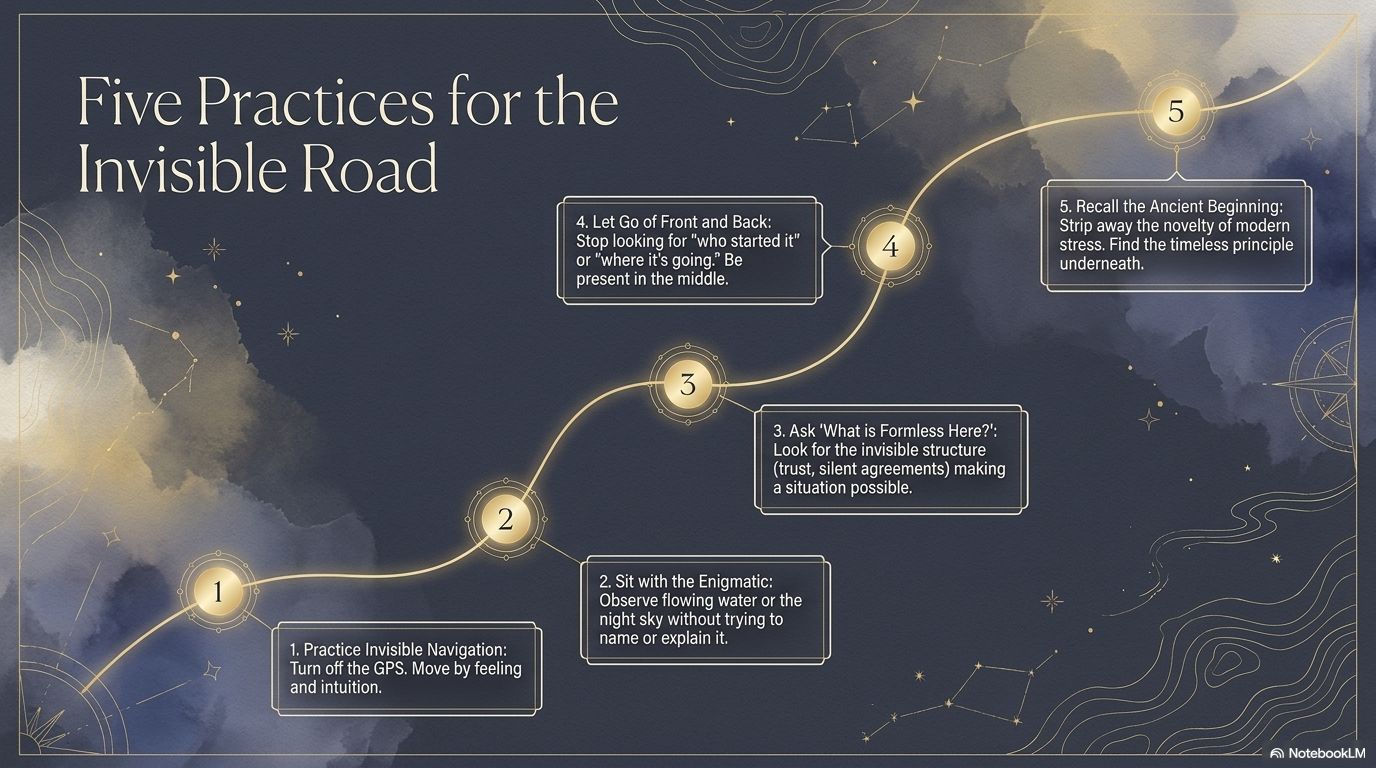
How do you apply Chapter 14 to your daily journey?
- Practice “Invisible Navigation”: For one walk or drive, turn off your GPS and put away the map. Move by feeling, by memory, by intuition. Notice how you find your way without clear sensory guidance. This is wielding the Tao.
- Sit with the Enigmatic: Spend ten minutes looking at something that cannot be fully grasped—a flame, flowing water, clouds, the night sky. Don’t try to name or explain. Simply let it be enigmatic. Let your mind rest in not-knowing.
- Ask “What is Formless Here?”: In any situation, ask: What is the invisible structure that makes this possible? The trust in a relationship, the unspoken agreement in a group, the silent ground beneath your feet. Honor the formless.
- Let Go of Front and Back: In an argument or a difficult conversation, stop trying to find “who started it” (front) or “where it’s going” (back). Simply be present in the middle, where the Tao flows.
- Recall the Ancient Beginning: When facing a modern problem—technology stress, information overload—pause and ask: What would the ancient Tao teach? Strip away the novelty. Find the timeless principle underneath.
The Destination: The Invisible Is the Only True Guide
Tao Te Ching Chapter 14 frees us from the tyranny of the visible. It reminds us that the most important things on any journey—purpose, meaning, direction, connection—cannot be seen, heard, or touched. They can only be lived.
The traveler who learns to trust the invisible walks differently.
- They are not anxious about missing a sign because they follow the signless.
- They are not frustrated by fog or darkness because they know the Tao is as present in obscurity as in light.
- They are not lost when the map fails because they have discovered the ancient axiom: the formless is the source of all form.
Wield this wisdom today. And every road becomes the Tao.
Continue Your Journey: Having encountered the enigmatic Tao beyond senses, Chapter 15 describes the ancient masters—hesitant as crossing a winter stream, attentive as a guest, and gradually unfolding like melting ice.
For the foundational maps of this philosophy, explore our Foundations of the Tao series.