I. Introduction: The Stone of Hidden Light
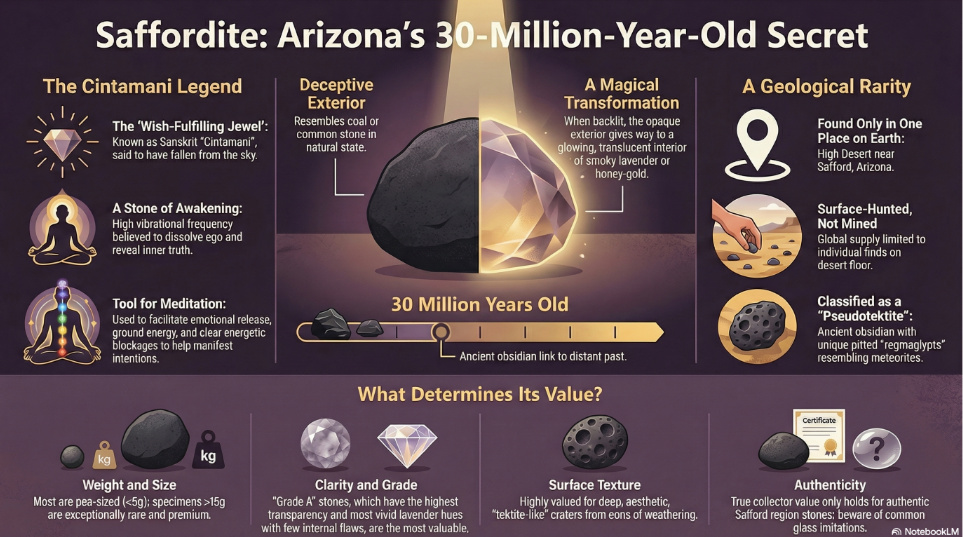
Walking through the arid, sun-scorched basins of the Arizona desert, you might step over a small, dark pebble without a second thought. At first glance, a Saffordite looks like a piece of weathered coal or a common river stone—matte, dark, and unassuming. However, the moment you pick it up and hold it against the sun, a transformation occurs that borders on the magical. The opaque exterior gives way to a translucent, glowing interior of smoky lavender or honey-gold. This “hidden light” is the hallmark of the Saffordite, a stone that has captivated geologists, gem collectors, and spiritual seekers alike. Its value isn’t just in its appearance, but in its status as a 30-million-year-old mystery that bridges the gap between the terrestrial and the cosmic.
II. Geological Rarity: A Treasure Found in Only One Place
Authentic Saffordites are among the most geographically restricted stones on Earth. They are found exclusively in a small, rugged region of the High Desert near Safford, Arizona. Unlike diamonds or quartz, which are mined in massive quantities across multiple continents, Saffordites are “surface-hunted.” They are not found in deep veins but are scattered across the desert floor, revealed only by the shifting sands and seasonal rains.
Scientifically, they are classified as an ancient form of obsidian or “pseudotektite,” dating back roughly 30 million years. While they share the glass-like composition of volcanic obsidian, their unique weathering and pitted surface—resembling the “regmaglypts” found on meteorites—make them a distinct geological rarity. Because there is no commercial mining operation for these stones, the global supply is strictly limited to what individual hunters can find by hand, ensuring their value remains high as demand grows.
III. The Visual Allure: More Than Meets the Eye
What truly sets the Saffordite apart is its optical transformation. In its raw state, the stone features a “skin” characterized by moon-like craters and dimples, a texture created by eons of desert wind and water erosion. This rugged exterior protects a remarkably clear, gem-quality interior.
When back-lit, the stone reveals a sophisticated color profile. Most specimens display a smoky lavender hue, though rarer pieces may exhibit hints of amber or gray. Unlike common black obsidian, which remains opaque even in thin slices, a high-grade Saffordite allows light to pass through it with startling clarity. This contrast between the “rough” outer shell and the “pure” inner light has made it a favorite for artisanal jewelry and high-end specimen collections.
IV. The Metaphysical “Cintamani” Legend
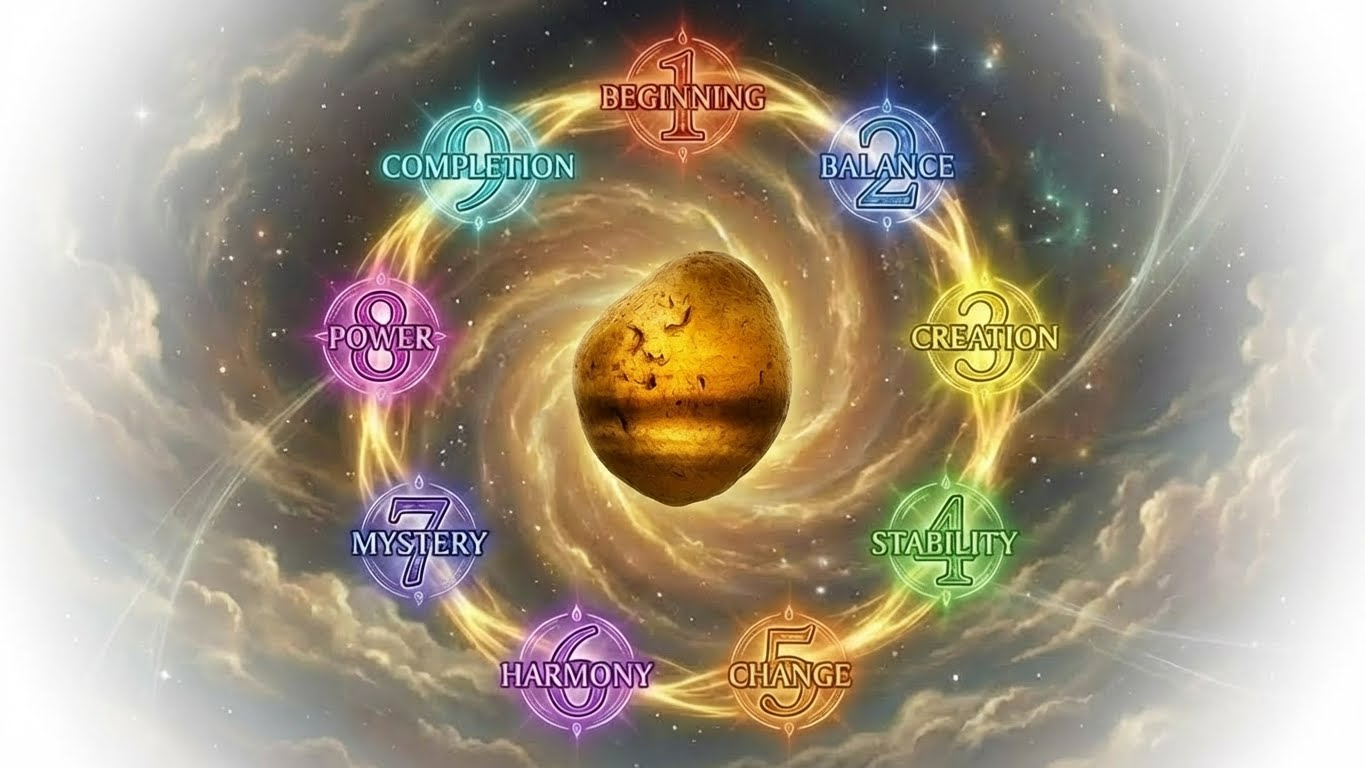
Beyond its physical properties, Saffordite is steeped in ancient lore. In many spiritual circles, it is referred to as the Cintamani stone, a Sanskrit term meaning “the wish-fulfilling jewel.” According to legend, Cintamani stones are fragments of a celestial body that fell to Earth, carrying a frequency that aids in human evolution.
Metaphysical practitioners value Saffordite as a “Stone of Awakening.” It is believed to possess a high vibrational frequency that helps the wearer peel back the layers of the ego—much like the stone’s own rough exterior—to reveal the inner truth of the soul. It is frequently used in meditation to facilitate emotional release and grounding. By balancing the intense “fire” of its volcanic origins with the “earth” energy of its long dormancy in the desert, Saffordite is considered one of the most powerful tools for manifesting intentions and clearing energetic blockages.
V. What Determines the Market Value of Saffordite?
Not all Saffordites are created equal, and several factors dictate their market price:
- Weight and Size: The vast majority of Saffordites found are the size of a pea, weighing under 5 grams. Finding a specimen over 15 grams is a rare event, and stones of this size command a significant premium.
- Clarity and Grade: “Grade A” stones are those with the highest transparency and the most vivid lavender tones. If a stone has fewer internal bubbles or “smoke,” its value increases.
- Surface Texture: Collectors often look for “tektite-like” pitting. Stones that feature deep, aesthetic craters are highly sought after by those who appreciate the natural artistry of desert weathering.
- Authenticity: Because of their popularity, imitation glass is sometimes sold as Saffordite. Authentic stones from the Safford region are the only ones that hold true collector value.
VI. Conclusion: A Piece of Ancient History in Your Hand
Owning a Saffordite is like holding a 30-million-year-old secret. It is a stone that represents the endurance of the Arizona desert, the violent beauty of volcanic history, and the spiritual aspirations of humanity. Whether you are a geologist fascinated by its unique “pseudotektite” structure, a collector looking for a rare specimen, or a practitioner seeking a high-vibration meditation tool, the Saffordite offers something truly unique.
Experience the Light of the Desert
Ready to experience the high-frequency energy of the desert for yourself? Browse our hand-selected, authentic collection of Arizona Saffordites. Every stone is unique, ethically sourced from the Safford region, and waiting to find its keeper.