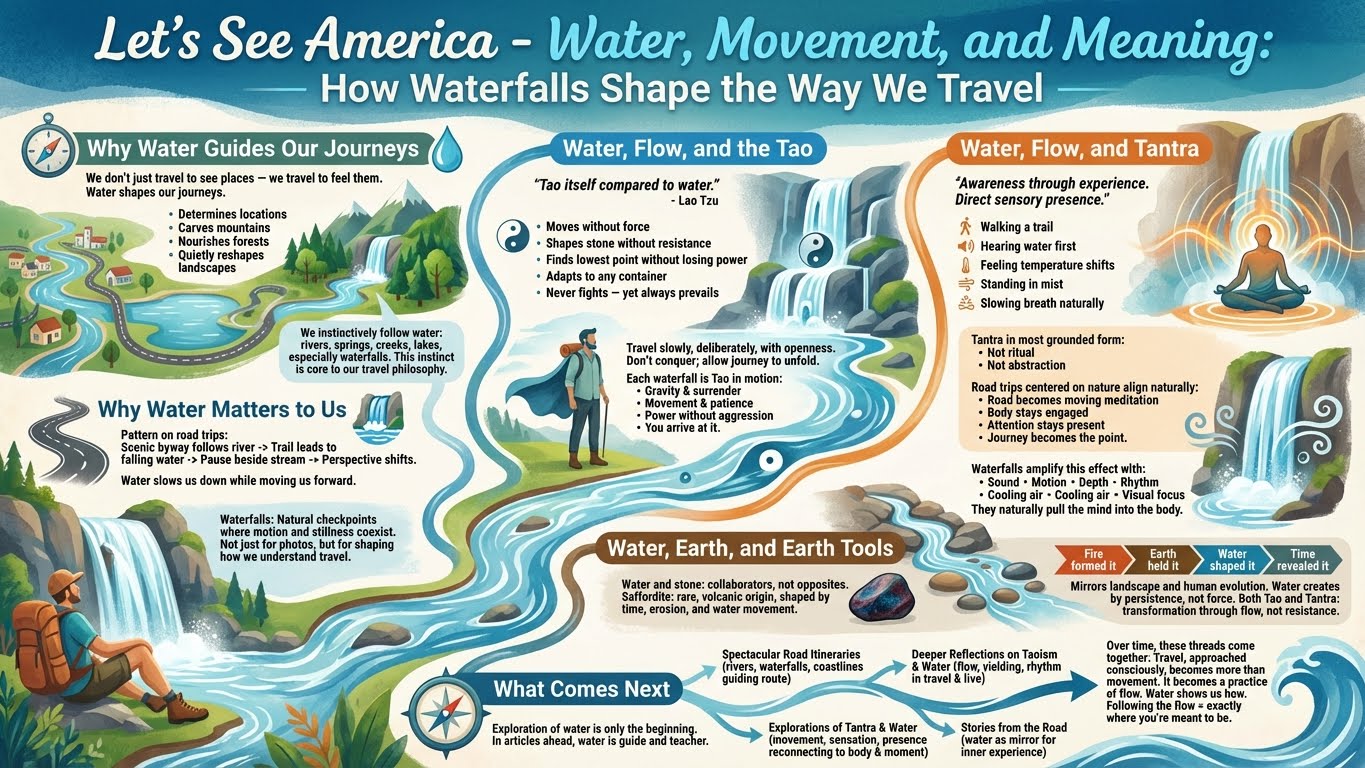
The most memorable journeys aren’t the ones where you packed everything, saw everything, and did everything. They’re the ones where you knew when to stop—when to put the camera down, when to turn back, when to simply sit and let the moment be enough. Tao Te Ching Chapter 9 teaches that wisdom lies not in accumulation but in knowing when enough is enough.
Executive Summary
Chapter 9 of the Tao Te Ching teaches the traveler one of the hardest skills on any journey: recognizing the moment of “enough.”
Through images of an overflowing cup, an over‑sharpened blade, and rooms filled with gold and jade, the chapter warns that excess inevitably leads to loss. The traveler who keeps pushing for one more vista, one more achievement, or one more peak moment ends up exhausted and diminished.
True mastery lies in restraint—stopping before things spill, pacing oneself, and traveling light in both possessions and identity.
The chapter’s final teaching—“withdraw when the achievement is complete”—redefines success as the ability to step back gracefully rather than cling to the summit. For the traveler, this becomes a practical roadmap: stop short, release unnecessary burdens, descend after peak moments, and leave each place better than you found it.
In practicing timely withdrawal, the traveler discovers a deeper freedom and a journey that can continue without strain.
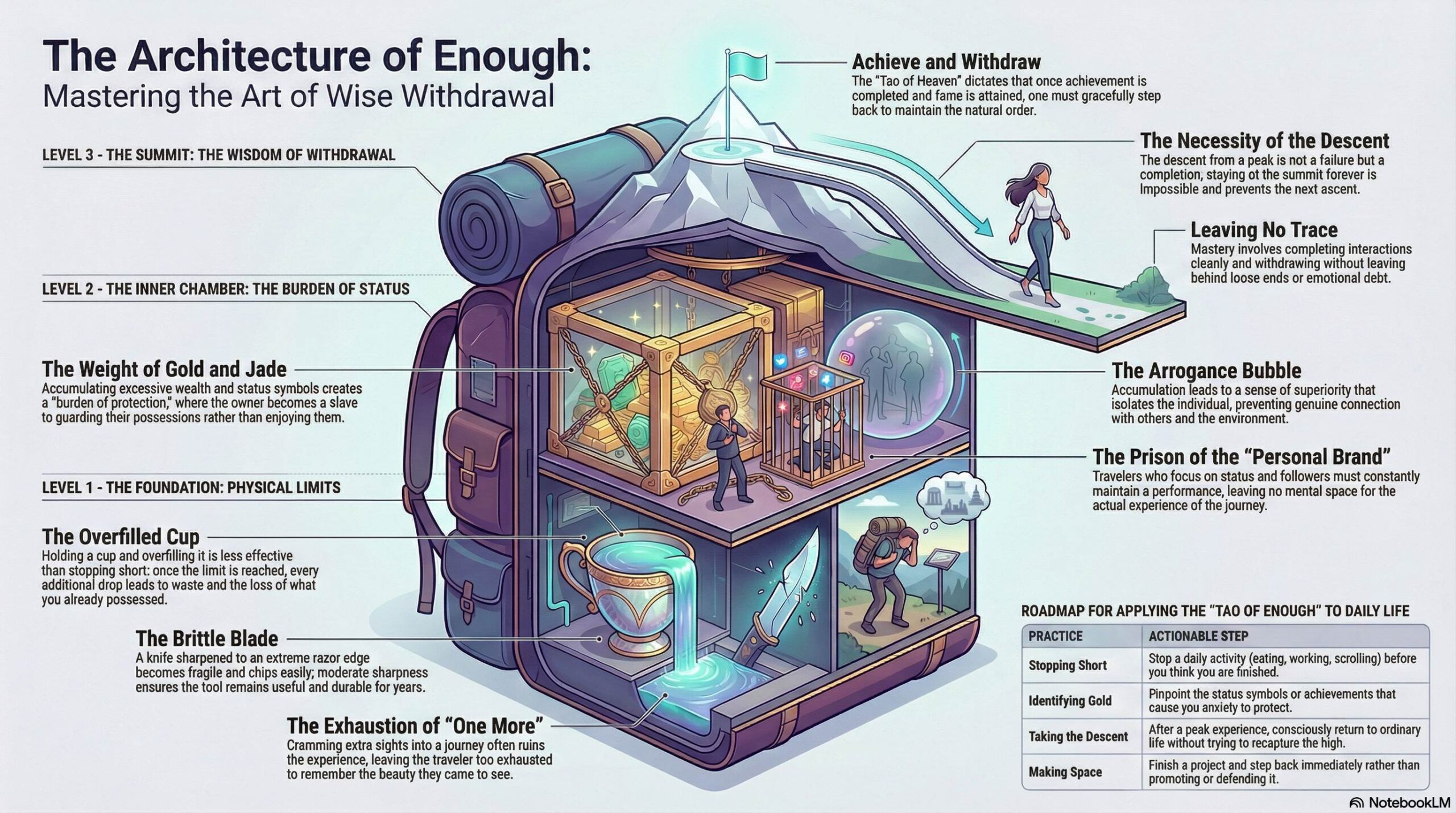
Chapter 9
Holding a cup and overfilling it
Tao te ching 9 Of 81
Cannot be as good as stopping short
Pounding a blade and sharpening it
Cannot be kept for long
Gold and jade fill up the room
No one is able to protect them
Wealth and position bring arrogance
And leave disasters upon oneself
When achievement is completed, fame is attained
Withdraw oneself
This is the Tao of Heaven
The Traveler’s Greatest Challenge
After learning to flow like water in Chapter 8, Tao Te Ching Chapter 9 delivers a crucial warning about the dangers of excess. Where water teaches us to move freely, this chapter teaches us to stop wisely. It addresses one of the most difficult skills on any journey—knowing when you’ve reached the point of “enough.”
For the traveler on life’s road, this chapter is a gentle but firm reminder: the path that continues forever without rest leads nowhere. The cup that keeps filling eventually spills. The blade that never stops sharpening eventually breaks. True mastery includes the art of timely withdrawal.
The Cup That Overflows: Why More Isn’t Better
The chapter opens with two vivid images of excess:
“Holding a cup and overfilling it cannot be as good as stopping short. Pounding a blade and sharpening it cannot be kept for long.”
Imagine yourself on a road trip, filling your water bottle at a stream. When it’s full, you stop. If you keep pouring, you waste water, wet your hands, and lose what you already had. The simple act of stopping at “full” preserves everything.
The Traveler’s Insight: How many journeys have been ruined by one too many stops? The traveler who tries to cram in “just one more” vista often arrives home exhausted, unable to remember any of them clearly. The photographer who keeps shooting long after the light has faded ends up with nothing but dark images. The adventure seeker who pushes past exhaustion into danger turns a wonderful trip into a cautionary tale.
The blade metaphor is equally powerful. A knife sharpened to razor thinness may be incredibly sharp—but it will dull quickly, chip easily, and break under pressure. The blade kept at a reasonable sharpness serves faithfully for years.
The Traveler’s Insight: In travel, this is the difference between burning out and lasting. The traveler who paces themselves, who doesn’t demand peak experience every moment, who allows for rest and ordinary time—this traveler can journey indefinitely. The one who demands every day be extraordinary, every meal unforgettable, every vista breathtaking, soon finds that nothing breathes anymore. They’ve sharpened themselves past usefulness.
The Burden of Gold and Jade: Why Less Is Freedom
The chapter then shifts to wealth and status:
“Gold and jade fill up the room; no one is able to protect them. Wealth and position bring arrogance and leave disasters upon oneself.”
Imagine packing for a long journey. Every item you add increases your burden. Every “treasure” you carry requires watching, protecting, worrying about. The traveler with one small bag moves freely, spontaneously, without fear. The traveler laden with valuables moves slowly, anxiously, always looking over their shoulder.
The Traveler’s Insight: This isn’t just about physical possessions. It’s about the weight of achievement, status, and reputation. The traveler who has built a “personal brand” must constantly maintain it, defend it, perform it. The traveler who has accumulated followers must keep feeding the algorithm. These are “gold and jade” that fill the room of your mind until there’s no space left for actual experience.
“Arrogance” here isn’t just about pride—it’s the natural result of accumulation. When you have much, you begin to believe you deserve much, that you are separate from and superior to those with less. This arrogance isolates you from the very experiences that would nourish you. On the road, the arrogant traveler stays in chain hotels, eats at recommended restaurants, and never connects with the place they’re visiting. They travel surrounded by a bubble of their own importance, and they return having never really left home.
The Wisdom of Withdrawal: The Tao of Heaven’s Way
The chapter concludes with its deepest teaching:
“When achievement is completed, fame is attained—withdraw oneself. This is the Tao of Heaven.”
This is the counterintuitive heart of Taoist wisdom. In a world that says “push forward,” the Tao says “know when to step back.” In a culture that says “never quit,” the Tao says “completion is the signal for withdrawal.”
The Traveler’s Insight: Consider the perfect moment on any journey. You’ve reached a summit. The view is extraordinary. The light is golden. You feel profound peace and accomplishment. What do you do next? If you’re wise, you stay for a while, breathe it in, and then—you go down. The descent is not failure; it’s the natural completion of the ascent.
The traveler who cannot descend, who must cling to the peak, who tries to make the summit moment last forever—this traveler misses the rest of the journey. They also miss the truth that the summit only exists because of the valley. The descent is not defeat; it’s the necessary movement that allows the next ascent.
“Withdraw oneself” doesn’t mean disappearing from life. It means not overstaying your welcome—in situations, in roles, in achievements. It means knowing when your contribution is complete and gracefully making space for what comes next. It means not clinging to the applause, not demanding encores, not trying to remain forever at center stage.
Your Roadmap: Practicing Timely Withdrawal
How do you bring the wisdom of Chapter 9 into your daily journey?
- Practice “Stopping Short”: In one area of your life today—eating, working, talking, scrolling—stop before you think you’re finished. Leave a little on the table. Notice how it feels to have “enough” rather than “more.”
- Identify Your “Gold and Jade”: What are you carrying that requires protection? What status symbols, achievements, or possessions are you constantly worried about losing? Consider what your journey might look like without their weight.
- Complete Something and Step Back: Finish a project, achieve a goal, or reach a milestone—and then deliberately take a step back. Resist the urge to immediately start promoting it, defending it, or building the next thing. Let it simply be complete.
- Take the Descent: After a peak experience—a beautiful sunset, a meaningful conversation, a personal breakthrough—consciously practice the descent. Return to ordinary life without trying to prolong or recapture the peak. Trust that valleys make peaks possible.
- Leave the Campsite Better: The Tao of withdrawal means leaving no trace—not just physically, but emotionally and relationally. Complete your interactions cleanly. Don’t leave behind loose ends or unexpressed feelings. Withdraw with grace.
The Destination: Freedom in Completion
Tao Te Ching Chapter 9 offers a vision of freedom that runs counter to everything our culture teaches. It suggests that completion, not continuation, is the mark of wisdom. That knowing when to stop is more valuable than knowing how to keep going. That the ability to withdraw is the sign of mastery, not failure.
The traveler who masters this art moves through the world differently. They don’t cling to experiences, so every experience is fresh. They don’t hoard achievements, so every achievement is freeing. They don’t overstay their welcome anywhere, so they’re always welcome everywhere.
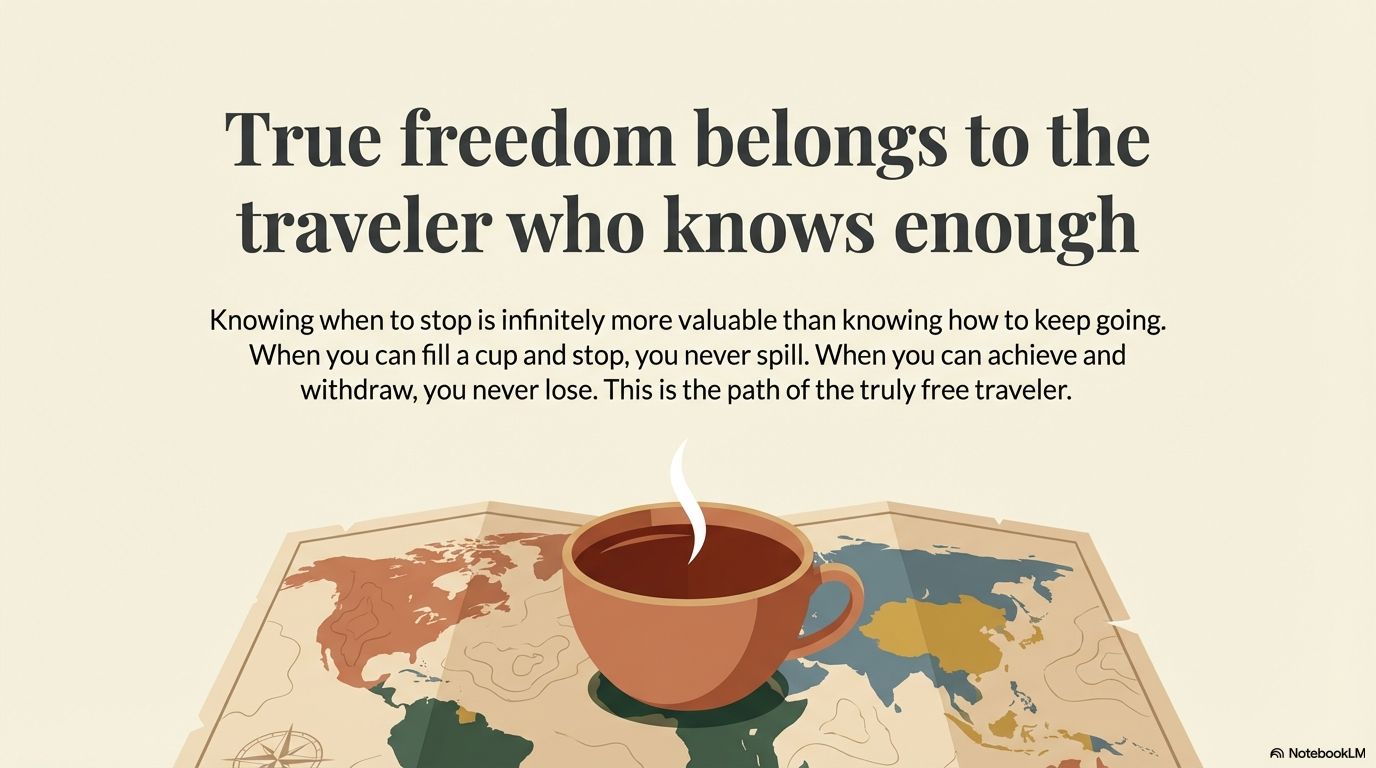
When you can fill a cup and stop, you never spill. When you can achieve and withdraw, you never lose. This is not the way of the world—but it is the Tao of Heaven. And it is the path of the truly free traveler.
Continue Your Journey: Having learned the art of timely withdrawal, Chapter 10 explores the integration of body and soul—how to carry yourself with the wholeness of an infant and govern with the gentleness of a mother.
For the foundational maps of this philosophy, explore our Foundations of the Tao series.