The longest-lasting roads weren’t built to impress anyone. The most unforgettable journeys aren’t the ones you take for yourself alone. Tao Te Ching Chapter 7 reveals a paradox at the heart of existence: by letting go of self-interest, you find the path that endures forever.
Executive Summary
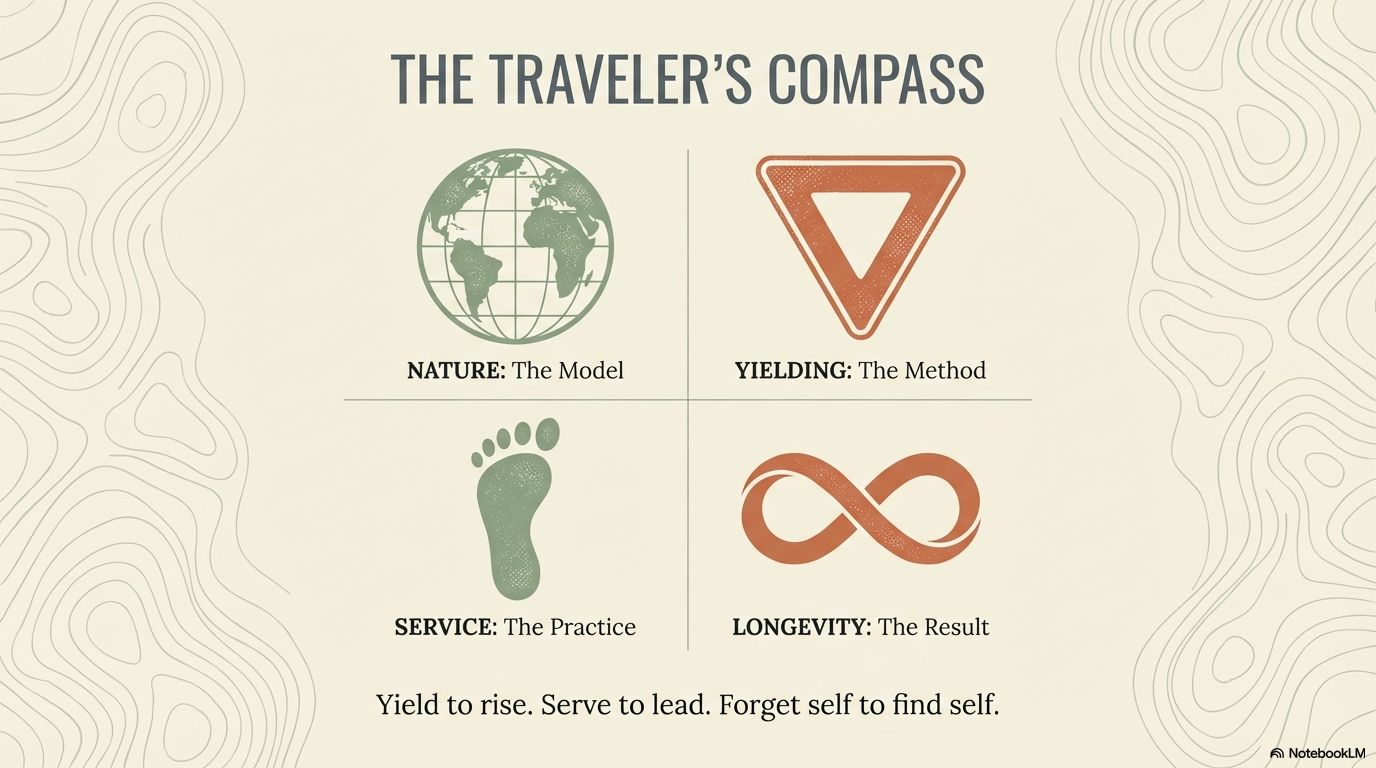
Traveling the Tao – Chapter 7 reframes Lao Tzu’s teaching on selflessness through the lens of the traveler’s path. Drawing from the observation that Heaven and Earth endure because they do not exist for themselves, the chapter argues that true longevity—of purpose, leadership, and personal fulfillment—arises from serving something larger than the self.
The text contrasts ego-driven striving with the quiet power of selfless presence. Just as the sky and earth support all travelers without demanding recognition, the sage traveler leads by stepping back, guides by listening, and influences by embodying humility. This selflessness becomes a paradoxical advantage: those who place themselves last naturally move to the front; those who release self-interest achieve their deepest aims.
Applied to modern life, the chapter offers practical guidance: yield rather than force, travel to connect rather than collect, lead by following, and practice invisible service. By shifting from self-centered ambition to journey-centered awareness, the traveler discovers greater peace, clarity, and impact.
Ultimately, Chapter 7 invites readers to “become the road”—a steady, generous presence that others can walk upon. In doing so, one finds a path that never gets lost and a journey that endures long after the traveler has passed through.
Chapter 7
Heaven and Earth are everlasting
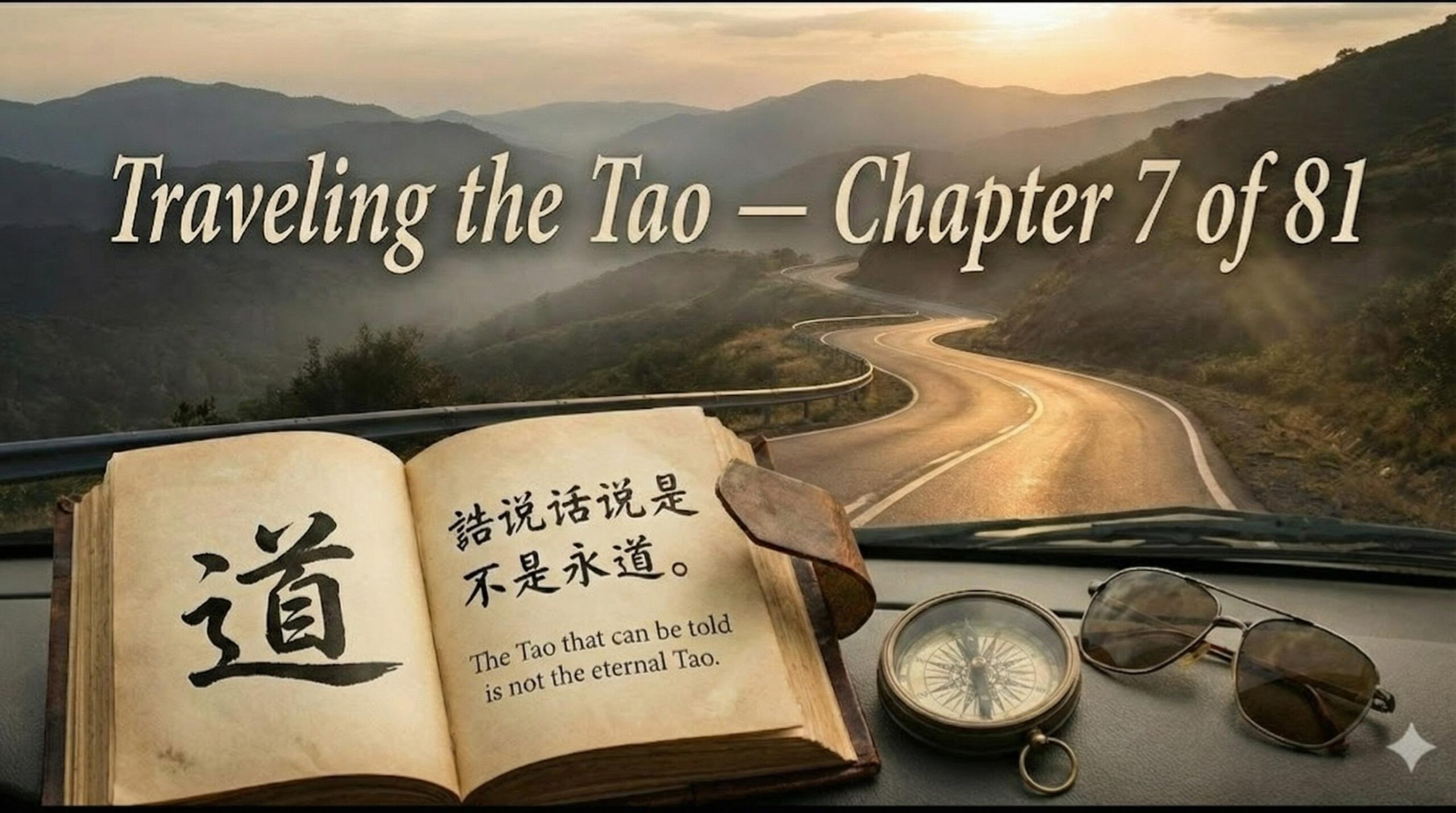
Tao te ching 7 Of 81
The reason Heaven and Earth can last forever
Is that they do not exist for themselves
Thus they can last forever
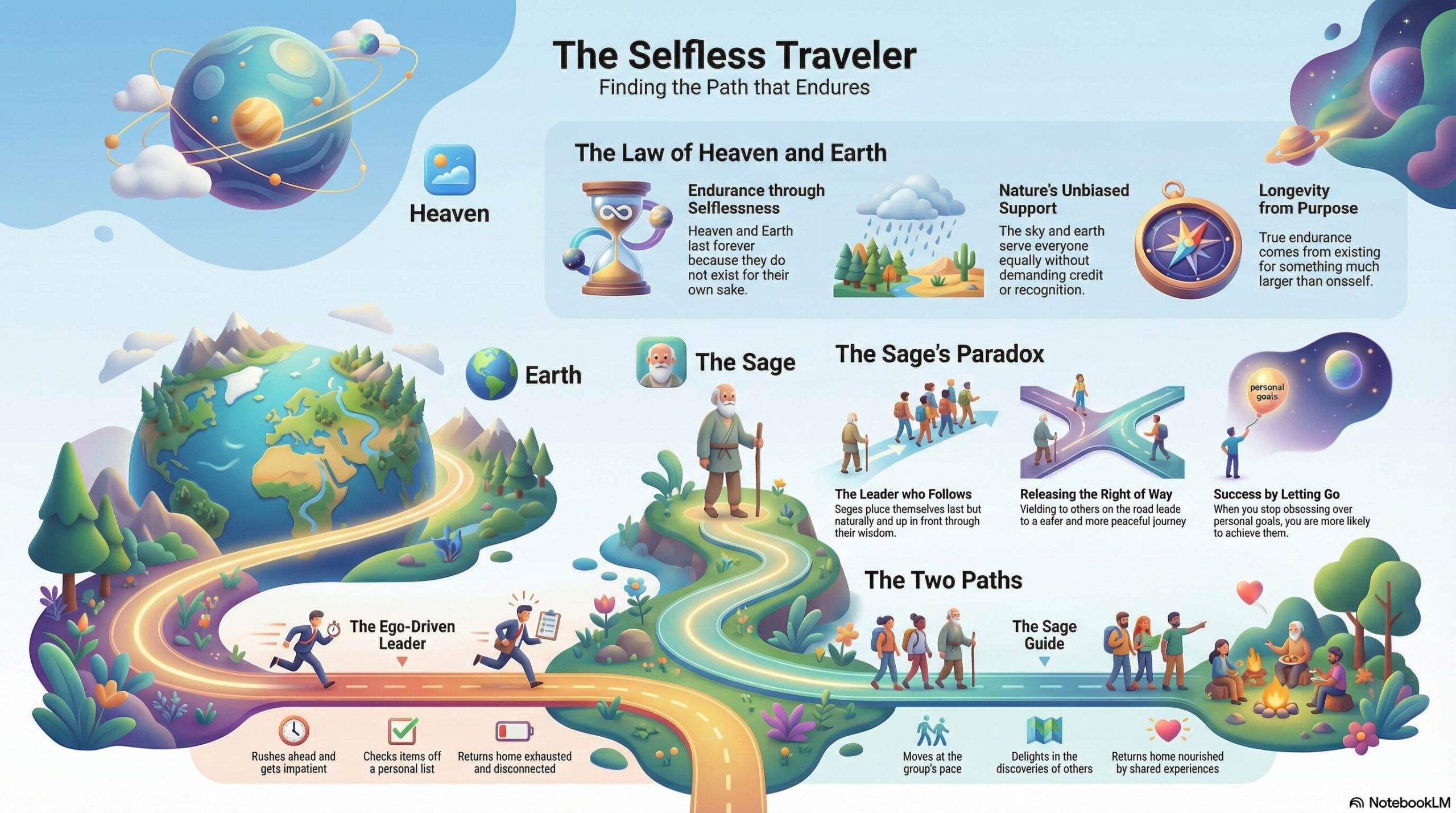
Therefore the sages:
Place themselves last but end up in front
Are outside of themselves and yet survive
Is it not due to their selflessness?
That is how they can achieve their own goals
The Paradox of the Everlasting Road
After exploring the nurturing Valley Spirit of Chapter 6, Tao Te Ching Chapter 7 presents a profound teaching about longevity and selflessness. Using the simplest observation—that Heaven and Earth endure forever—Lao Tzu draws a revolutionary conclusion: they last precisely because they don’t exist for their own sake.
For the traveler on life’s road, this chapter offers a map to a different kind of success. It suggests that the most fulfilling journeys, the ones that truly last in memory and meaning, are those undertaken with a spirit of selflessness. The path that claims nothing for itself becomes the path that carries everyone.
Heaven and Earth: The Original Selfless Travelers
The chapter opens with an observation so obvious we might miss its depth:
“Heaven and Earth are everlasting. The reason Heaven and Earth can last forever is that they do not exist for themselves. Thus they can last forever.”
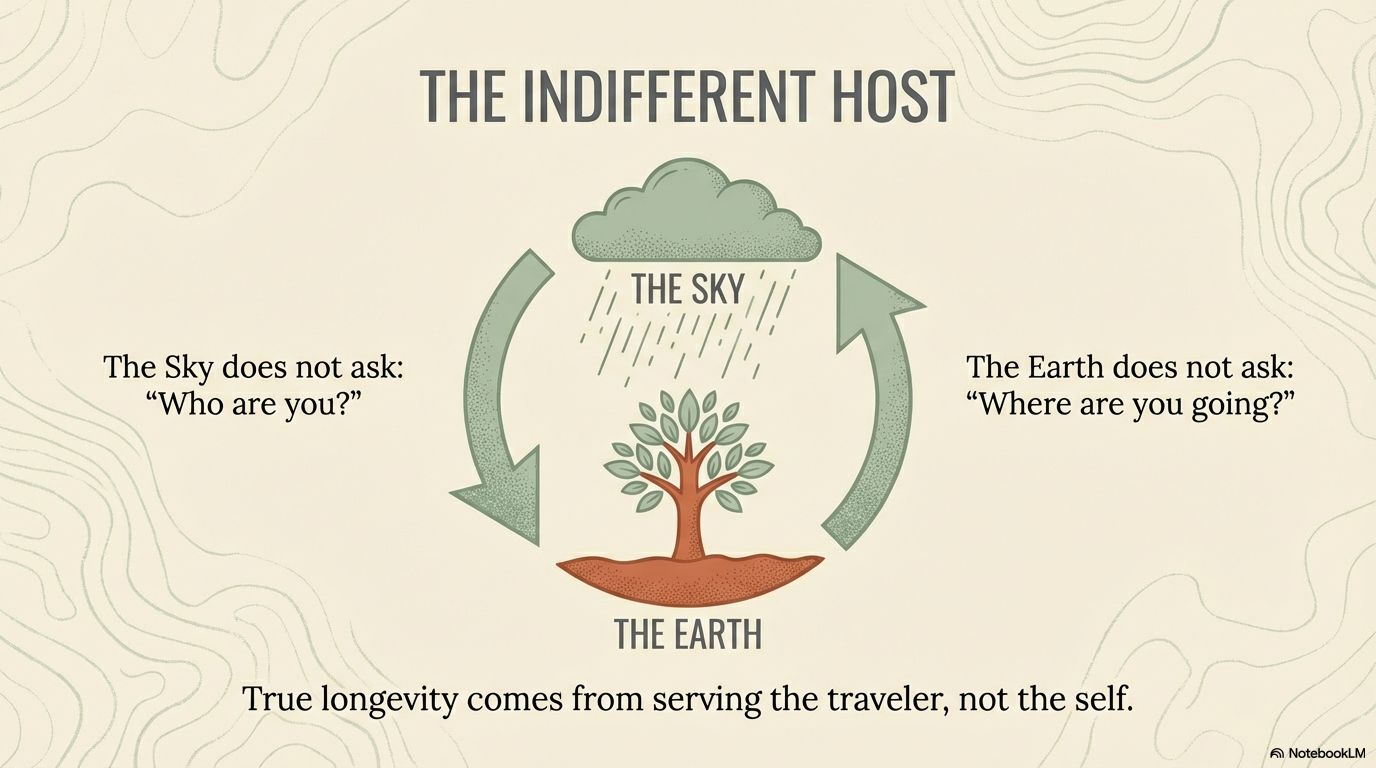
Consider the sky above your road trip. It doesn’t ask who you are or where you’re going. It simply provides its vastness equally to the semi-truck driver and the hitchhiker, to the sunrise and the storm. The earth beneath your tires doesn’t question your destination. It supports every mile without demanding credit or recognition.
The Traveler’s Insight: The most enduring places we visit aren’t the ones that shout for attention. They are the quiet valleys, the ancient forests, the vast deserts that have simply been for millennia, serving all who pass through without expectation. They teach us that true longevity—in places, in relationships, in purpose—comes from existing for something larger than oneself.
The Sage Traveler: The Guide Who Follows
The chapter then applies this cosmic truth to human conduct:
“Therefore the sages: Place themselves last but end up in front; Are outside of themselves and yet survive.”
This is the essence of Wu Wei in leadership and life. Think of the finest guides you’ve ever encountered on a journey—whether a professional tour leader, an elder in a community, or a friend who simply knew the way.
The Traveler’s Insight: A great guide doesn’t strut at the front demanding attention. They walk with you, sometimes even behind you, ensuring you have the space to discover the path yourself. They place themselves last in importance, yet they end up “in front” because everyone naturally follows their wisdom. They are “outside themselves”—not obsessed with their own comfort or agenda—and yet they “survive” because they are woven into the fabric of every traveler’s memory.
Consider the difference between two types of trip leaders:
- The Ego-Driven Leader: Rushes ahead, checks items off their own list, gets impatient with stragglers, and returns home exhausted, wondering why the group seemed disconnected.
- The Sage Guide: Moves at the group’s pace, delights in others’ discoveries, shares credit freely, and returns home nourished by the shared experience, having “achieved their own goal” of a meaningful journey without ever grasping for it.
The Selfless Driver: Finding Your Way by Serving the Journey
This principle applies not just to leading others but to navigating your own life’s path.
1. Driving Without Demanding the Right of Way
On the road, the driver who constantly asserts their right of way, who must be first through every intersection, who honks and gestures at every delay—this driver arrives home frazzled and diminished. The driver who yields, who lets others merge, who flows with traffic rather than fighting it, arrives calm and safe. By placing themselves “last” in the competition for the road, they “end up in front” in the journey toward peace.
2. Traveling Beyond the Self
The most transformative journeys are those that take us “outside ourselves.” When you travel not to collect experiences for your resume but to connect with something larger—a culture, a landscape, a community—you return enlarged. You “survive” in the sense that you are reborn, carrying the places you visited within you forever.
3. The Paradox of Personal Goals
“Is it not due to their selflessness? That is how they can achieve their own goals.”
Here is the chapter’s ultimate gift: when you stop obsessing over your own goals, you actually achieve them. The traveler who seeks only to serve the journey—to be present, to learn, to connect—inevitably returns with the richest memories. The photographer who stops trying to capture the “perfect shot” and simply experiences the sunset often finds they’ve taken the best photo of their life without even trying.
Your Roadmap: Traveling the Path of Selflessness
How do you bring this wisdom of the everlasting road into your daily journey?
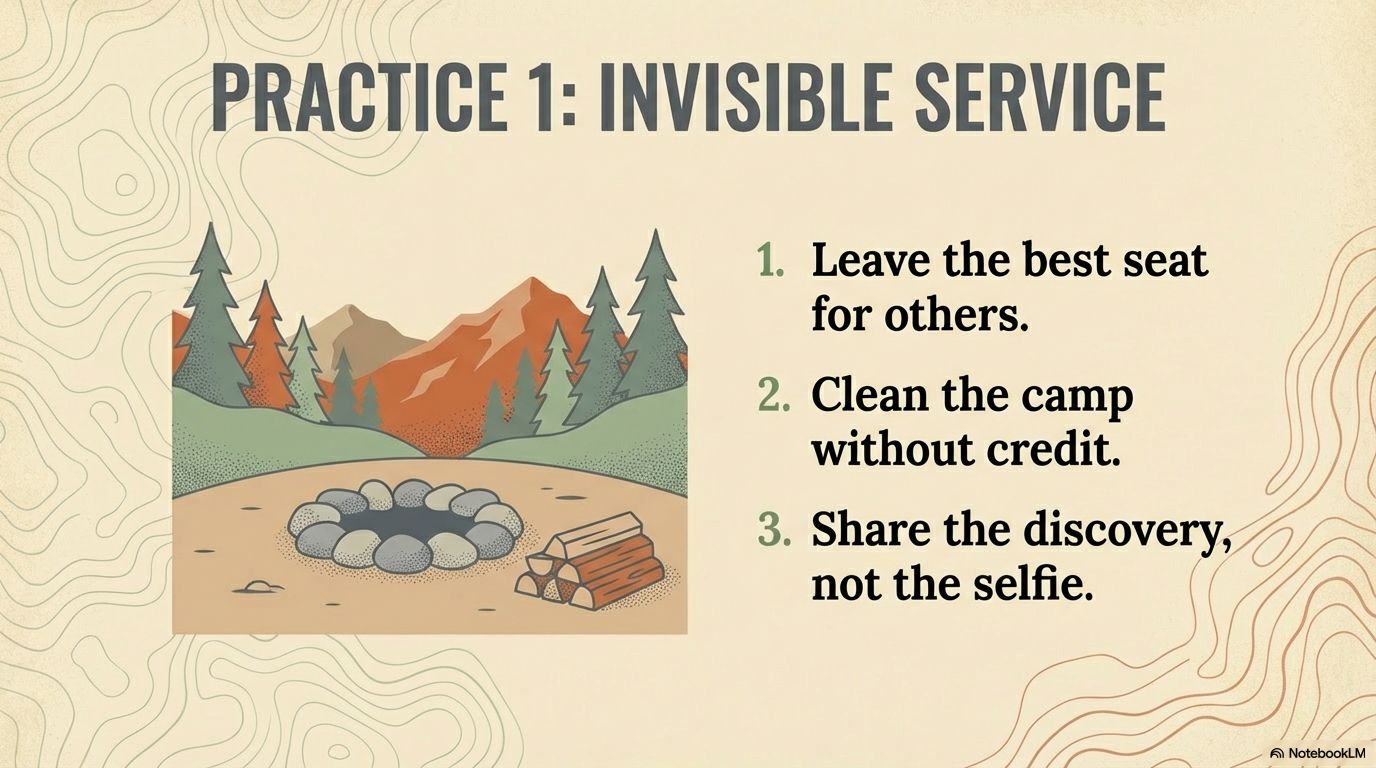
Practice “Invisible Service”
On your next trip or project, do one thing that serves others without expecting recognition. Let someone else have the better seat. Share a discovery without posting about it. Clean up a campsite without being asked. Feel the freedom of invisible contribution.
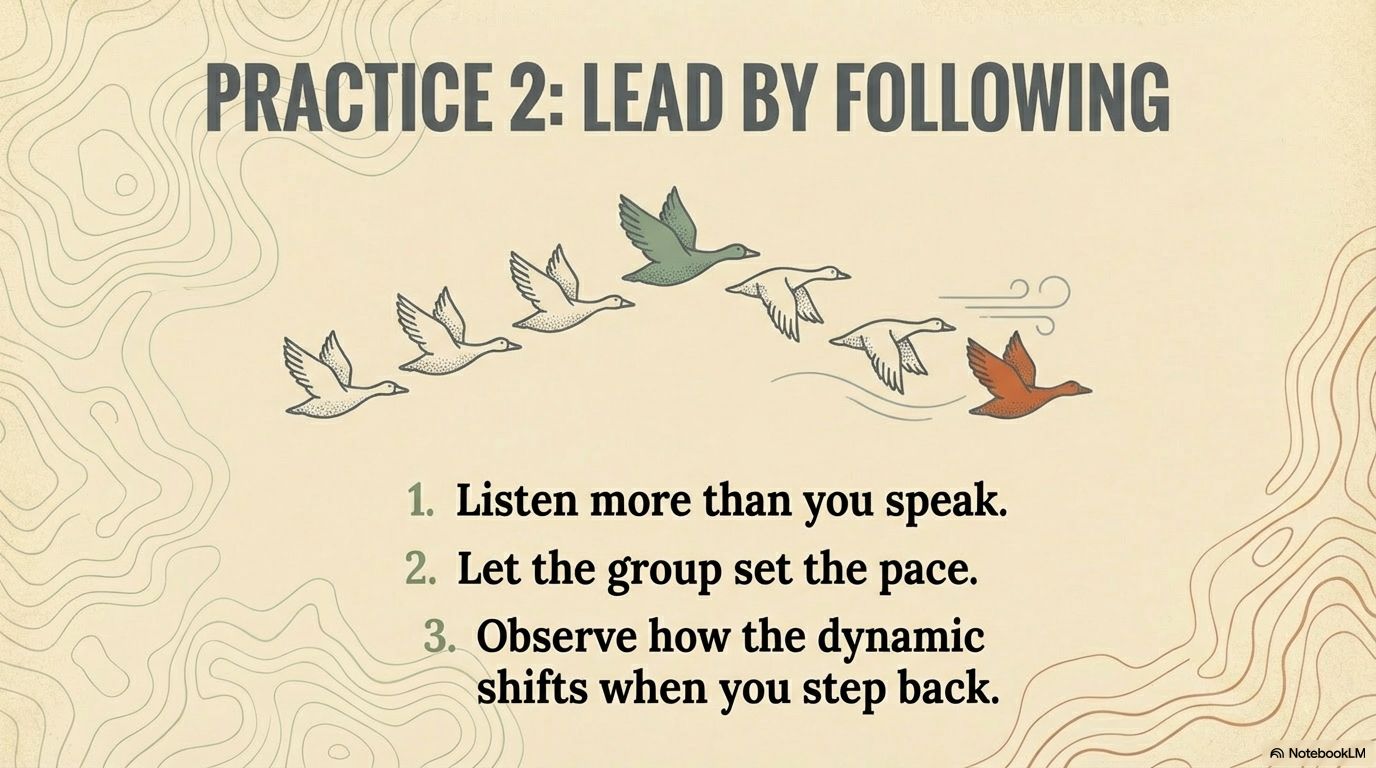
Lead by Following
In a group setting—work, family, travel—consciously step back. Listen more than you speak. Let others’ needs guide the pace. Notice how this shifts the dynamic and where it leads you.
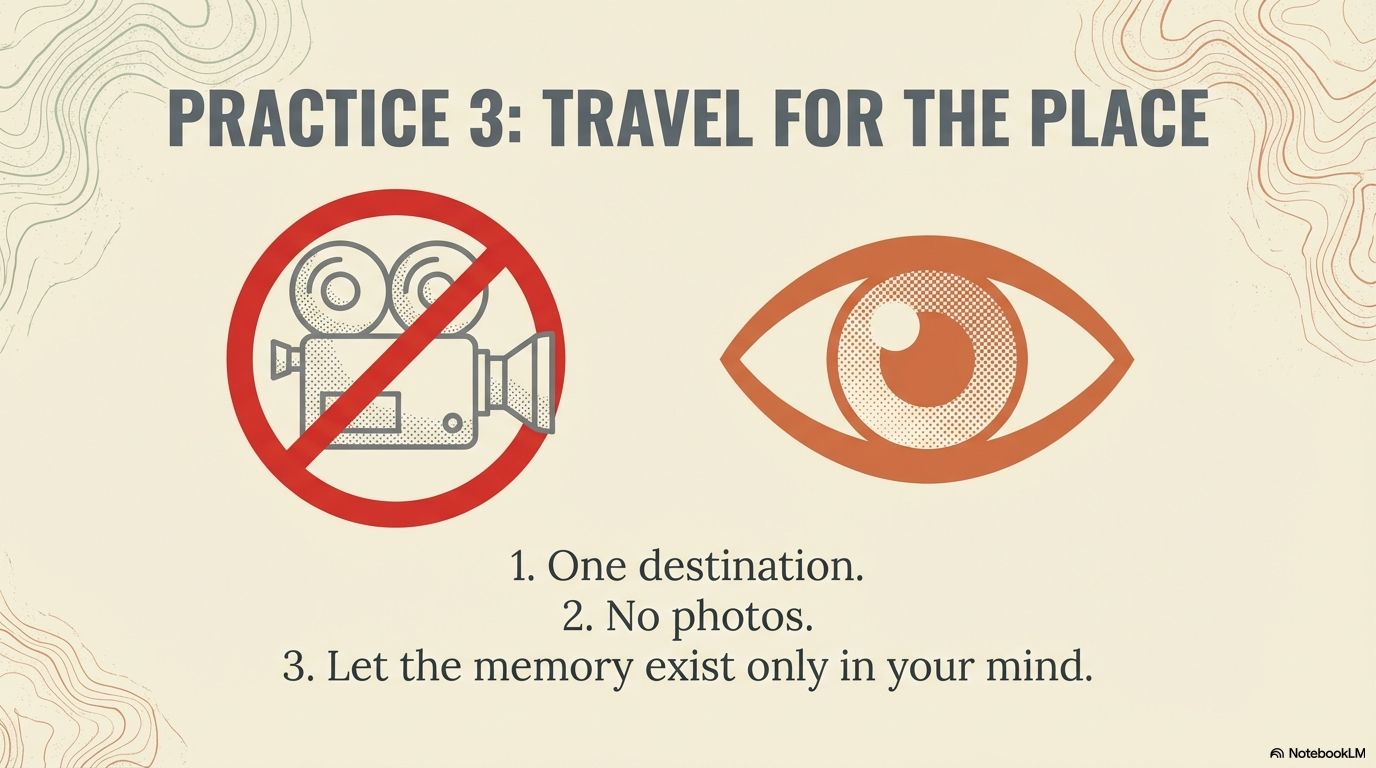
Travel for the Place, Not the Photo
Choose one destination and experience it fully without documenting it for others. Let it exist for itself, and let yourself exist for it. See what remains in your memory when the camera is absent.
Release One Goal
Identify a personal ambition you’ve been grasping tightly. For one day, hold it lightly. Focus instead on how your pursuit of that goal might serve others. Notice if the path toward it becomes clearer or less burdened.
The Destination: Becoming the Everlasting Road
Tao Te Ching Chapter 7 invites you to become like Heaven and Earth—a presence so selfless that you become indispensable. Not by asserting yourself, but by making yourself a vessel for something larger. Not by claiming the road, but by becoming the road itself for others to travel.
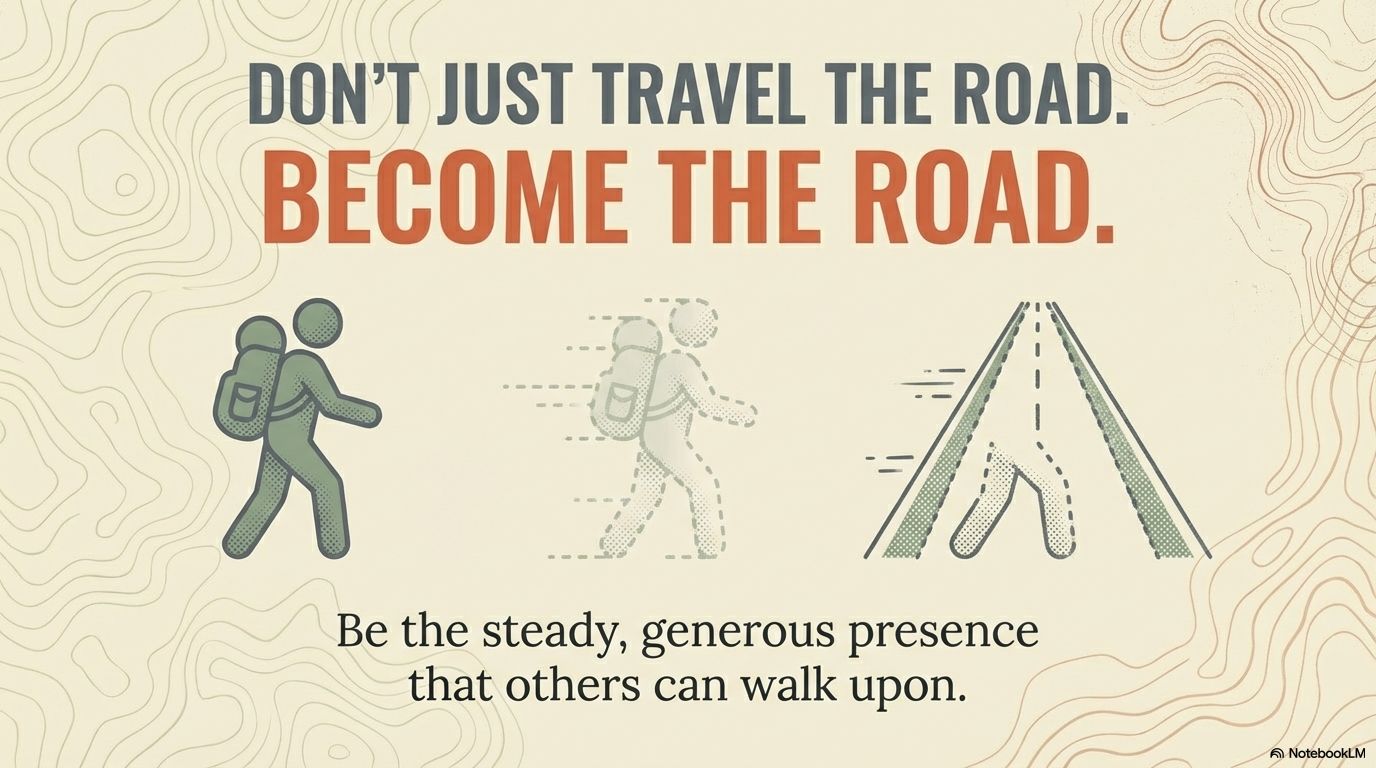
The sage traveler understands that the journey doesn’t belong to them. They are simply passing through, tending the path for those who will come after. And in this selfless tending, they discover they have walked further, seen more deeply, and arrived more fully than they ever could have by racing ahead alone.
When you travel not for yourself alone, you find that every road leads home, and every destination welcomes you as an old friend.
Continue Your Journey: Having learned the art of selfless travel, Chapter 8 explores the highest virtue—like water, which benefits all things without striving and seeks the low places others avoid. For the foundational maps of this philosophy, explore our Foundations of the Tao series.