Ethics feeling abstract? Discover the Taoist Three Treasures—Frugality, Humility, Compassion—as practical energy tools. Learn how to weave Jian, Humility, and Ci into your daily flow using the 5 Elements. Your guide to ethical living that feels effortless.
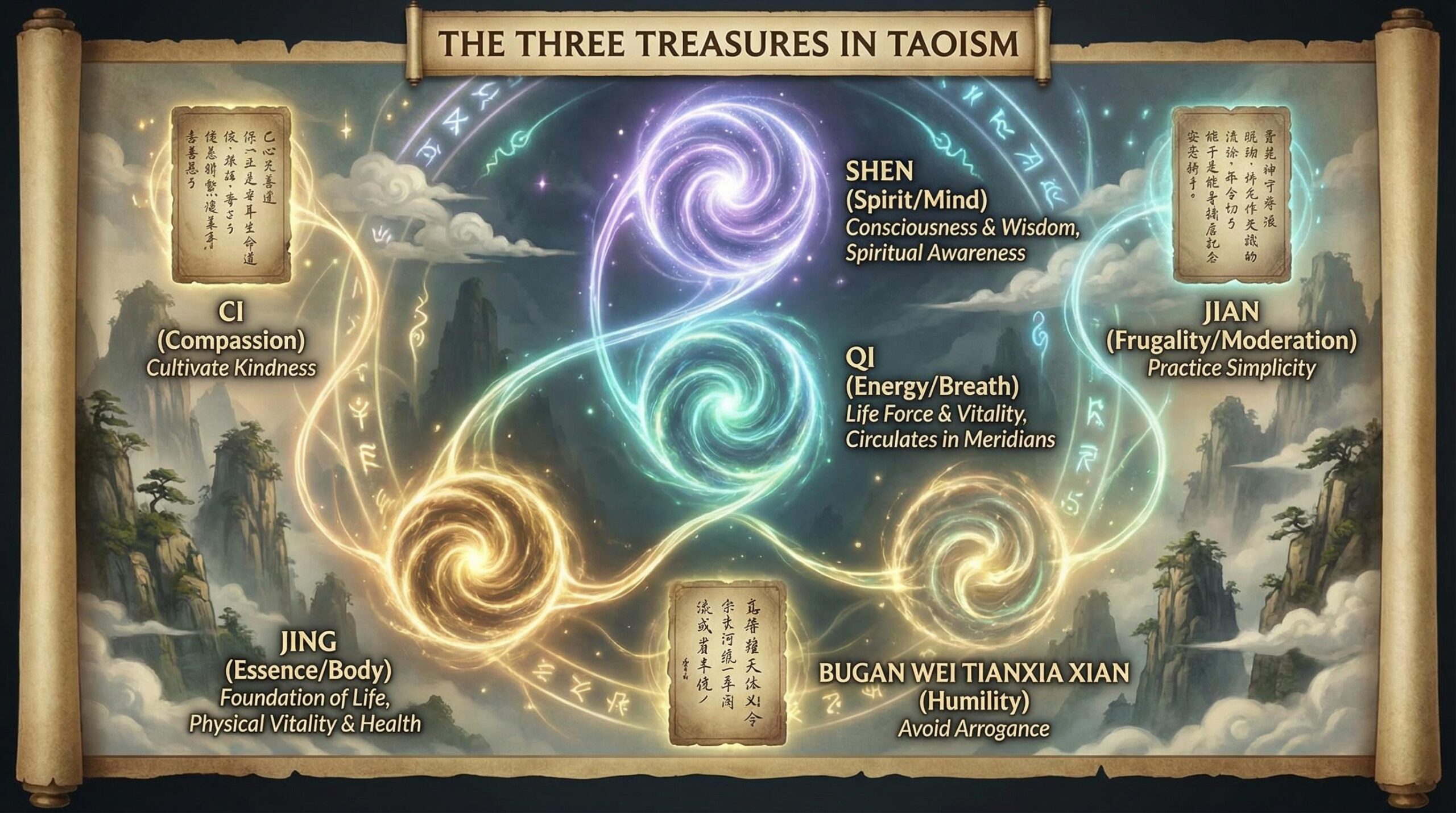
Executive Summary
This article explores the Taoist Three Treasures as practical instruments for managing personal energy throughout a standard day.
By framing frugality, humility, and compassion as functional tools rather than abstract moral rules, the text demonstrates how to align ethical behavior with the five elements and natural circadian rhythms.
Readers are encouraged to protect their mental clarity in the morning and practice ego-free interactions during peak social hours to prevent burnout. The material suggests that these ancient virtues act as protective guardrails that conserve vital life force and foster a sustainable lifestyle.
Ultimately, the source promotes a cyclical approach to intentional living where simple, daily shifts in awareness lead to long-term spiritual harmony and self-respect.
The Taoist Spiral of Harmony Series
This is the fourth article in a short series on how to apply the Taoist Spiral of Harmony in your modern, busy life. Read Article 1.

Beyond Rules: Ethics as Energy Management
We often think of ethics as a list of “shoulds”—moral obligations that cost us time, energy, or advantage. Taoism flips this script. In the spiral of harmonious living, ethics aren’t burdens; they are practical guardrails that protect your most precious resource: your energy (Qi).
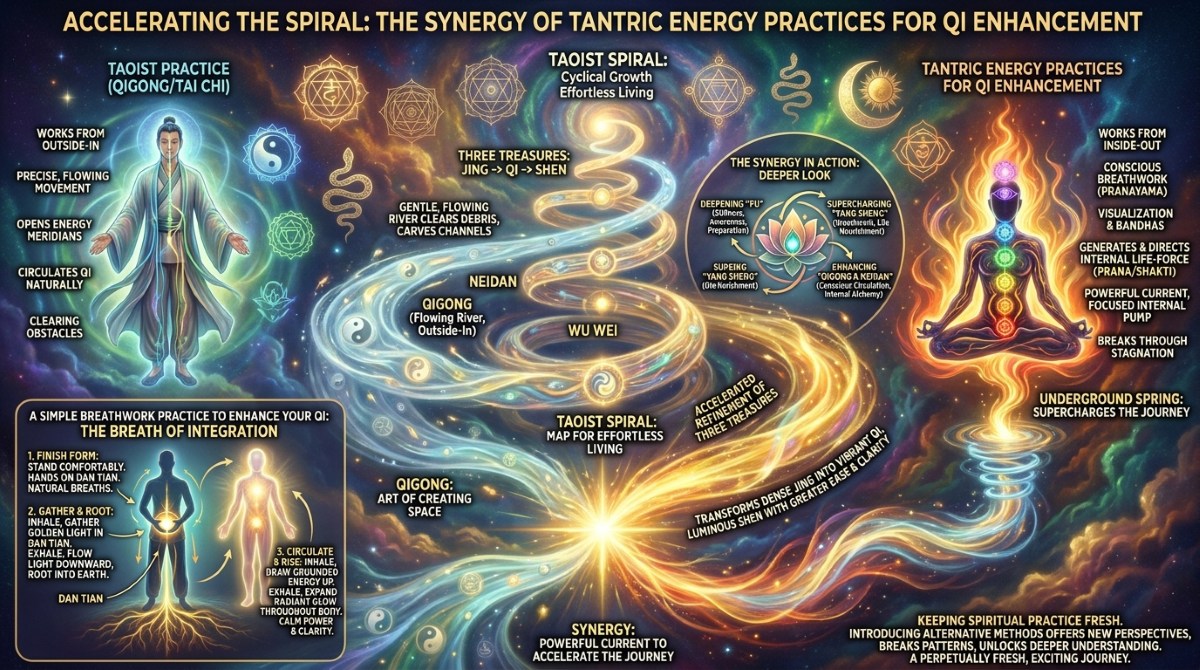
After establishing your foundational mindset (Pu) and daily nourishing habits (Yang Sheng), the next turn of the spiral brings you to the Three Treasures: your ethical compass for interacting with the world without burning out.
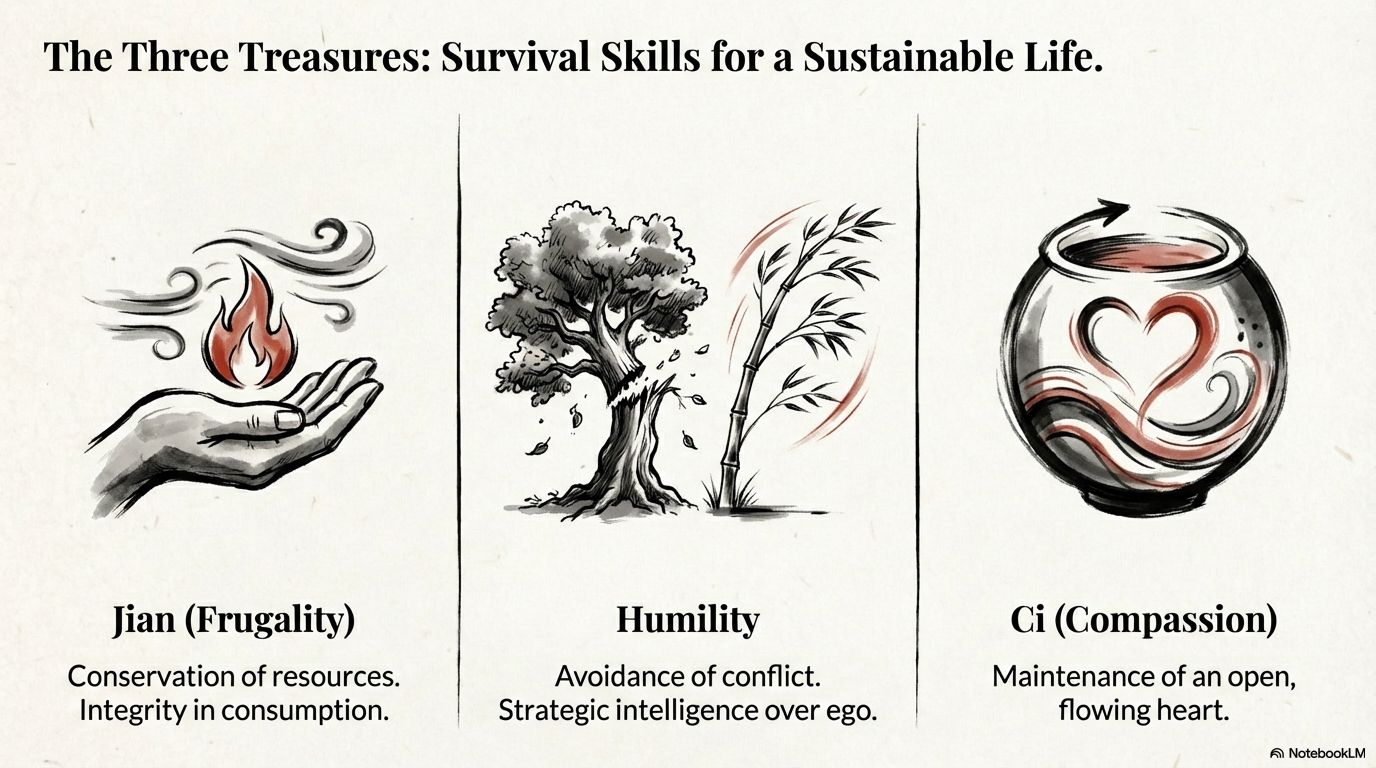
These Treasures aren’t lofty ideals. They are survival skills for a sustainable life:
- Jian (Frugality): Conservation of your resources.
- Humility: Avoidance of unnecessary conflict and strain.
- Ci (Compassion): Maintenance of an open, flowing heart.
Let’s translate these from philosophy into your daily schedule, using the 5 Elements as our timing guide.
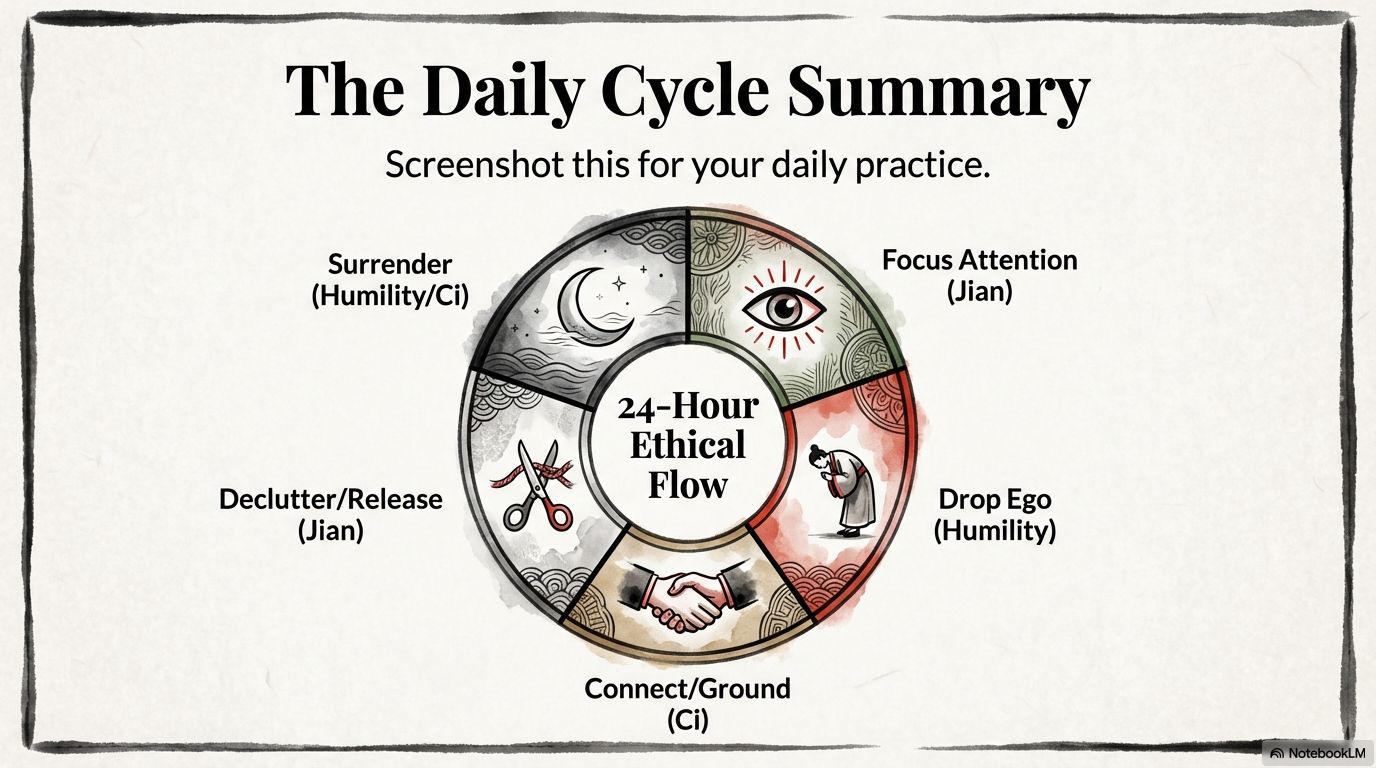
The Daily Cycle of the Three Treasures
Aligning your ethical practice with the day’s natural energy makes it feel less like a chore and more like common sense.
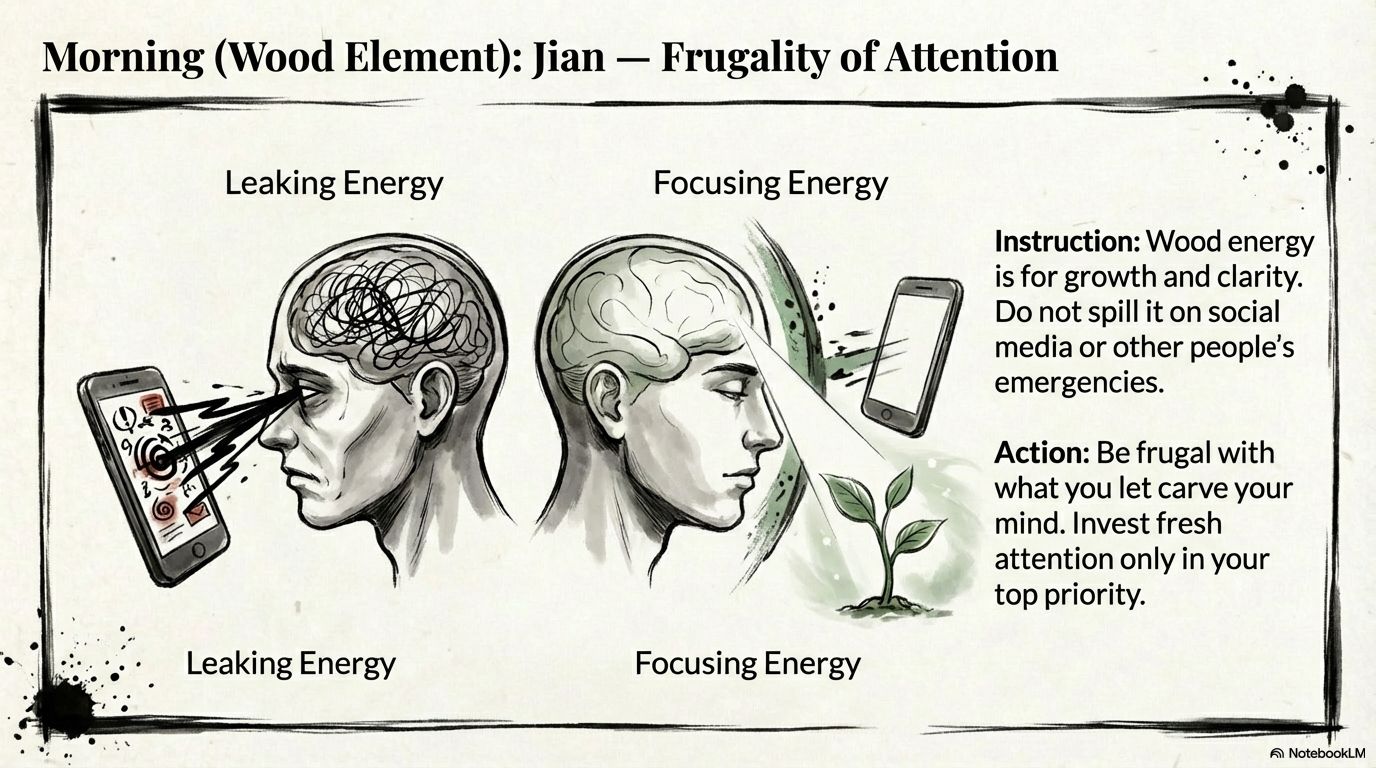
1. Morning (Wood Element) – Practice JIAN: Frugality of Attention
The Energy: Wood is for growth and new beginnings. Its resource is clarity and potential.
- Your Practice: Apply Jian (Frugality) to your mental space.
- How: Protect your morning “Wood energy” like a scarce resource. Don’t spill it on social media, news, or other people’s emergencies in your first waking hour. Be frugal with what you let carve your mind. Invest your fresh attention deliberately in your top priority for the day.
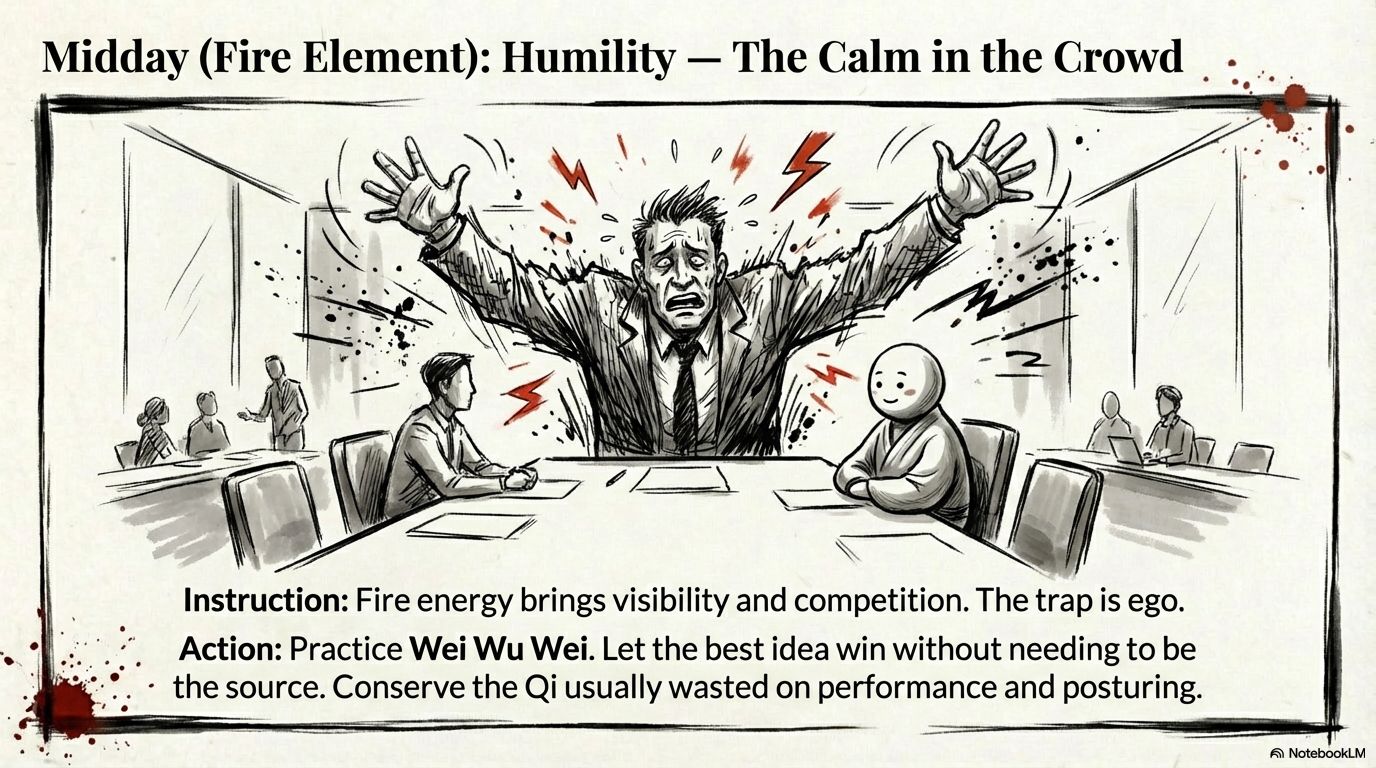
2. Midday (Fire Element) – Practice HUMILITY: The Calm in the Crowd
The Energy: Fire is peak action, socializing, and visibility. Its trap is ego and competition.
- Your Practice: Embody Humility in interactions.
- How: In meetings or collaborations, don’t fight to be the smartest or loudest. Practice “Wei Wu Wei”—action without asserting the ego. Let the best idea win, even if it’s not yours. By not needing to be the “alpha,” you conserve massive emotional energy (Qi) and avoid the burnout of constant performance.
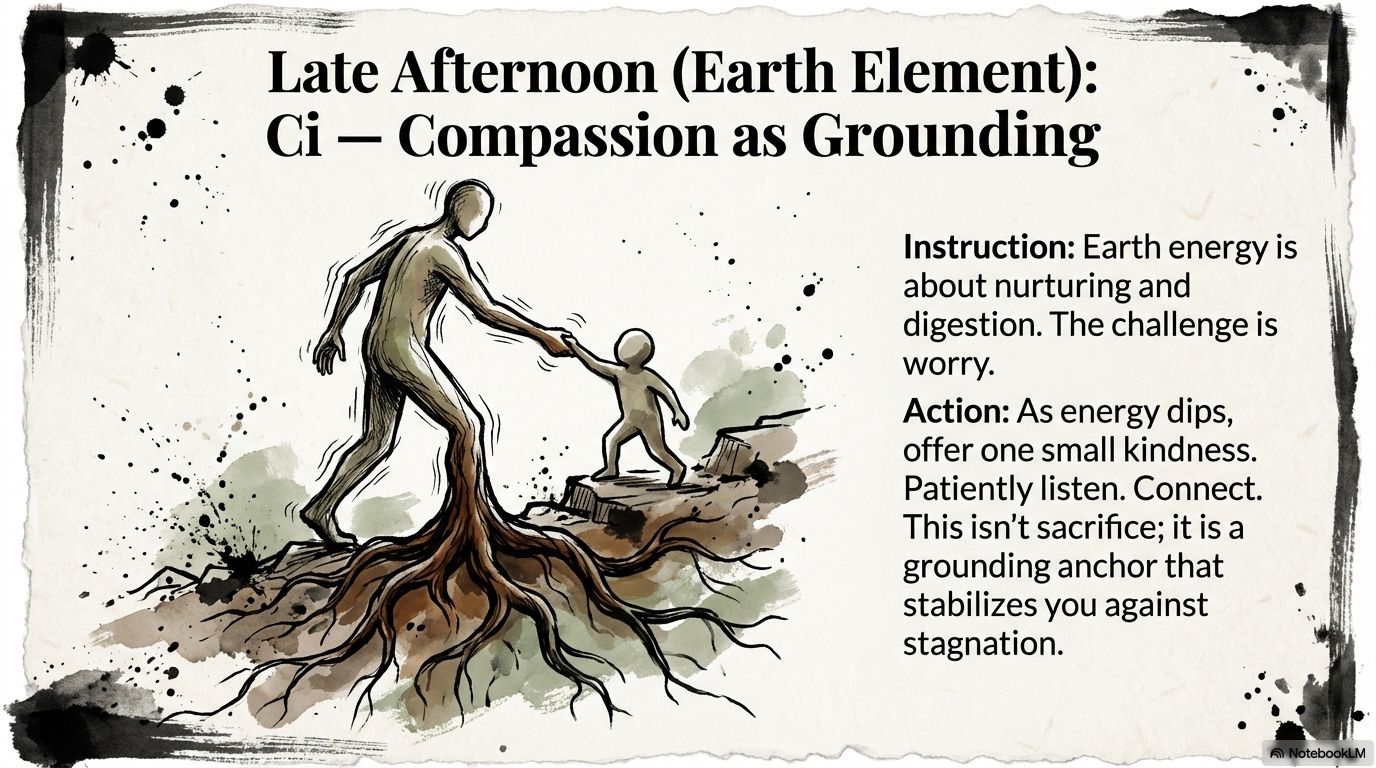
3. Late Afternoon (Earth Element) – Practice CI: Compassion as Grounding
The Energy: Earth is about nurturing, stability, and digestion. Its challenge is worry and over-giving.
- Your Practice: Offer Ci (Compassion) to stabilize.
- How: As energy dips, choose one small, kind action. It could be patiently listening to a family member instead of rushing them, or sending a supportive message. True compassion here isn’t a grand sacrifice; it’s a grounding act of connection that nourishes you as much as the other. It prevents your energy from stagnating in self-absorption.
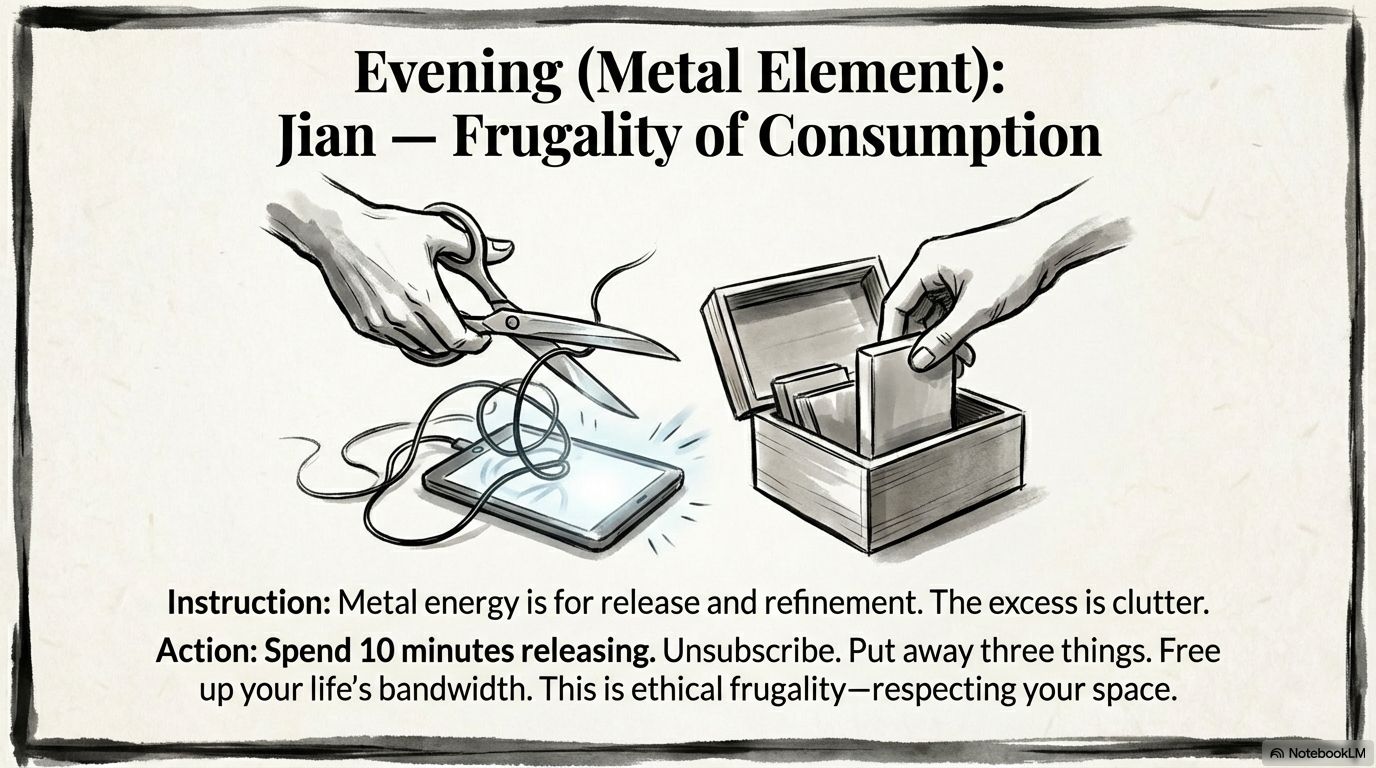
4. Evening (Metal Element) – Practice JIAN: Frugality of Consumption
The Energy: Metal is for release, refinement, and drawing boundaries. Its excess is clutter and holding on.
- Your Practice: Apply Jian to your physical and digital space.
- How: Spend 10 minutes releasing what you don’t need. Put away three things. Unsubscribe from one newsletter. Cancel an unused subscription. This isn’t minimalism for aesthetics; it’s ethical frugality—freeing up your life’s bandwidth (time, money, mental space) from waste.
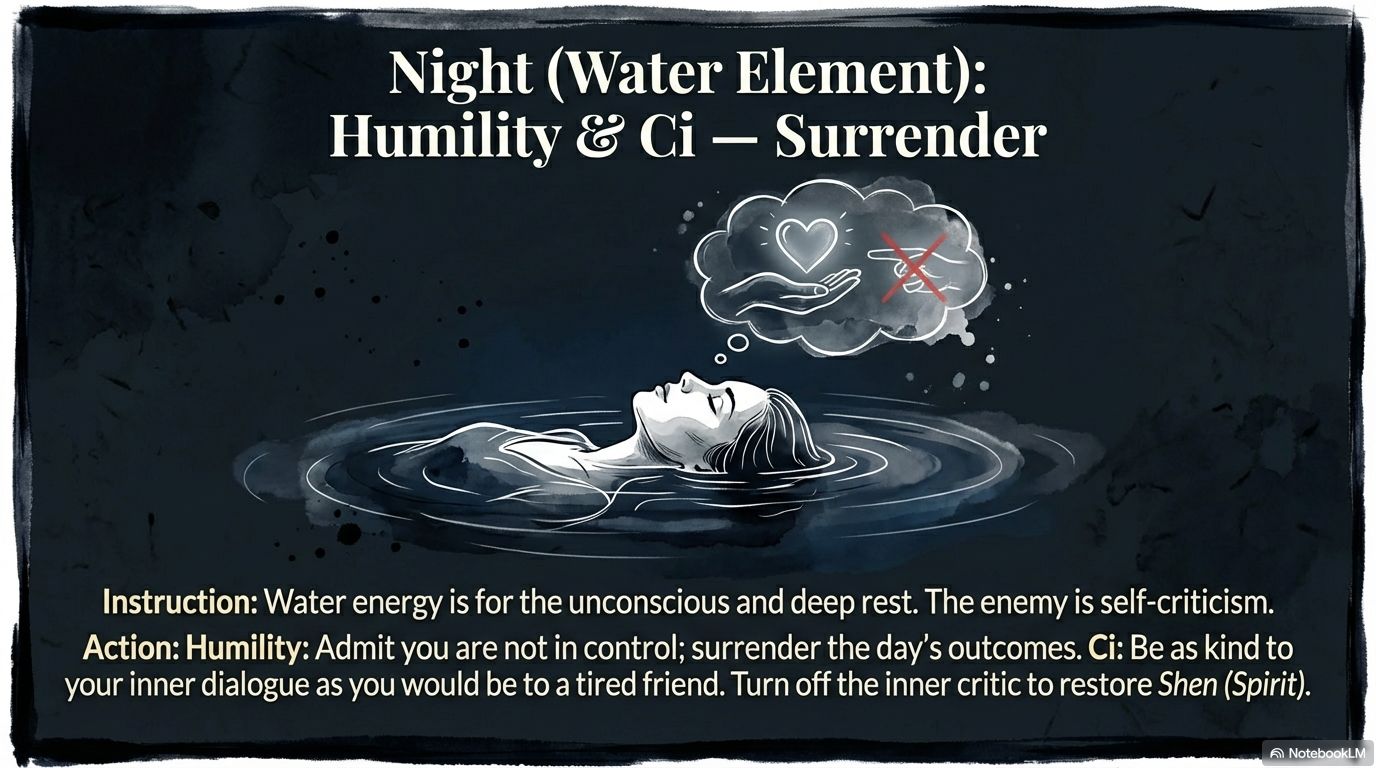
5. Night (Water Element) – Practice HUMILITY & CI: Surrender and Self-Kindness
The Energy: Water is for deep rest, surrender, and the unconscious. Its enemy is resistance and self-criticism.
- Your Practice: Blend Humility and Compassion inwardly.
- How: Humility: Acknowledge you are not in control. Surrender the day’s outcomes and your need to figure everything out. Let go.
- Ci: Be as kind to yourself in your inner dialogue as you would be to a tired friend. This is the deepest compassion—turning off the inner critic so your spirit (Shen) can restore in peace.
Why This Sequence Works: The Spiral in Action
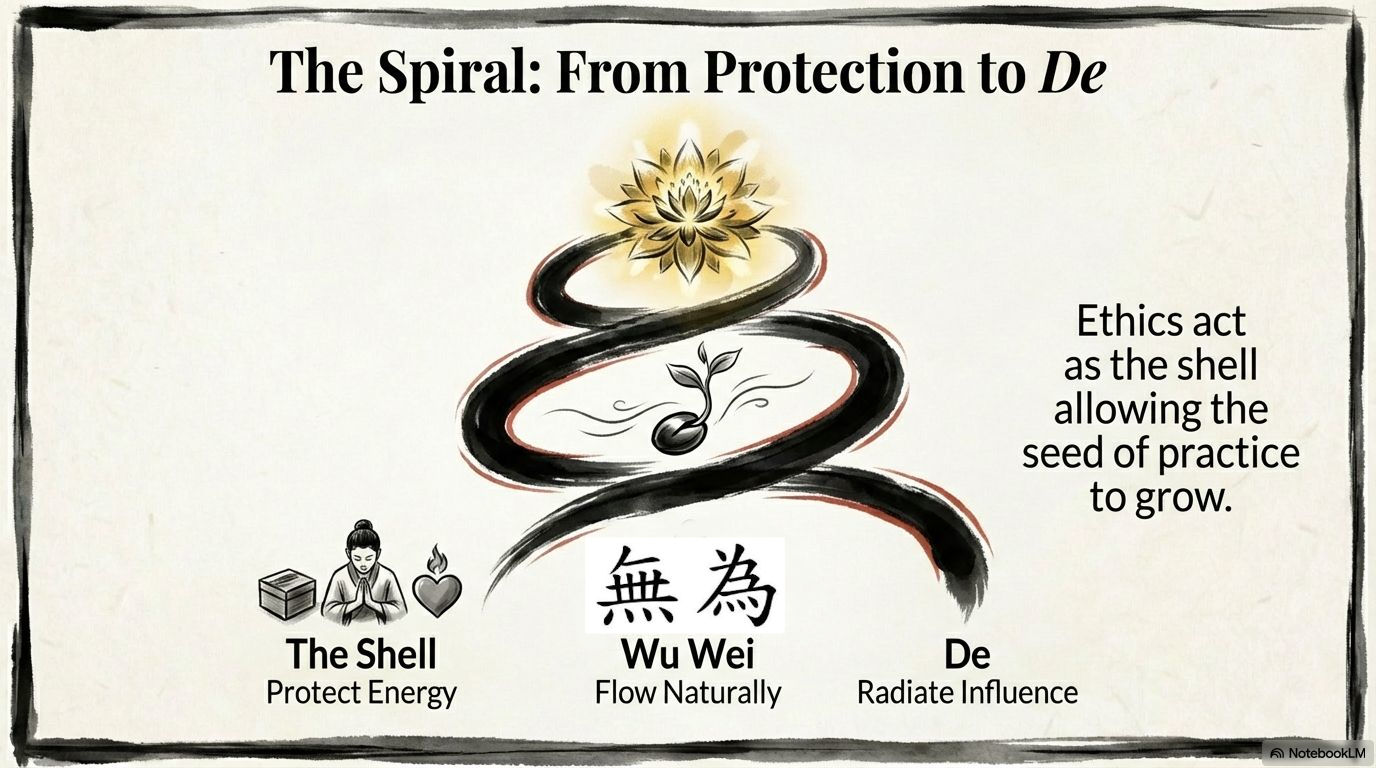
This daily ethical cycle directly fuels your progress on the Taoist path:
- Pu & Yang Sheng give you the clarity and energy to practice ethics without feeling depleted.
- Practicing Jian protects the energy (Jing, Qi) you cultivated.
- Practicing Humility saves you from the energy drain of conflict and pride, creating space for…
- Wu Wei (Effortless Action) to emerge naturally. When you’re not wasting energy forcing outcomes or defending your ego, you start to flow.
- This calm, ethical flow provides the stable foundation needed for deeper practices like Qigong and Neidan, which refine your energy further.
- The result is De—an authentic, calm influence that isn’t sought, but naturally earned. And this De circles back, making it easier to return to a simpler, purer state (Pu).
The ethics are the protective shell that allows the seed of your practice to grow safely.
FAQ: The Three Treasures Today
Q: Isn’t humility a weakness in a competitive world?
A: Taoist humility is not weakness; it’s strategic intelligence. It’s the flexibility of the bamboo that survives the storm while the rigid oak breaks. It conserves energy and allows you to see situations clearly, without ego’s distortion.
Q: How is frugality (Jian) an ethical treasure?
A: In a world of infinite consumption, frugality is a radical act of integrity. It’s respect for your own energy (time, focus, money) and the planet’s resources. Wasting nothing is a profound ethical stance.
Q: What if I fail at this daily?
A: This isn’t about perfection. It’s about awareness. Did you waste your morning attention (Jian)? Notice it, release it (Metal), and try again tomorrow. The spiral has no endpoint, only continuous practice.
Your First Step on the Ethical Spiral
This week, choose one Treasure and one time of day.
Example: Practice Jian (Frugality) during your Metal time (evening). For 10 minutes, just put things away. Don’t buy, don’t consume—just release and order your immediate space.
Feel the subtle calm and spaciousness that follows. That’s your energy being conserved. That’s your power being protected. That is ethics, not as a rule, but as a tangible, daily act of self-respect and harmony.
Tags: #TaoistEthics #ThreeTreasures #Jian #Humility #Compassion #Ci #EnergyManagement #SustainableLiving #MindfulConsumption #Taoism #DailyPractice #2026