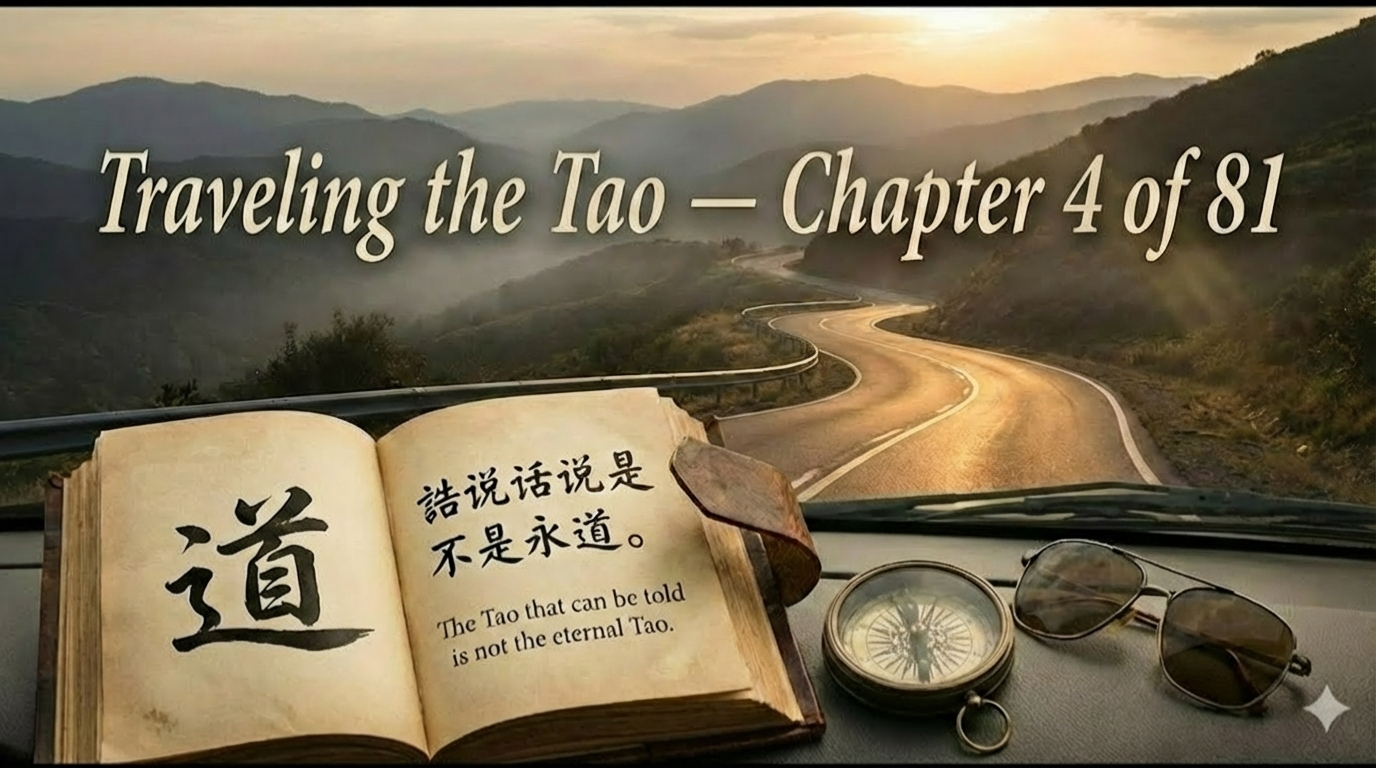
A seasoned traveler knows the value of empty space. It’s the hollow trunk that holds the gear, the quiet moment between destinations that holds the memory, and the unknown detour that holds the adventure. Tao Te Ching Chapter 4 reveals that the most essential tool for your journey isn’t something you pack—it’s the spacious, adaptable emptiness you cultivate within.
Executive Summary
This article interprets the fourth chapter of the Tao Te Ching by utilizing the metaphor of a long-distance road trip to explain ancient spiritual concepts.
It suggests that the Tao functions like the empty space in a vehicle or the open road ahead, providing the necessary capacity for movement and experience without ever being exhausted.
By prioritizing internal spaciousness over mental clutter and rigid plans, a person can better navigate life’s frustrations, such as conflict, ego, and overstimulation.
The source encourages readers to embrace humility and “travel light” by shedding anxieties and fixed opinions to remain adaptable to the journey.
Ultimately, the text argues that true power and resilience come from maintaining a quiet, receptive mind that is grounded in the uncomplicated reality of the present moment.
The Traveler’s Paradox: Why Empty Space Takes You Further
After learning to pack light in Chapter 3, Tao Te Ching Chapter 4 introduces a deeper truth: the most important part of any vehicle is the empty space that allows movement. This chapter explores the nature of the Tao itself, not as a thing, but as the formless capacity that makes all travel possible. It’s the silent navigation behind your GPS, the smooth pavement beneath your tires, and the open sky above—ever-present, endlessly useful, yet impossible to grasp.
For the modern traveler drowning in itineraries and bucket lists, this chapter is an invitation to rediscover the power of the open road and the quiet mind.
Chapter 4
The Tao is empty; when utilized, it is not filled up
Tao te ching 4 Of 81
So deep! It seems to be the source of all things
It blunts the sharpness
Unravels the knots
Dims the glare
Mixes the dusts
So indistinct! It seems to exist
I do not know whose offspring it is
Its image is the predecessor of the Emperor
The Tao: Your Inexhaustible Interior Space
The chapter opens with a riddle: “The Tao is an empty vessel; used but never filled.”
Imagine your car, RV, or backpack. Its usefulness isn’t the metal, fabric, or plastic—it’s the empty space inside that carries what you need. If you cram every cubic inch full, you lose the flexibility to pick up a souvenir, help a fellow traveler with their bag, or adapt to new conditions.
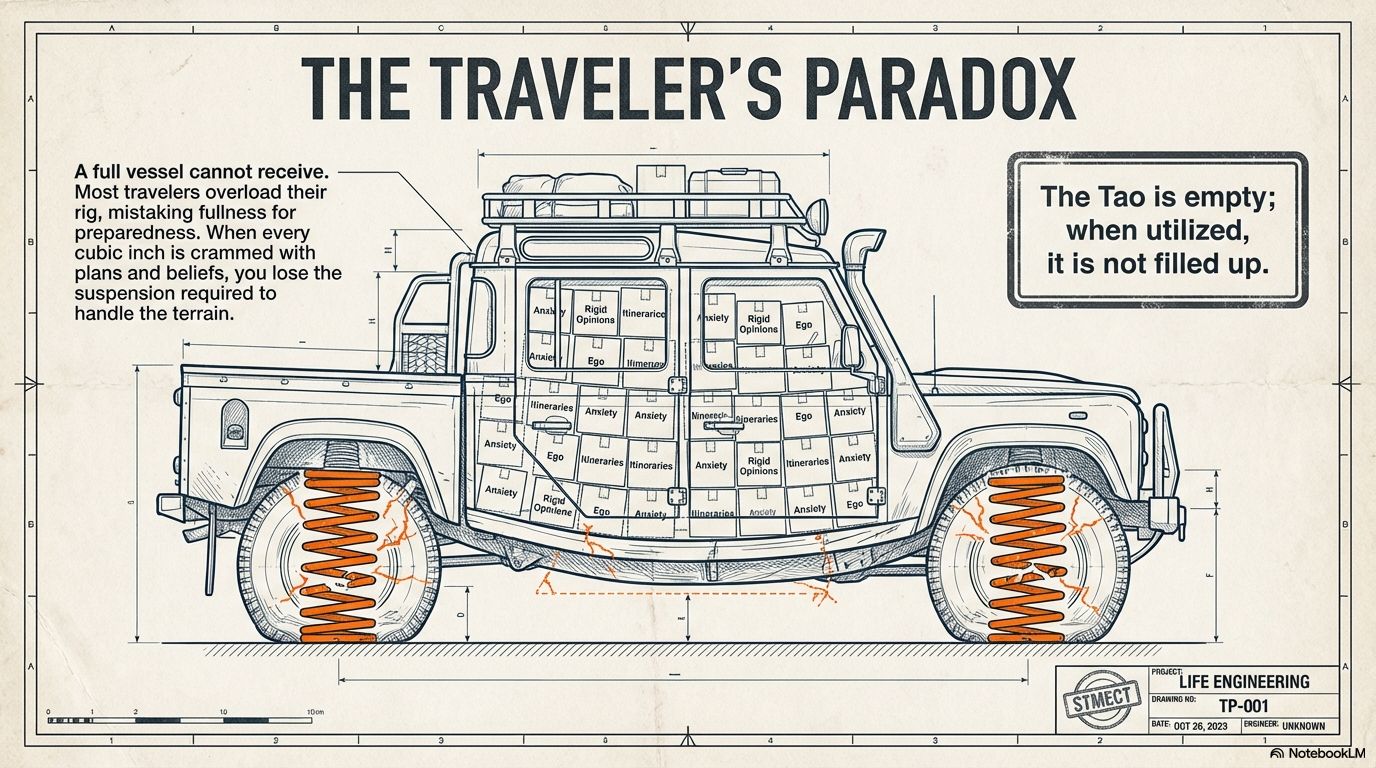
The Tao is that interior space within your own awareness.
A mind overstuffed with opinions, plans, and distractions has no room for true experience. It merely hauls its own clutter from place to place.
A mind with emptiness—calm, open, and receptive—becomes a vehicle capable of handling any terrain life presents.
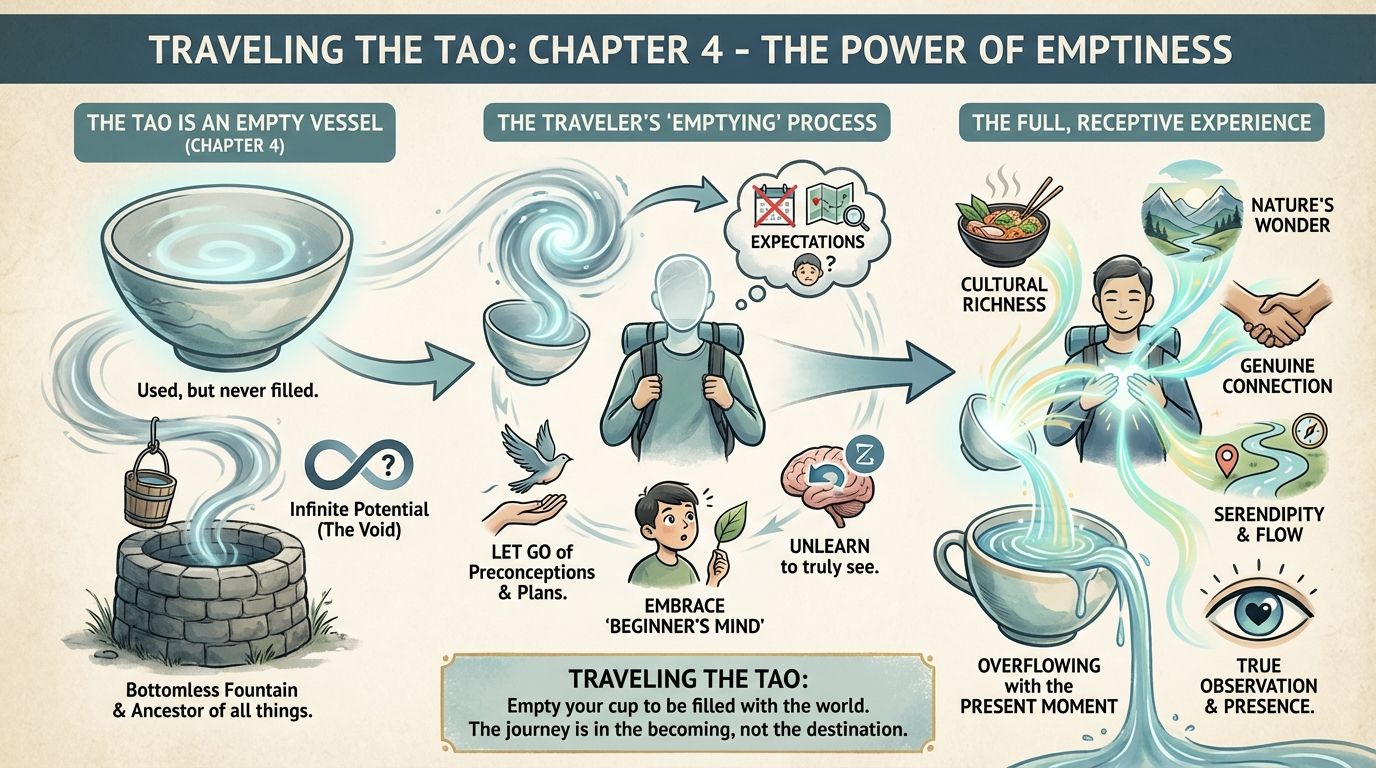
The Four Functions of the Empty Road
Lao Tzu describes this emptiness in action with four timeless metaphors perfect for the journey:
- “It blunts the sharp edges.” It’s the wisdom that softens a sharp retort to a rude fellow traveler into a neutral response. It smooths out the bumps of conflict and irritation on the road.
- “It unties the knots.” It’s the patient clarity that slowly works out a tangled travel knot—a missed connection, a bureaucratic visa issue—where frantic pulling only tightens it.
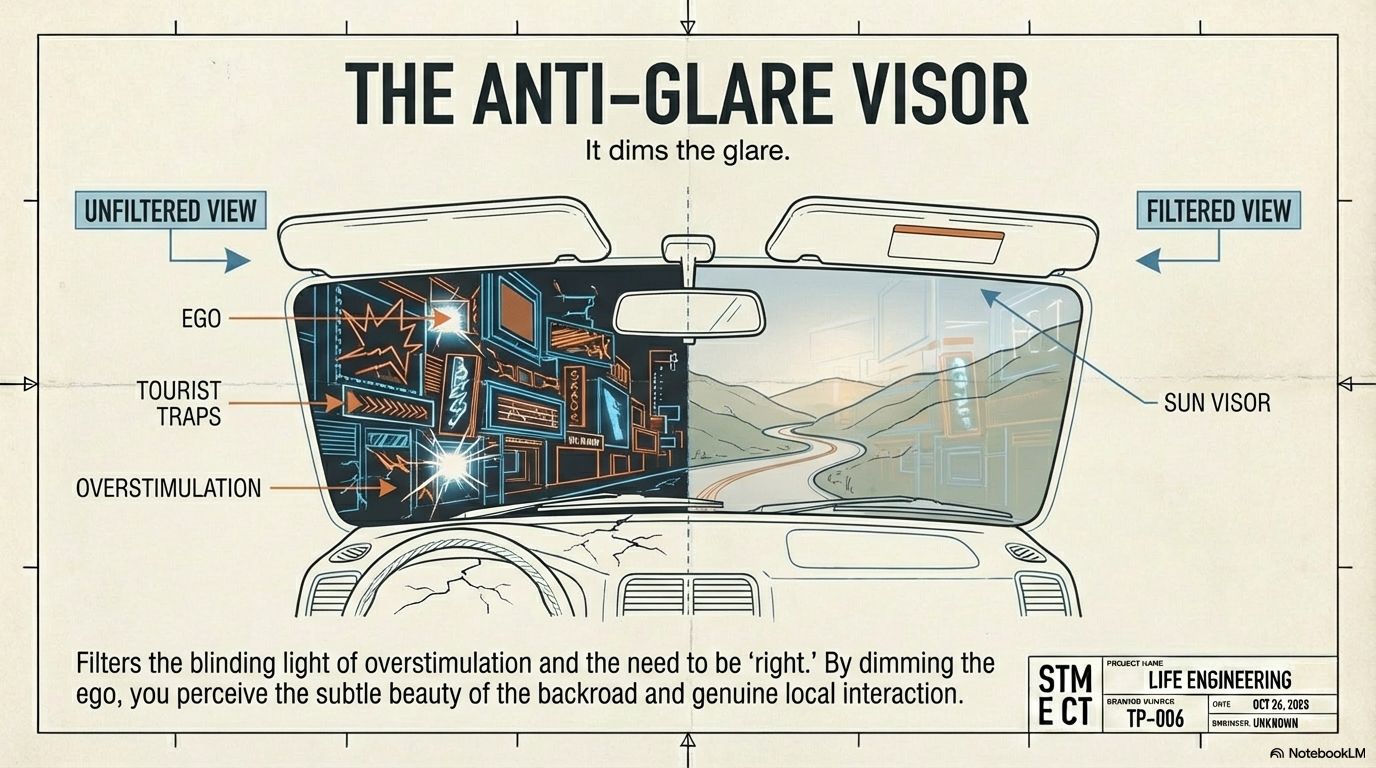
- “It softens the glare.” It dims the blinding glare of overstimulation—the neon of tourist traps, the ego’s need to be right—allowing you to see the subtle beauty of a backroad or a genuine local interaction.
- “It settles the dust.” It is the patience to let the dust of a long, chaotic travel day settle, revealing the clear lessons and quiet peace beneath the exhaustion. It mingles with the grit of real travel without being defined by it.
This “empty vessel” is your all-terrain spiritual vehicle, equipped to handle any condition the journey throws your way.
The Master Traveler: Navigating from Stillness
How does one drive this vehicle of emptiness? The sage traveler operates from this clear, open space, practicing a mode of journeying called Wu Wei.
1. Driving Without Fighting the Road (Wu Wei)
The Sage “acts without action.”
This is effortless navigation. It doesn’t mean going nowhere; it means no white-knuckled, exhausting struggle against the road. It’s reading the traffic flow and merging smoothly, accepting a detour as a chance to see new scenery, and knowing when to stop for the night.
Action arises from harmony with the conditions, not from a stubborn, predetermined plan.
2. Leading from the Backseat
True guidance, the text hints, comes from this ancient, silent source that is “older than the gods.”
A trip leader rooted in this doesn’t need to micromanage every turn. They create a confident, calm atmosphere—like the empty hub of a wheel that allows the entire rim to turn—so the whole group can move forward together in harmony.
3. The Prosperity of the Uncluttered Journey
We think a successful trip is a full photo album and a packed schedule.
Chapter 4 suggests real success is uncluttered experience.
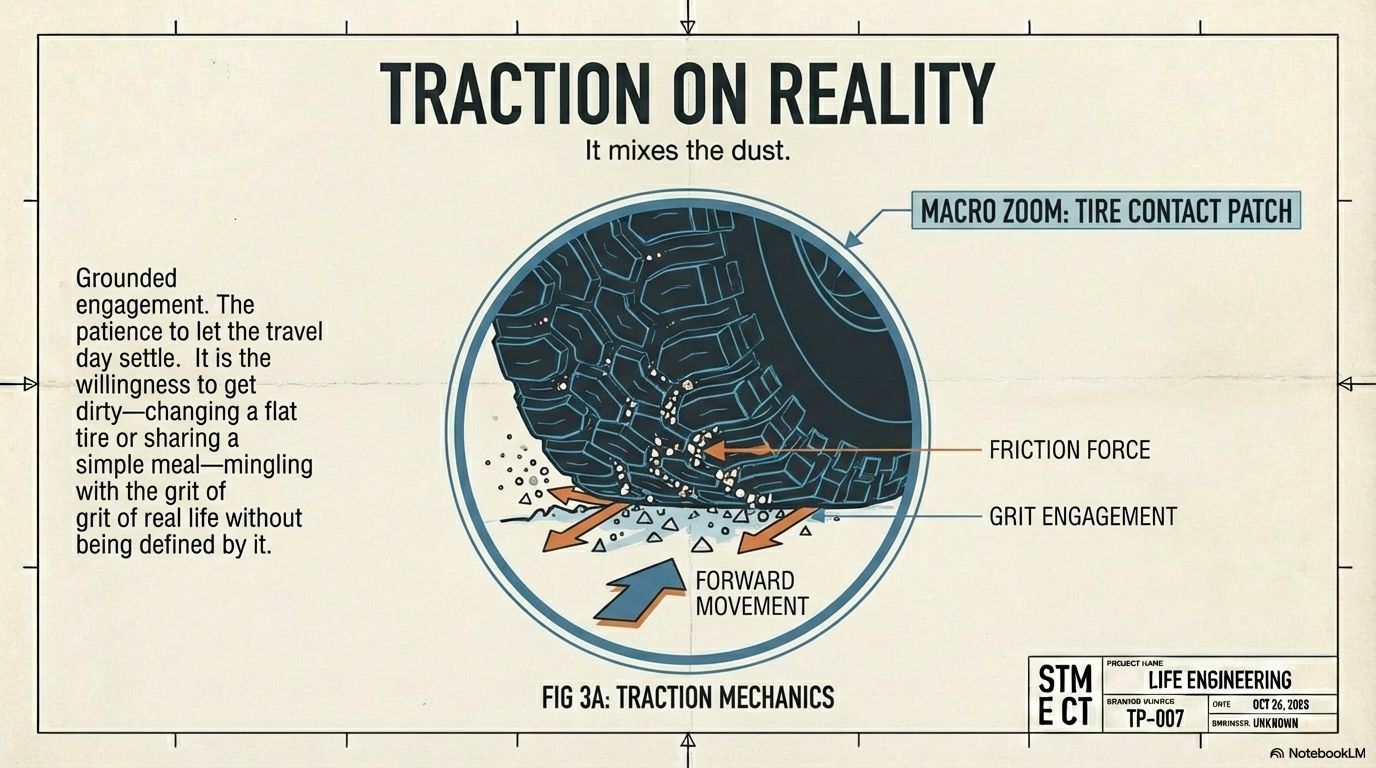
It’s the prosperity of having enough space—in your schedule and your mind—to truly receive a place. It’s the resilience that comes from mixing with the dust, from being humble and engaged enough to change a flat tire, ask for directions, and share a meal with strangers.
This grounded engagement yields richer memories than any pristine, insulated tour ever could.
Your Roadmap: Practical Ways to Cultivate Traveler’s Emptiness
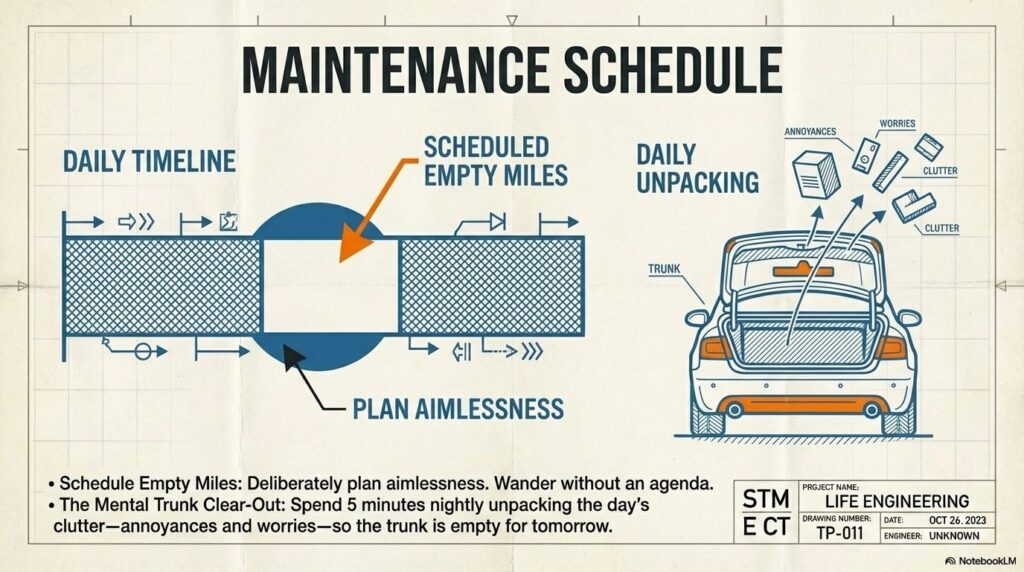
- Schedule “Empty Miles”: On your next trip, deliberately plan a half-day with no agenda. Wander. Get lost. Sit in a square and just watch. Protect this empty space as vital to your experience.
- Create a “Mental Trunk Clear-Out”: Each evening, spend 5 minutes mentally unpacking the day’s clutter—petty annoyances, fixed opinions, worries about tomorrow. Acknowledge them and let them go, creating empty space for the new day.
- Practice “Detour Appreciation”: When a small plan fails—a closed restaurant, a rainy hike—consciously pause. Instead of frustration, ask: “What unexpected experience is this emptiness creating space for?”
- Navigate a Conflict from Neutral: In a travel disagreement, try dropping your “position” for a moment. From that empty, neutral space, suggest a solution that serves the journey itself, not just one person’s will.
The Journey Is the Empty Space
Tao Te Ching Chapter 4 teaches that the essence of travel isn’t the checklist of sights, but the quality of space within you as you see them.
By valuing the hollow, the open, and the quiet, you stop being a passenger in a crammed vehicle and become the driver of a spacious, all-terrain consciousness.
The empty road holds every possible route. The quiet traveler hears the deepest wisdom.
Embrace the emptiness, and discover it is not a lack, but the very condition that makes the wondrous journey possible.
Continue Your Journey: Having embraced the open road within, Chapter 5 examines the impartial nature of the Tao, like the sky that holds both storm and sunshine. For the foundational maps of this philosophy, explore our Foundations of the Tao series.